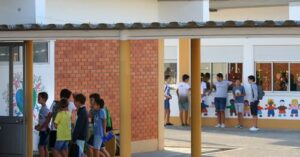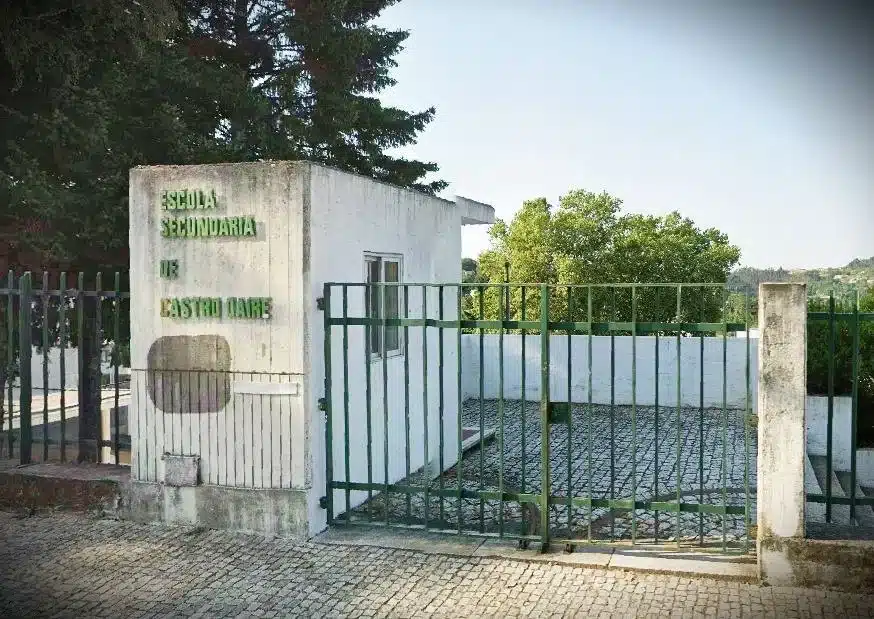
PJ police have been called in to investigate a spate of suicides, and attempts at suicide, among school pupils in the ‘Agrupamento de Escolas de Castro Daire’ in Viseu district.
Local people are described as in “profound consternation”. Everyone is seeking answers.
Diário de Viseu explained recently that “everything began in May when a pupil at the Castro Daire secondary school, aged 17, resident in Lamas, put an end to his own life, practically at the end of the school year.
“Then, at the beginning of the new term, one of his classmates, aged 16, resident in Mões, repeated the act. Two lives lost in four months – something that led the Castro Daire school grouping to publish, over Facebook, that it had suffered “a profound sense of loss”, insofar as “our students are and always will be the energy, soul and meaning of this educational institution. They are, without a doubt, our greatest asset, and therefore there are no words that can convey our feelings or offer any consolation”.
“Perplexity reached gigantic proportions when, at the start of last week (meaning two weeks ago now), news came that three pupils in the same class, practically the same age, had also tried to bring an end to their lives. The cases took place in Mões, Termas do Carvalhal and Ribolhos. Two boys and one girl. Three adolescents, three pupils at this secondary school, three children … In common they had the fact that there were friends and colleagues of the two boys who had passed in May and September”.
Questions have been swirling about ‘what might be wrong in the school community’, ‘were these young people properly integrated, emotionally healthy?’ Diário de Viseu stressed these are cases “that should be investigated by the authorities”, albeit there are those who have wondered out loud whether this could all be an awful ‘coincidence’, affecting young people at a very vulnerable point in their lives.
Since then, the situation does seem to have moved on, in as much as the GNR, that had been in charge of the investigations, has passed them on to the PJ.
Correio da Manhã today suggests the school grouping director has, for now, “passed the blame” to something that must have taken, or be taking, place outside of the school environment. This does not mean the school is doing nothing; far from it: Diário de Viseu has been keeping abreast of the efforts being made, and heard from the school director that “there are many teams and specialists involved in suicide issues here. They are working together and, just this morning, there was an increase in the number of specialists working here at the school, who also met to coordinate other actions”.
CM has given some details on how at least two of the recent suicide attempts were foiled. One of the pupils was seeing a school psychiatrist, who telephoned his mother to say the pupil was definitely not in a good situation. The mother went to the school to collect her son, and found him drunk and ‘out of control’. She called INEM (medical emergency), and when professional help arrived, the boy “confirmed that he had made a suicide pact with a friend”.
The mother called the family of her son’s friend, and the boys’ plans were thus stopped.
“I still don’t know why he did it”, the woman has told CM. “I don’t understand, and he is still not in a condition to talk”, she said.
As for the parents of the last teen who killed himself, they have described themselves as in shock, devastated. Their son left no farewell message, says CM, although an email “circulated that allegedly had been written by him”.
National Suicide Prevention line: 1411
Diário de Viseu adds that it normally does not report on suicides, but that this situation is one that ‘should unite everyone’.
“The Mais Contigo programme, which aims to prevent suicide in schools, found that 41% of the more than 16,000 students assessed in the last school year across the country showed mild depressive symptoms and 26.5% showed moderate or severe symptoms”, the paper refers to a Lusa report.
“According to data from the national coordinating team, 2,069 adolescents were at risk of suicidal behaviour, 70.6% of whom were girls.
Mental health specialist and coordinator of the programme, José Carlos Santos – a lecturer at the University of Coimbra’s School of Nursing – said ‘young women remain more vulnerable than young men’. But the most important aspect of Mais Contigo is that “at the end of the intervention it was possible to reduce depressive symptoms and increase self-concept in both groups, with 93 adolescents being referred to primary health care and 69 to specialised care.
“We really made a difference. There were 162 adolescents who, if it weren’t for the commitment of the Mais Contigo facilitators, would possibly be suffering mentally, without any monitoring or more specialised help,” he said, of the last intervention.
Source material: Correio da Manhã/ Diário de Viseu/ Lusa