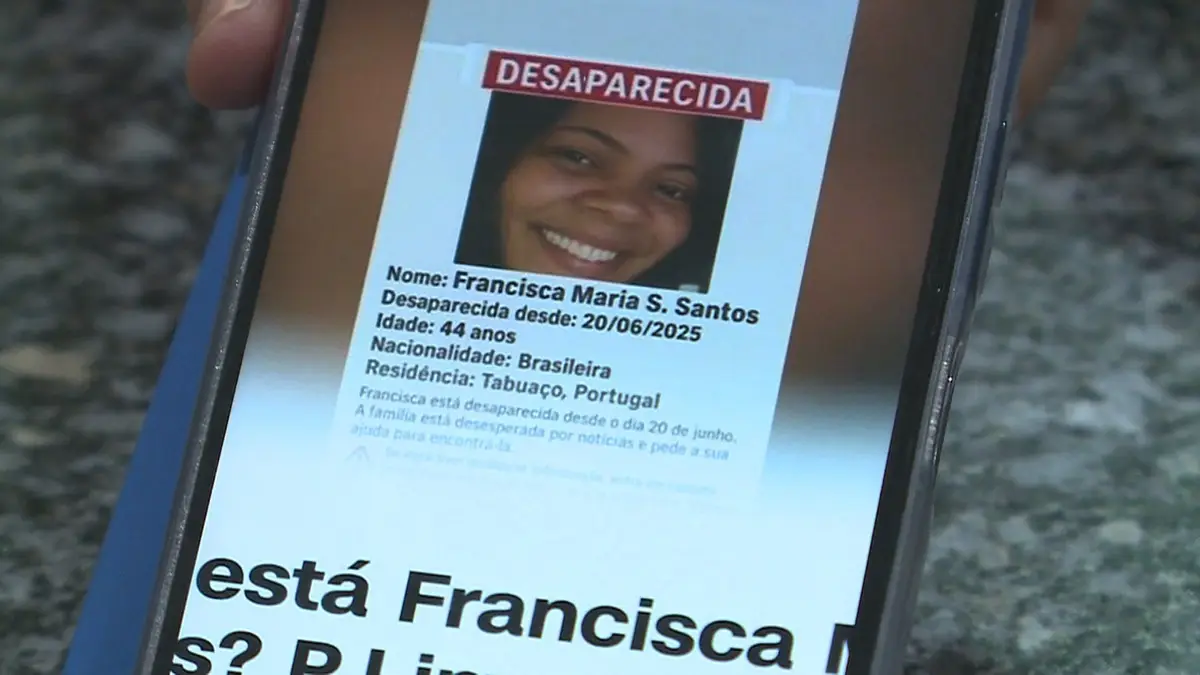
The mystery of a missing Brazilian woman in Tabuaço (Viseu district) seems at last to be nearing some kind of closure following the discovery of a badly-decomposed body just metres from where Francisca dos Santos lived.
Topping multiple questions now is “why did it take eight months to discover a body that was lying so close to the missing person’s home address?”
Could it be that Francisca dos Santos was ‘murdered’ (potentially somewhere else) and her body much later ‘dumped’ in scrubland?
Could it be that she simply wandered out into the night on June 20 and suffered some sort of sudden illness that killed her?
Has the body truly lain where it was found yesterday all the time the 44-year-old has been missing? In which case, what kind of police searches really went ahead after the alarm was sounded?
For now, the remains – discovered by a local pruning trees yesterday – have been transported to the local office of legal medicine.
According to Correio da Manhã, “everything indicates” that the body was ‘dumped’ in that area some time after death. Keys clearly indicating Francisca’s home address, and her bank card were found close to it – along with hair “very similar to that of the missing Brazilian (…) Only the autopsy can confirm, but the mummification of the remains indicate that this is what happened,” says the paper regarding the ‘post death dumping’ theory, adding that “it is not certain that (the body) was buried, because the truth is that the bad weather of the last few weeks provoked changes to the terrain, trees fell, shifting the earth.”
Early on in this investigation, focus was on a ‘lover’ who had told Francisca he was a surgeon when he was in fact a council worker employed in refuse collection. The other detail that seems to have been overlooked in the man’s self-description to the missing woman was that he was in a relationship with another woman.
In other words, there is now a lot more for police to work with. But the main question locally is ‘why did it take so long to find a body that was lying so close to the last place in which the missing person was seen?’
Source material: Correio da Manhã/ SIC Notícias