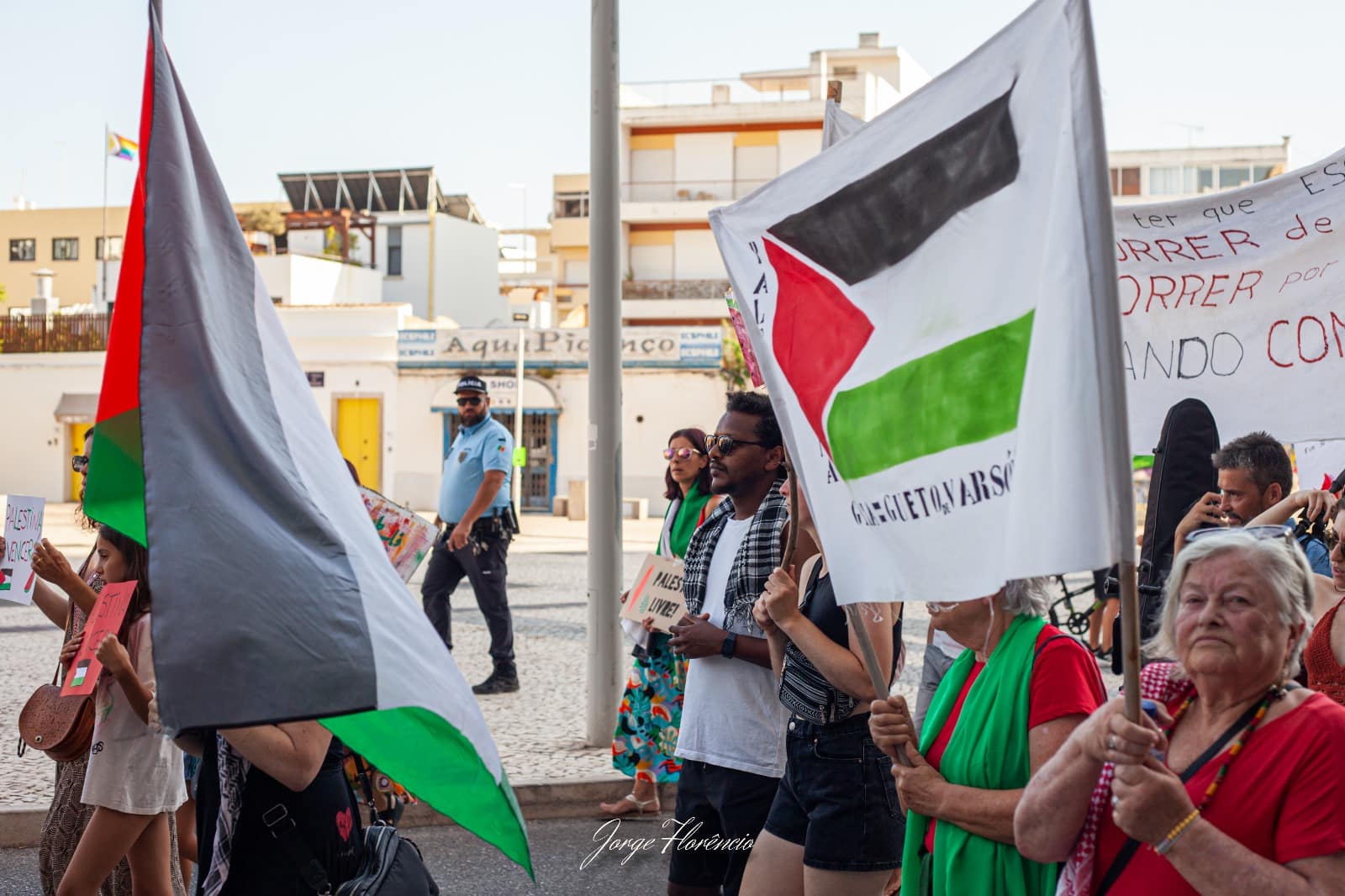
Portugal has brought its recognition of the state of Palestine forward by a couple of days, pipping other countries, including France (which proposed this recognition in July), marginally to the post.
Minister of Foreign Affairs Paulo Rangel said the formal recognition would be made on Sunday, September 21 ahead of the meeting in New York of the United Nations General Assembly – to which the Palestinian delegation has been denied visas to attend.
With the situation for Palestinians corralled in a missile-blasted Gaza continuing as ‘a living hell on earth’, in the words of former British foreign secretary David Lammy, the development will “change nothing on the ground”.
Pundits freely admit that the likelihood of a Palestinian state ever seeing the light of day seems minimal. Indeed, a new book on this effective 100 years war describes the two-state solution as “a meaningless distraction and a performative notion used by diplomats for 30 years to avoid finding real solutions”.
Authors (and veteran negotiators) Robert Malley and Hussein Agha say that without practical steps to make Israel engage in real peace talks, “the offer of recognition won’t change the life of a single Palestinian”.
But in the way that so much that means so little is hyped-up these days, Portuguese news services are recalling the “most important moments in the process of recognition of the Palestinian state by Portuguese authorities in recent decades”.
Viewed from another angle, it is testimony to years of diplomatic dancing on the head of a pin.
Portugal’s government however is taking its new stand very seriously – and on Monday, its ‘recognition of the state of Palestine’ will be followed by France, Canada, Luxembourg, Malta, Australia, Belgium, Andorra and New Zealand at a special summit on the two-state solution.
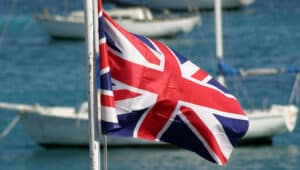
These new converts, along with UK which also declares its recognition of Palestine on Sunday, bring the number of like-minded countries within the United Nations to almost 80% of the membership – but the United States definitely does not agree, siding with Israel – which sees recognition of Palestine as a ‘reward to Hamas/ terrorism’.
Thus, what is this ‘brave diplomatic stand’ all about?
While, the Palestinian Authority has already sent its thanks to Portugal for supporting “efforts to reach peace, and implement a two-state solution” (which critics consider to be already dead in the water), the UK Guardian suggests recognition will allow Britain, for example, to enter treaties with Palestine.
It would mean that the Palestine head of mission “becomes a fully recognised ambassador”, says the paper. “Some argue that a greater onus would be placed on the UK to boycott goods imported into the UK by Israel that come from the occupied territories. But it is seen more as a statement on Palestine’s future, and disapproval of Israel’s refusal to negotiate a Palestinian state”.
As for Portugal’s relevance in this Gordian Knot, again, it may be that this country too starts to boycott imports from Israel, but this far, there has been no national discussion on this point. The European Union however is Israel’s largest trading partner, and it is indeed talking about sanctions.
Also in favour of sanctions against Israel is the Portuguese Association of Jews, which is calling on Portugal to cease trading with Israel altogether.
Where this leaves the Palestinian people – herded as they are from one end of Gaza to the next as buildings are destroyed all around them – remains the desperate unanswered question.
Source: Guardian/ Lusa/ CNN