In the western Algarve, a small non-profit organisation is tackling one of the area’s most pressing environmental challenges: the steady advance of desertification. Based at a 43-hectare farm near Lagos, Mud Valley Institute is working hard to promote the importance of ecosystem restoration, especially in increasingly desertified regions like the Algarve.
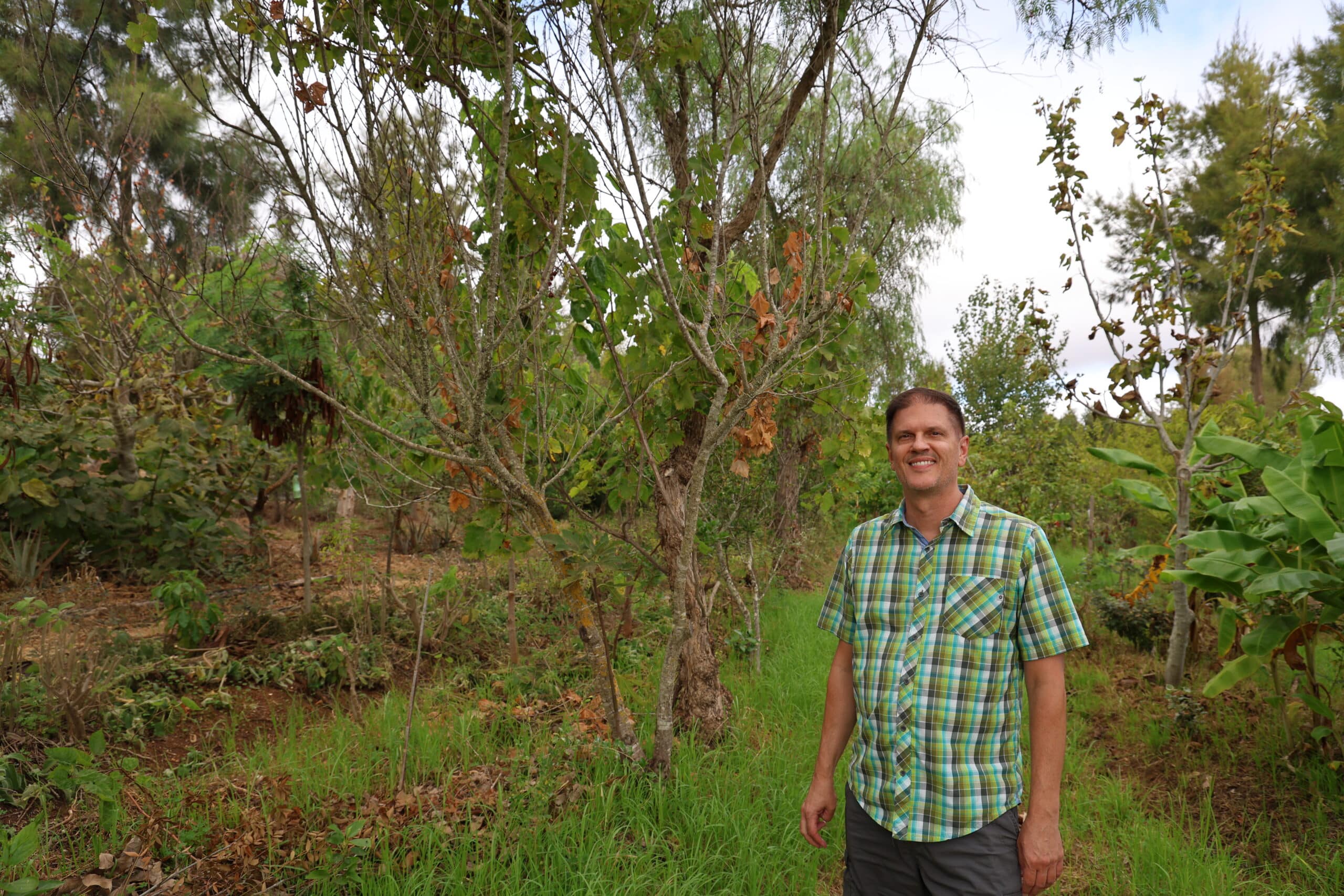
The organisation was founded in 2010 by Walt Ludwick, who co-owned and operated Weight Watchers franchises across eastern Canada and the northeastern United States for over 20 years before selling his business and moving to Portugal with his family in 2006.
“When Walt first got the land, it was basically a blank slate,” Richard Rushing, Mud Valley’s managing director, told the Resident. “He started experimenting with the landscape, developing the soil, planting native species – it’s been years in the making.”
For Walt, soil restoration is central to everything. “It all goes back to food quality,” Rushing explains. “The health of the soil directly impacts the food we eat. Healthy soil is vital to growing healthy and nutritionally dense foods.”
The Algarve’s dry climate and eroded hills make it a natural testing ground for regenerative agriculture. With limited rainfall and fragile soils, the region faces similar pressures to those seen across southern Europe. Mud Valley’s approach combines science, education, and community action to develop scalable restoration techniques.
The non-profit was first established in 2010, originally as a vehicle to support Novas Descobertas, a local children’s charity that Walt’s wife Nita had founded. But in 2024, Rushing and the team formalised a broader mission focused on ecosystem regeneration. “Last year was our foundational year,” he says. “We created our business strategy, set objectives, and really began defining who we are.”
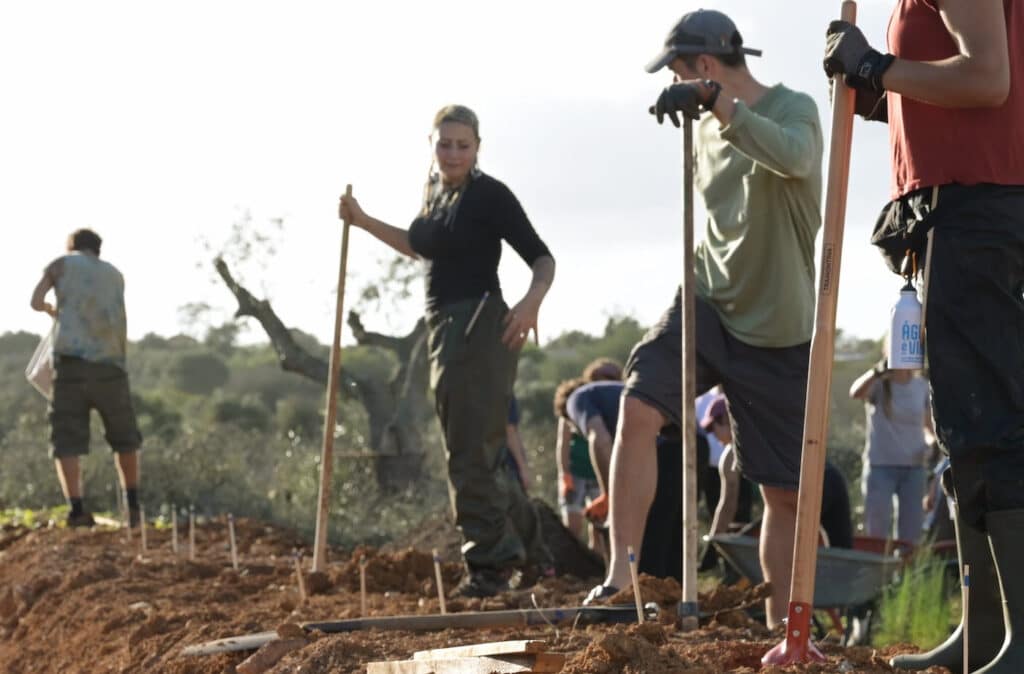
Today, Mud Valley runs an expanding slate of programs – from weekly volunteering and farm days to citizen science projects. Recently, the organisation formally partnered with the Faculty of Science at the University of Lisbon, opening up new doors for expansion.
“We can really do some fun stuff with them – their students can come down here and do internships, and we can work with them on research projects. We’re working with them on a cross-European citizens’ science program, called ECHO. Citizens learn about soil health, but they also get a cool sampling kit, where they’ll go do the sample and the measurements. There’s also an app involved, which they can use to upload all their data to this big database.” And as Rushing explains, having a university partnership “gives us credibility and tools to expand.”
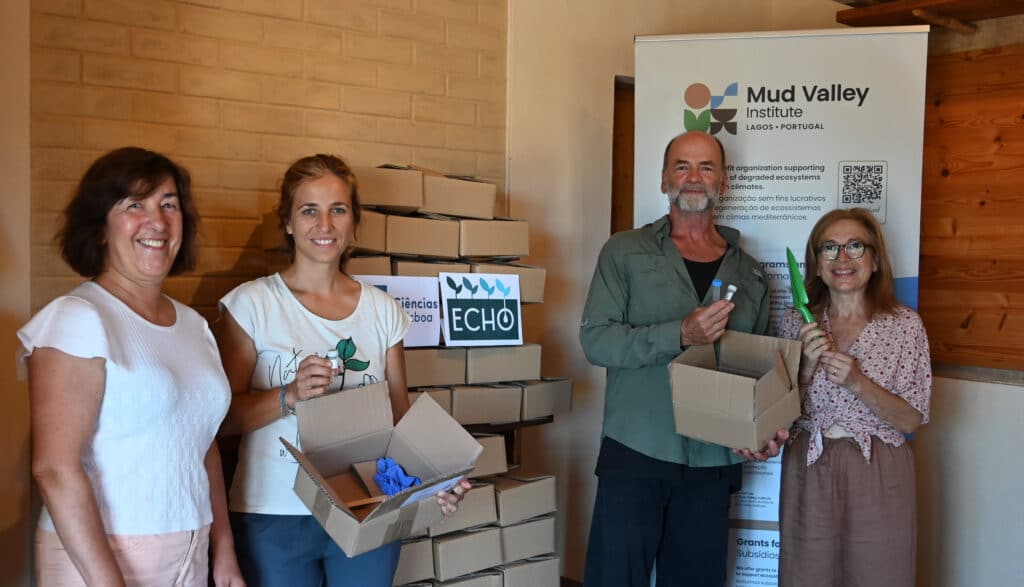
In 2025, Mud Valley also became the leading force of a new Algarve-wide network of restoration projects. Together, the group is organising a “Month of Regeneration” this November and December, featuring 30 public events including workshops, classes, and volunteer days.
Despite growing recognition, Mud Valley faces familiar non-profit challenges. Funding remains tight, with operations largely financed by Walt himself. “It’s the classic chicken-and-egg problem,” Rushing admits. “You need funding to grow, but you need growth to attract funding.”
Equally pressing is the need to connect with the local Portuguese community. “Among the international community – the Dutch, Germans, Brits, for example – ecosystem restoration is already understood,” Rushing says. “But for locals, it’s less familiar. We have to start with the basics: soil health, water retention, and biodiversity.”
To build those bridges, Mud Valley offers bilingual programs and has begun working with international schools across the Algarve. This year, it is launching new educational partnerships with Brave Generation Academy in Lagos and Aspire International School in Almancil. “Working with 30 students at an international school is great,” Rushing says, “but we want to work with public schools too. Working with 300 in a public school – that’s where you start to see scale.”
The institute also hopes to reach small landowners and traditional farmers. Encouraging regenerative practices can be a hard sell, Rushing admits, because the payoff is slow. “It’s expensive and long-term. The returns may not come for three to five years. But it always pays off – economically and ecologically.”
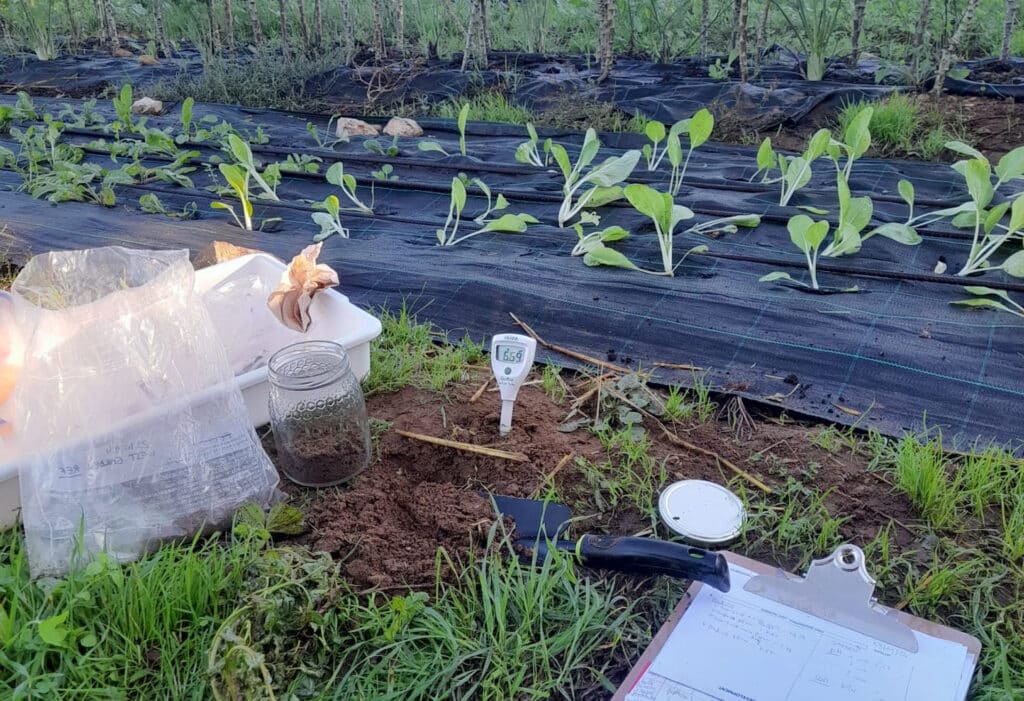
A key part of Mud Valley’s credibility lies in its on-site soil lab, led by a PhD soil scientist, Dr. Elodie da Silva. “Not everyone has a soil lab,” Rushing says. “We can actually measure what works. And what we’ve found is that native species – almond, carob, fig trees – perform best. It’s not surprising, but it’s powerful to prove it.”
Rushing himself joined Mud Valley after moving to Portugal three years ago. A former corporate strategy and finance executive in the US, he initially came looking for a quieter life. “My wife told me I wasn’t going to spend my days drinking coffee and eating pastéis de nata,” he laughs. Volunteering with local groups soon led him to Mud Valley, which he has helped transform into a structured, forward-looking organisation.
Now, with a small but capable team, Rushing sees the institute as poised for growth. “Our vision,” he says, “is to have a network of farms and regeneration projects across the Algarve – tens of thousands of hectares.”
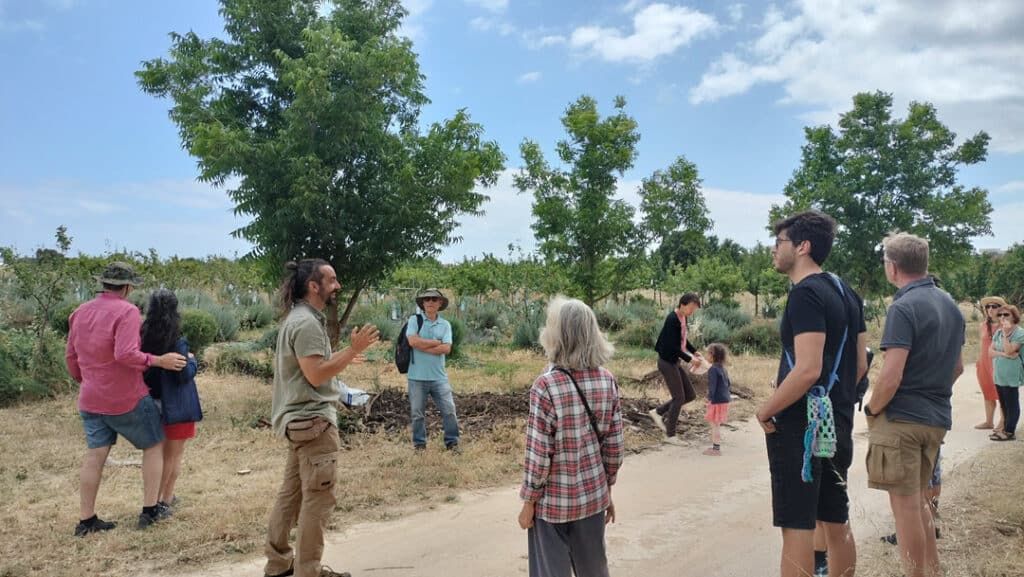
Beyond the numbers, Mud Valley’s work is about shifting mindsets. “Ecosystem restoration isn’t just about the soil,” Rushing says. “It’s about people believing that change is possible. You don’t have to be an ecologist to start – just composting at home is a small step that can lead to big change.
More information about Mud Valley’s work and its upcoming events can be found on its website (www.mudvalleyinstitute.org) and Instagram page (@mudvalleyinstitute).