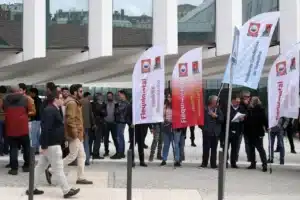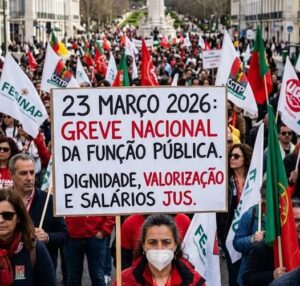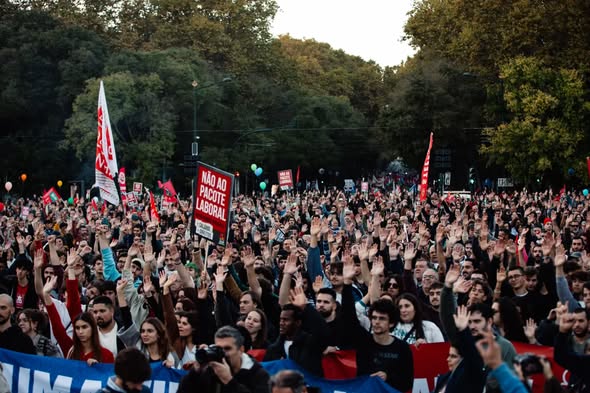
As of mid-afternoon, the country’s two largest syndicates, CGTP and UGT, are firm in their resolve to hold a general strike on Thursday, December 11, which they predict will cause the “total paralysis” of Portugal’s public services for 24-hours.
What is the reason? According to prime minister Luís Montenegro ‘there is no reason’. This is much more a political stand, as the unions are aligned with the PS Socialists and PCP communists, he says.
Syndicate leaders dismiss the PM’s reading of the situation, which they claim is rooted in proposals for new labour laws that the government is seeking to see approved in parliament.
A general strike “is the best way to respond” to the fact that the government wants to make it easier for employers to fire workers, harder for syndicates to enter into companies, and implement a number of other ‘changes’ that go against the rights of workers, CGTP secretary general Tiago Oliveira has told reporters .
UGT too has described the labour package, announced during the summer, as a “labour reform for employers”, albeit secretary general Mário Mourão has intimated it could back out of strike action if the government begins to cede ground in negotiations.
In many ways, the government’s back has been put up because negotiations are having to take place against the backdrop of a very real threat (of a general strike).
Labour minister Rosário Paula Ramalho, for example, has called the strike ‘extemporaneous’ because the 100 proposals of the government have still not been fully discussed with social partners (the unions and employers).
For now, it is very much a case of ‘who blinks first’ with UGT, the much more right of centre syndicate: Mário Mourão has told ECO online that “what we want is that the document that enters parliament is different to the one presented in July…”
Media commentators have grasped this topic with gusto: a number agreeing with the government – ‘this is all very pushy’ and smacks of ‘politicking’. But some new commentators are ex-ministers/ former politicians. As such Ana Mendes Godinho (a former minister of labour under António Costa) has said that the labour package does, in her opinion, look like a “step backwards”, while this strike shambles “is a terrible signal that there has not been the capacity to find spaces for dialogue with representatives of the workers”.
As things stand, December will be a month of real workplace hokey-cokey: the 1st and 8th of the month are already Bank Holidays. In fact, there will only be one full working week without some kind of hiatus (including Christmas and New Year).
Sources: LUSA/ Público/ Antena 1