Government’s “profound reforms” to be discussed with social partners
It is not just in the field of immigration that Portugal’s social democrat government seeks to ring the changes. Labour legislation is also ‘on the blocks’. On Thursday, the government approved, in the Council of Ministers, the preliminary draft of what it calls a “profound reform” to be negotiated with social partners. The document includes revising “more than a hundred articles of the Labour Code”.
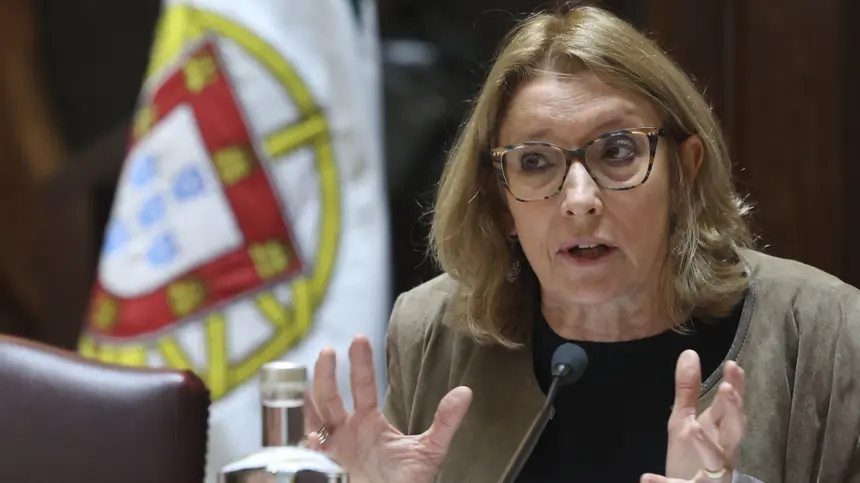
Christened ‘Work XXI’, the reform aims to make labour regimes ‘that are very rigid’ more flexible in order to increase ‘ competitiveness of the economy and promote business productivity’, minister of labour, solidarity and social security Maria do Rosário Palma Ramalho has explained. It is also focused on valuing workers through merit, stimulating employment “especially youth employment”, and boosting collective bargaining.
‘In terms of scope, there are 30 key themes,’ Maria do Rosário Palma Ramalho told the post- Council of Ministers press conference, emphasising that the reform includes initiating the process of transposing two European directives (one on adequate minimum wages in the EU and the other on working conditions on digital platforms).
Among the many changes is one that will allow employers to dismiss workers who fraudulently ‘self-declare sick leave’ (since the last government, workers are able to take three days off work for sickness without having to have a doctor’s note). In the case of abuse of this facility for workers, the government wants employers to be free to dismiss on the grounds of ‘just cause’ (in this case, fraud).
There are also restrictions proposed on the right to strike (this particularly following the strikes mounted by rail unions during the election campaign, in which the country was essentially left without trains for three days – but it is also being brought in to prevent the perennial strikes that affect education/ schools). Maria do Rosário Palma Ramalho said the changes proposed seek “to balance the right to strike with the need to respect other fundamental rights”.
Fixed-term contracts are also part of the package to be discussed in detail over the coming months: the government proposes that the initial duration of a fixed-term contract should be at least one year – currently the minimum is six months. The maximum duration may be extended from 2 to 3 years (fixed term) and from 4 to 5 years (indefinite term).
Regarding:
- Teleworking (working from home), the government wants this to convert to hybrid working (part workplace/ part home). Workers and employers will be on an equal footing in negotiations, regardless of who takes the initiative.
- Parental leave: the government seeks changes to exclusive paternity leave, requiring fathers to take 14 consecutive days off work immediately after the birth of their child. At issue is a proposed amendment to Article 43 of the Labour Code, concerning exclusive parental leave for fathers, which provides that it should be mandatory for ‘the father to take 28 days of parental leave, consecutively or in interpolated periods, within 42 days of the birth of the child, 14 of which shall be taken consecutively immediately after the birth’. Right now, the law provides that fathers must take at least seven days off after the birth of their child. “It is mandatory for the father to take 28 days of parental leave, either consecutively or in separate periods of at least seven days, within 42 days of the child’s birth, seven of which must be taken consecutively immediately after the birth,” according to the current law.
- Mourning, termination of pregnancy: there are a number of changes to current laws here. The government seeks to end bereavement leave for miscarriage – currently three days without loss of rights – but include in the leave for termination of pregnancy, the regime of leave for family assistance. It also wants to allow partners (‘the worker’s companion’) leave to assist in these circumstances. According to the current law, “in the event of termination of pregnancy, the worker is entitled to leave lasting between 14 and 30 days,” and violation of this right constitutes a very serious administrative offence.
Three social consultation meetings for Work XXI have been scheduled for September, as well as bilateral meetings between the government and the various social partners. There is no deadline for the conclusion of negotiations, as these are not expected to be ‘simple’: various media outlets have already alluded to ‘divisions’ between syndicates, employers and political parties.
Sources: Lusa/ Diário de Notícias/ rhmagazine.pt