Expresso today has aired the now very public barny involving the dean of Porto University and Education Minister Fernando Alexandre.
The essence of the spat centres on Portugal’s ‘rigorous entry requirements’ for young people who aspire to study medicine (requirements that have been repeatedly criticised in the past, for either ‘losing talent’, or sending candidates to study medicine in other countries, from which they may not return).
Considering Portugal has a dire shortage of qualified young doctors, it makes sense – at least on paper – to make some exceptions, where they could be made. That certainly appears to be the thinking in certain quarters, but it is not shared by the dean of Porto University.
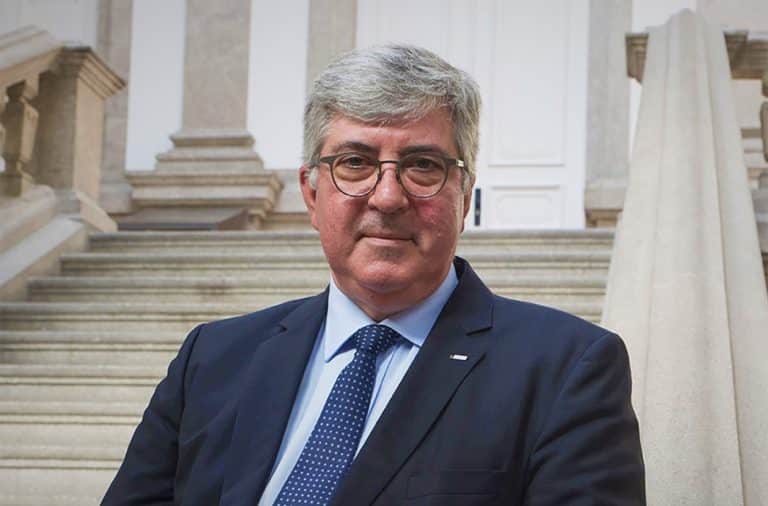
Dean António Sousa Pereira has complained to Expresso of receiving pressure from several “influential people with access to power” to allow 30 candidates into the Faculty of Medicine who did not score the required 14 points in the special entrance exam.
Reading between the lines, Dean Pereira was essentially presented with a fait accompli, which he point-blank refused to accept: Expresso explains that the university’s medical faculty opened 37 vacancies for the coming academic year 2025/ 2026, to which 50 candidates applied. Of these 50, only seven scored the requisite 14 points or more in the test, held in May – thus, there were 36 places that would have been left unfilled – except for the fact that the selection committee, made up of six faculty lecturers, decided to move the goalposts. The committee agreed “as an exception”, to accept candidates who had scored 10 points or more – that way, 30 of the ‘failed students’ would be admitted.
On top of all this manoeuvring (and so far all unbeknownst to Dean Pereira), the selection committee informed the 30 failed students that they would be given places to study medicine after all …
There would have been a pause here for ‘general delight’ / relief and celebration only for the students to hear, in July – once Dean Pereira was aware of everything that had gone on – that this was not going to happen at all.
Expresso goes in to much more detail, explaining ‘what the dean said to the Minister of Education, and what the Minister of Education says he said to the dean’, but the situation remains as the dean has every right to insist that it remains: the students cannot be accepted as this would be ‘against the law’.
The education ministry has itself “requested intervention from the IGEC – the general inspectorate of education and science” – and this too concluded that the dean was acting by the book: the opening of these places had “no legal basis”, was therefore “legally inadmissible” and carried “the risk of violating the principles of legality, equality and legal certainty”.
Like so many aspirant doctors before them, the 30 young students will have to study medicine elsewhere, or try again next year.
Expresso’s text suggests the students themselves had a lot of ‘influential pressure behind them’. They contested the dean’s reasoning in every way that they could, arguing that it was beyond unfair that they had been told they had places, and were then informed that they didn’t have them. But the dean has ‘won’ this showdown, which sees to it that the next academic year starts teaching only seven aspirant doctors, instead of 37.
Source material: LUSA/ EXPRESSO