Wind farm “has not had predicted effect of repelling fish”, say studies conducted by major shareholder
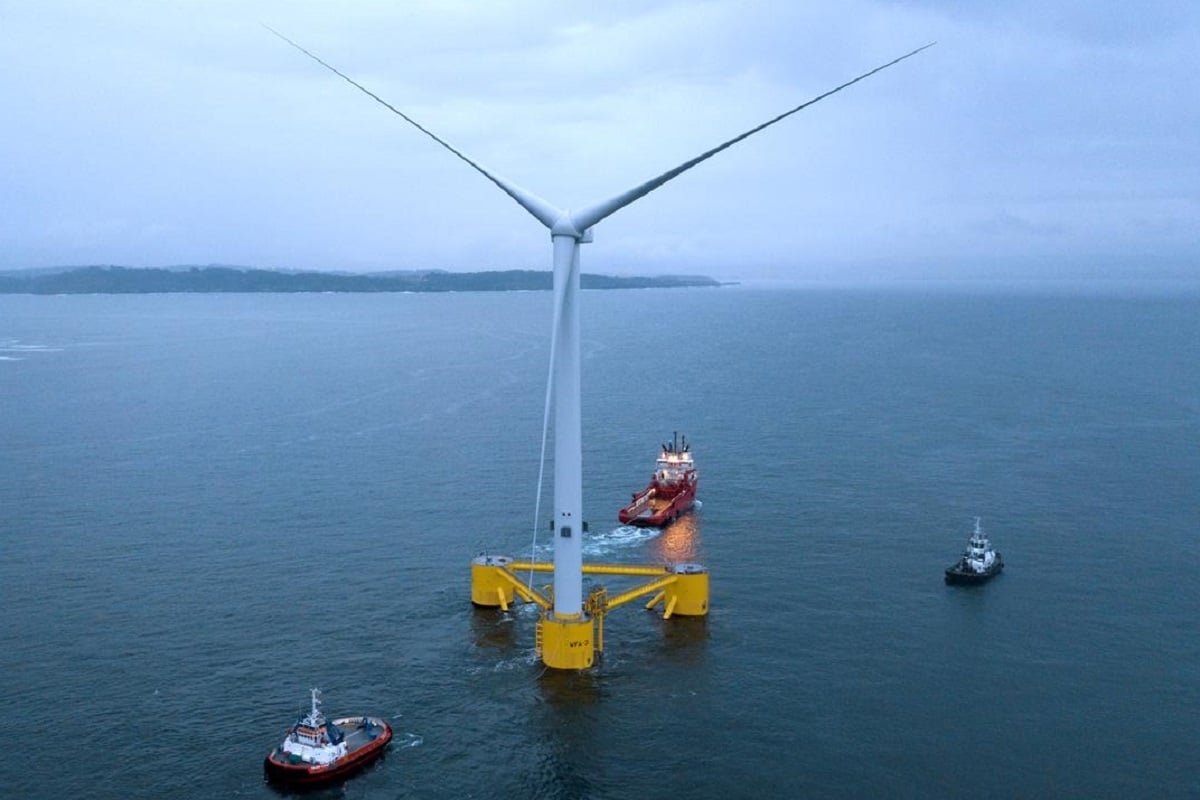
Environmental studies conducted by Ocean Winds – the majority shareholder of Portugal’s first floating wind farm – have concluded that, in five years of operation, the turbines installed off the coast of Viana do Castelo are having a “reserve effect” on biodiversity, with 270 species identified.
According to a report released by Ocean Winds, “fishing landings in Viana do Castelo have not decreased since the offshore wind farm began operations” – something that was predicted, much to the concern of local fishing fleets.
Studies carried out describe “approximately 270 species coexisting successfully with the project”, with “seven exotic species recorded, four of flora and three of fauna”.
“A total of 33 different bird species were observed, with 17 recorded during the initial studies and 31 during the operational studies. Five species of marine mammals were sighted, with the common dolphin being the most frequently observed, but also killer whales and minke whales. In addition to these mammals, a basking shark was also observed”, says the report.
The abundance of phytoplankton, octopus, common dolphins, fish with higher biomass, species sensitive to electromagnetic fields and birds was observed in terms of monitoring points.
In short, the report claims that “the WindFloat Atlantic project appears to function as a shelter and feeding area, mainly for fish and octopuses. Exotic species were detected clinging to the walls of the submerged sections of the platforms. These are part of the benthic communities that normally grow on solid substrates, including mussels, starfish, algae and many other animals and marine life.”
On the face of it, this is hugely exciting (given the concerns of fishing fleets). But it also goes against what has been said by fishing associations, namely VianaPesca, which complained two years ago that fish had “simply disappeared” from around a 1 mile radius of the area.
Ocean Winds’ studies concede that “common bird species, such as gannets and large gulls, face the risk of collision with wind turbines,” but that this risk “does not apply to the few endangered species in the surrounding area, as they fly too low and are therefore never at risk of flying into the turbine blades.”
The company notes that “in addition to the Environmental Impact Assessment (EIA) developed for WindFloat Atlantic in its development phase, several mandatory environmental studies required by its licence have been carried out”.
“These include monitoring programmes with several campaigns over several years before construction (2018), during construction (2019 and 2020) and during the operational period (since 2020),” the document adds.
The programmes “include archaeology, socio-economics, water quality, marine mammals, and the impact of anthropogenic noise on these, birds, bats, and marine life colonising the walls of the submerged platforms, without excluding those of the National Electricity Grid (REN) export cable and E-redes distribution”.
“In addition to these, Ocean Winds is conducting ongoing studies to develop an integrated biodiversity analysis within the offshore wind farm and on descriptions related to support for fishing activities.”
This study began in 2023 and is nearing the end of its second year. It “includes an analysis of all mandatory studies carried out to date, as well as additional campaigns focused on better understanding marine life, fish, invertebrates, and plankton”.
WindFloat was connected to the electricity grid in December 2019 and reached full commercial operation in September 2020.
By March 2025, the project had recorded a total cumulative production of 345 Gigawatt hours (GWh), supplying electricity annually to around 25,000 homes in Viana do Castelo, while avoiding more than 33,000 tonnes of carbon dioxide (CO₂) emissions.
Source material: LUSA