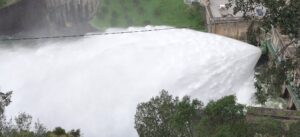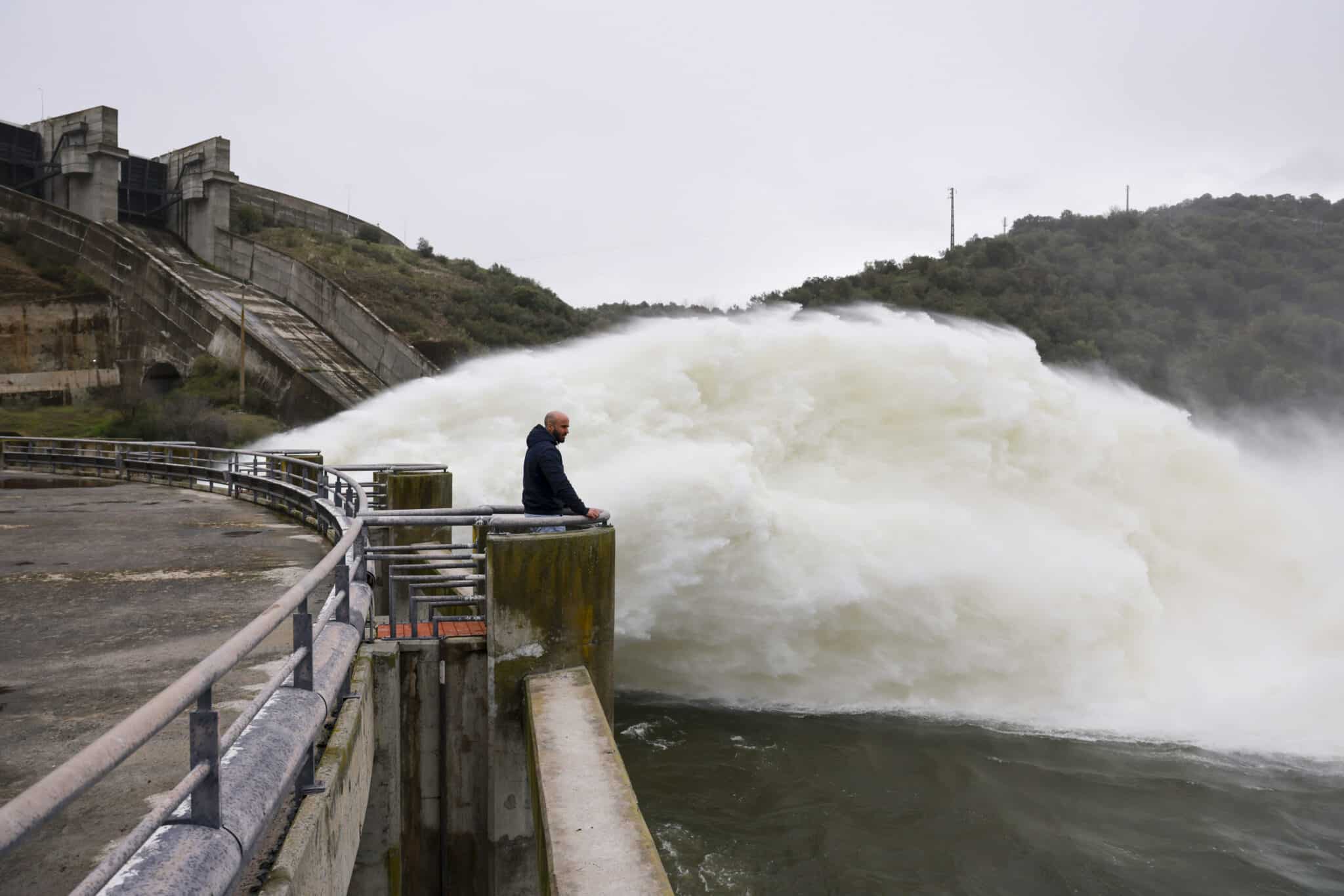
The Alqueva Dam has resumed releasing water today due to the “persistence of high inflow rates” caused by heavy rains.
Discharges began last week, as they have been taking place in a number of dams around the country.
In a statement, the Alqueva Development and Infrastructure Company (EDIA) indicates that the dam “has been releasing an initial discharge flow of 600 cubic meters per second (m3/s), which, added to the turbine flow (800 m3/s), makes a total flow released of 1,400 m3/s downstream”.
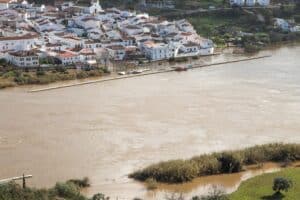
The water from flows to the Pedrógão Dam, which has been discharging into the Guadiana River since the January 21.
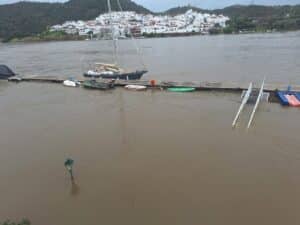
Given the risk of flooding, EDIA has recommended that residents adopt “precautionary behaviors in potentially affected areas” and requested “the collaboration of all entities and riverside communities in preventing risky situations.”
“EDIA is constantly monitoring the evolving situation, making any necessary operational adjustments and ensuring continuous coordination with the relevant authorities,” says the statement, pointing out that “controlled flow management has reduced the risk of downstream flooding, protecting populations and property along the Guadiana River.”
“This episode demonstrates the importance of the Alqueva Dam as an essential structure, also for controlling high flows and ensuring greater safety in the face of extreme weather events,” adds the text.
Controlled discharges at Alqueva began last week through the opening of the mid-bottom spillways, in response to the fact that the reservoir was near its full storage level.
The last controlled discharge operation at this dam, located between Portel, in the Évora district, and Moura, in the Beja district, had been carried out in 2013, also to manage the reservoir’s water volume, which was approaching its maximum storage capacity (this has happened twice before).
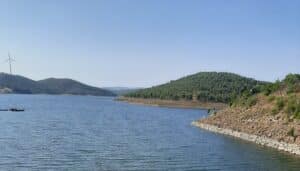
The maximum level of the Alqueva reservoir is 152 meters, which corresponds to a total storage capacity of 4,150 cubic hectometers of water (a hectometer being a million cubic metres).
Source: LUSA