With anti-oil groups in the Algarve working overtime to try and halt drilling poised to start off the coast of Aljezur in the west Algarve, a population ‘up north’ has been portrayed as looking to the arrival of oil prospectors, saying perhaps the influx of heavy machinery and rigs will “stimulate the local economy”.
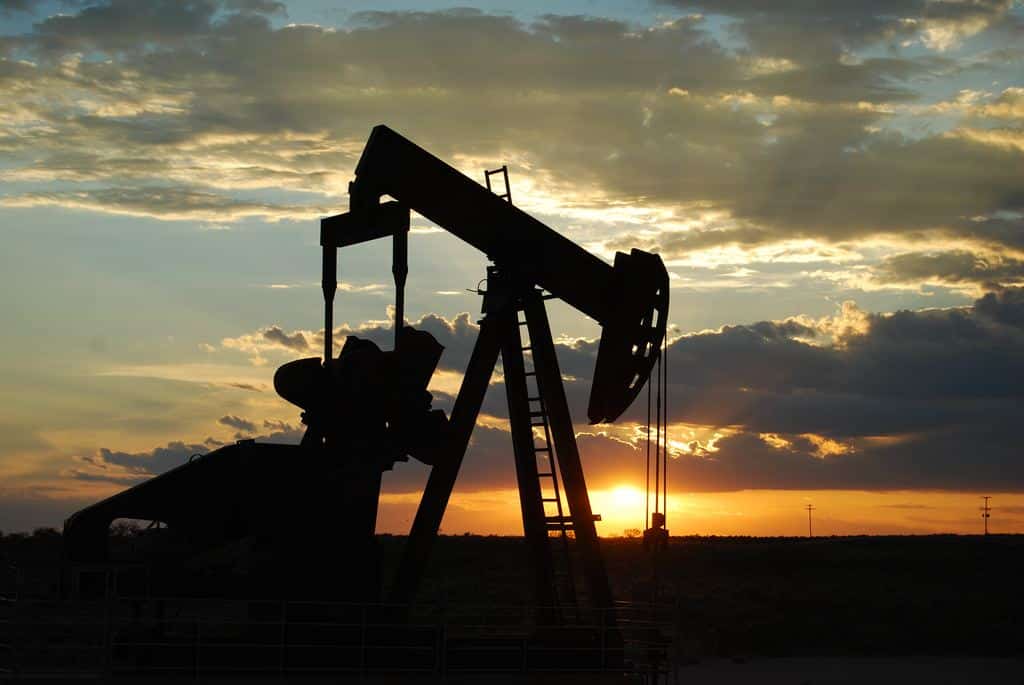
This will be the third time an oil company has tried to get at massive reserves of oil and natural gas, believed to lie 3,200 metres below the soil of the inland borough of Alcobaça.
Carrying a centre-page spread on this latest project led by Australis Oil and Gas, tabloid Correio da Manhã portrays an inland community dying on its feet, looking forwards to a potential new era of business activity.
None of the concerns of environmentalists appear to have put any doubts in locals’ minds.
“We need something to liven the place up”, said an employee at pastelaria A Padeirinha in historic Aljubarrota – the site of the great battle in 1385 when Portugal supported by English allies defeated the King of Castile, backed by Italians and French.
Drilling for oil and gas will be “good” for the area, she insisted, as things have been “going downhill for a long time. Aljubarrota is stuck, there are no tourists. Sometimes excursion buses come through, but they don’t stop”.
Others interviewed claim to see the arrival of drilling teams as a sign that property and land prices could increase. Indeed the president of the parish council told the paper: “We have to wait to hear the complete project to know exactly which area they mean to drill in. We want them here, and we hope there is lots of oil and lots of natural gas. Bring on the drilling!”
CM carries a half-page diagram of the rig set-up and timeline. The prospection area will take up the equivalent of 7.5 football fields – and the well will reach a depth of 3,200 metres where reserves have been dated back to the Jurassic and Triassic periods (over 250 million years ago).
Says the paper, the ‘target’ is the so-called Dagorda Formation which former concession holders Mohave Oil and Gas believed held hydrocarbon reserves that “could run the country for 20 years with a value twice that of Portugal’s GDP”.
The trouble with this information is that the terms extended to current concession holders involve very low royalties (click here) and any oil or gas extracted will not be used to power this country unless Portugal buys it at the market price.
Right now, public consultation on the need for an environmental impact study before drilling runs for another month (click here) with CM saying that so far only nine people logged their ‘contributions’ (these could be positive or negative opinions).
Once this period of public consultation has closed, State environment agency APA will decide whether Australis can go ahead without the requirement for an environmental impact study.
Exploration will go forwards in various phases and involve cranes, bulldozers, JCB excavators, compaction cylinders and “many trucks and articulated trucks”, says CM.
Finally, the reason given for the failure of the first two attempts to drill in the area is the “characteristics of the land: the porous rock means that gas has not concentrated in a single chamber, requiring multiple holes and the relieving of pressure so that the material can rise”.
Again, it is an odd way of describing the system otherwise known as ‘hydraulic fracturing’ or ‘fracking’ and which has been associated with increased seismic activity.
Expresso pre-empting CM’s feature on the project adds that “seismic studies” for the concession taking in the regions of Batalha and Pombal “have been done”.
Australis hopes to start work in 2019 and have completed its drilling within “two to three years”.
The contract signed in 2007 and giving the company an eight year drilling window involves a wind-down phase where “recovery of the site” is a prerequisite.
natasha.donn@algarveresident.com