André Gomes says the caves are now safer for everyone
Almost one year after tightening access to the Algarve’s famous Benagil sea caves, the region’s tourism boss says the changes have made the area safer and more organised for everyone.
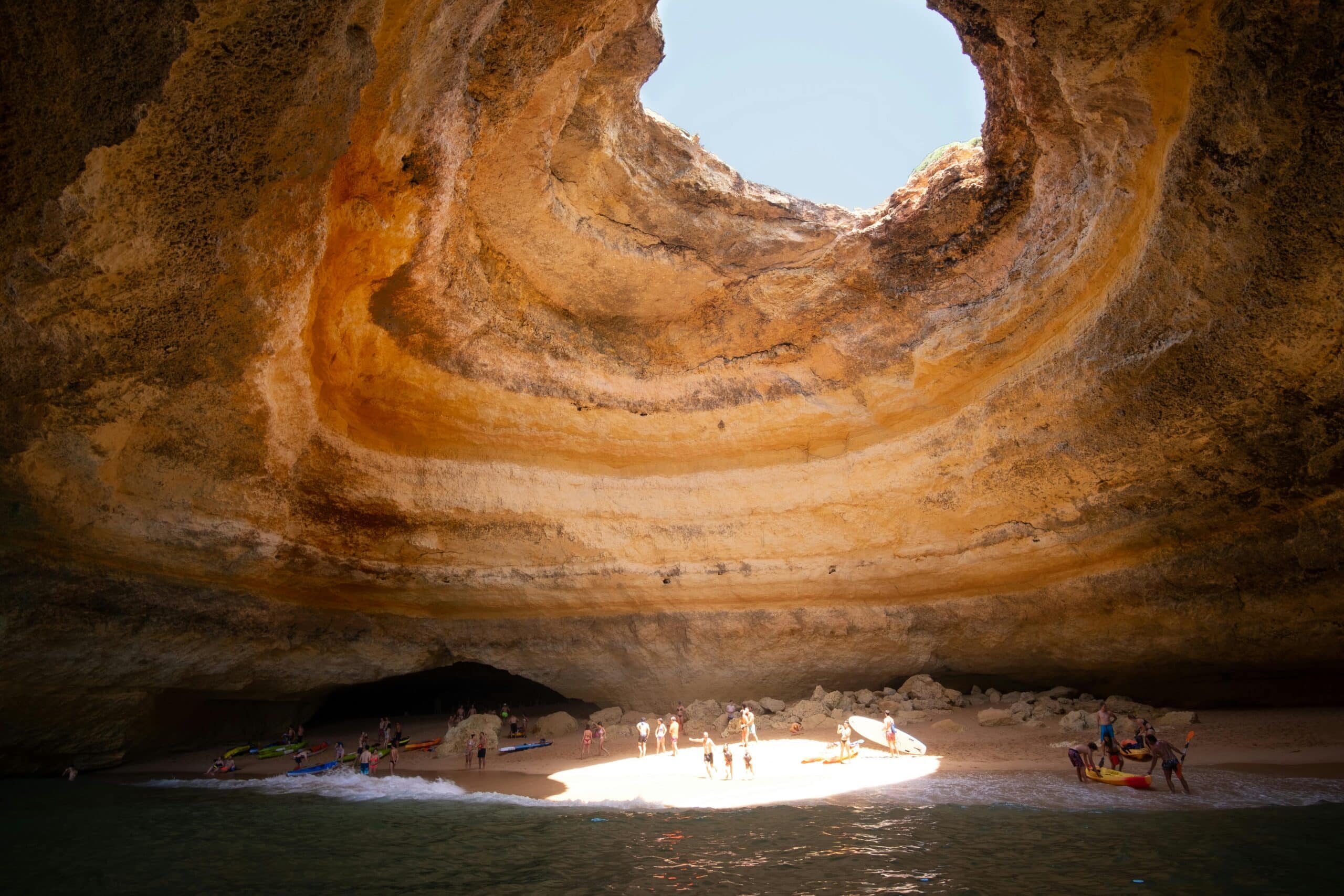
Already a popular attraction, crowds of holidaymakers started to flock to Benagil in larger numbers every summer when the caves went viral in the early 2010s, featuring frequently in international lists of the top places to visit in Portugal.
This booming international attention was not all positive, however, as Benagil would become overcrowded every summer, with numerous incidents from tourists becoming stranded inside the cave after swimming there on their own to accidents inside the grotto.
To tackle this overcrowding, new rules were introduced in August 2024 that prohibited disembarking inside the Benagil grotto, accessing the caves by swimming or with buoyancy aids, or hiring kayaks without a guide in the area of the caves. The crackdown also featured limits on the number of boats and kayaks that may be inside the cave at any one time, maximum times for visits and a ratio of one kayak guide for every six kayaks with visitors for kayak trips in the area. Fines were also implemented, which in the most serious cases can go to €216,000, for tourist boat operators who do not comply with the rules set out in the notice.
André Gomes, president of the Algarve tourism board (RTA), has hailed the success of the new rules, saying they have made visiting the caves a much less chaotic and dangerous experience.
“We no longer have incidents of too many boats inside, or of boats crisscrossing with kayaks and swimmers,” Gomes told Lusa news agency after a meeting in Lagoa last week to assess the new rules.
The latest meeting brought together tourism officials, environmental regulators, and the Portimão port captain to review how the rules worked during their first summer in action. The consensus: they’re here to stay, with only a few small adjustments planned for 2025, such as increasing the limit of boats that can be inside the grotto at once, and a reduction in the fines charged to individuals.
This successful implementation of the new rules could serve as a model for other parts of the Algarve coastline, Gomes added. “It’s natural and desirable that this approach be extended more broadly to maritime tourism along the coast.”
More than just a win for safety, the tourism chief sees the initiative as proof that collaboration within the tourism sector can help protect the Algarve’s natural resources while ensuring that the tourism industry continues to grow.