In many ways, the bringing forwards of the draft State Budget for 2026 has worked in the government’s favour: it has succeeded in wiping the returned Spinumviva furore off news bulletins; it looks essentially uncontentious (ie likely to be approved), and it will bring some smiles to the faces of the elderly (an important, ever-increasing pool of potential voters).
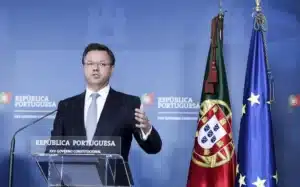
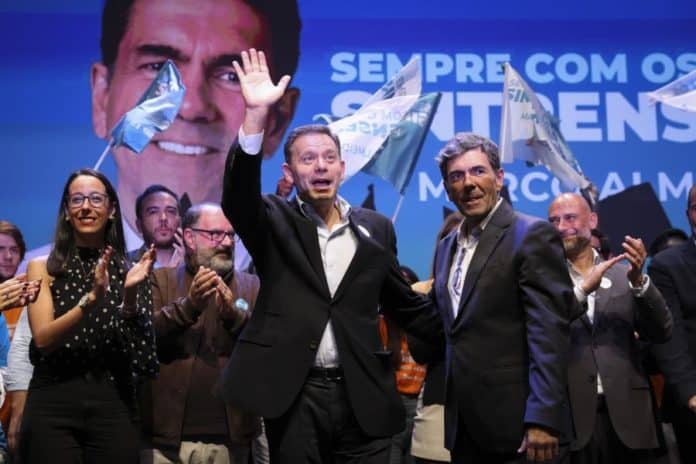
Campaigning for the municipal elections on Sunday in Sintra yesterday, the PM described the budget as “an enormous effort towards social justice”, while maintaining “a balanced budget exercise”.
“We have once again fulfilled our commitment to lower taxes on labour income, on personal income tax, for everyone, but particularly for the middle class,” he said.
“The budget includes an increase in pensions for everyone, in line with the growth of the economy and the inflation rate, and it also includes a further increase in the Solidarity Supplement for the Elderly to €670,” – when under PS Socialists, the figure was set at €550.
“It’s a huge effort, it’s an effort for social justice,” he said, adding that he is hoping next year, as in the last two years, the government will be in a position to give another ‘extraordinary supplement to pensions’ (of up to €1,567).
Lusa has given a précis of the budget:
Economy to grow by 2.3% in 2026 – the government expects the economy to grow by 2% this year and 2.3% in 2026. This is a downward revision of previous estimates. In the 2025 Budget, the government had forecast growth of 2.1% for this year, which was revised to 2.4% in the report submitted to Brussels last April.
Inflation of 2.4% in 2025; 2.1% in 2026
Surplus of 0.3% of GDP in 2025; 0.1% in 2026
Public debt falls to 90.2% in 2025; 87.8% in 2026 (this represents a 3.3 percentage point (p.p.) decline in the debt ratio this year and a 2.4 p.p. decline in 2026.)
Unemployment of 6% in 2026 – the unemployment rate will be 6.1% in 2025 and 6% in 2026, according to the government’s forecasts.
Minimum wage of €920
IRS to be lowered from the 2nd to the 5th bracket – Personal income tax (IRS) will fall again next year, with a 0.3 pp reduction in the rates for the 2nd to 5th brackets. The rate for the first bracket will remain unchanged.
Tax revenue up 4.4% – tax revenue is expected to increase by 4.4% in 2026, to €67.065 billion, driven by both direct taxes (+3.7%) and indirect taxes (+4.9%).
Internal security to increase by 11.3% to €3.16 billion – with the largest share going to police salaries (see story to come).
Defence spending to increase by 23.2% compared to 2025
ISP revenue rises 4.6% to €4.25 billion – the government estimates that revenue from the tax on oil and energy products (ISP) will rise by €187 million to €4.254 billion, albeit it is not, for the moment, increasing the tax, as encouraged by the European Commission. (“We will look for moments when prices are reduced, so that we can reverse these (ISP) discounts”, said finance minister Joquim Miranda Sarmento yesterday)
Social benefits increase, RSI and Childcare Guarantee left out – government plans to spend €26.35 billion on social benefits, with increases for almost all of them, except the Social Insertion Income and the Childhood Guarantee, both for cases of extreme poverty.
Municipalities receive €3.22 billion from part of the taxes collected by the State – municipalities will receive €3.227 billion from the Financial Equilibrium Fund, representing their share of taxes collected by the state.
Azores to receive €341.1 million from the Autonomous Regions Finance Law – an increase of €21.9 million from 2025.
Madeira to receive €294.3 million from the Autonomous Regions Finance Act – an increase of €14.5 million from 2025.
As Lusa reiterates, it is widely accepted that the forecast of budget surpluses is very low, and not open to proposals in the next phase of discussions in parliament that could shrink revenue, or increase expenditure.
“If the country doesn’t want to go into deficit again, the margin is close to zero”, Miranda Sarmento has stressed.
Parties of the left, particularly PCP communists, and the Left Bloc (both parties with comparatively few MPs) have decried the draft budget as bringing further taxation injustices, and ‘helping the banks’.
Iniciativa Liberal has called it “unambitious”; CHEGA has not said anything inflammatory, while PS Socialists have “opened the door towards approving the document”, says Lusa.
In other words, the consensus seems to be that next year’s State Budget will pass without great drama.
Source material: LUSA