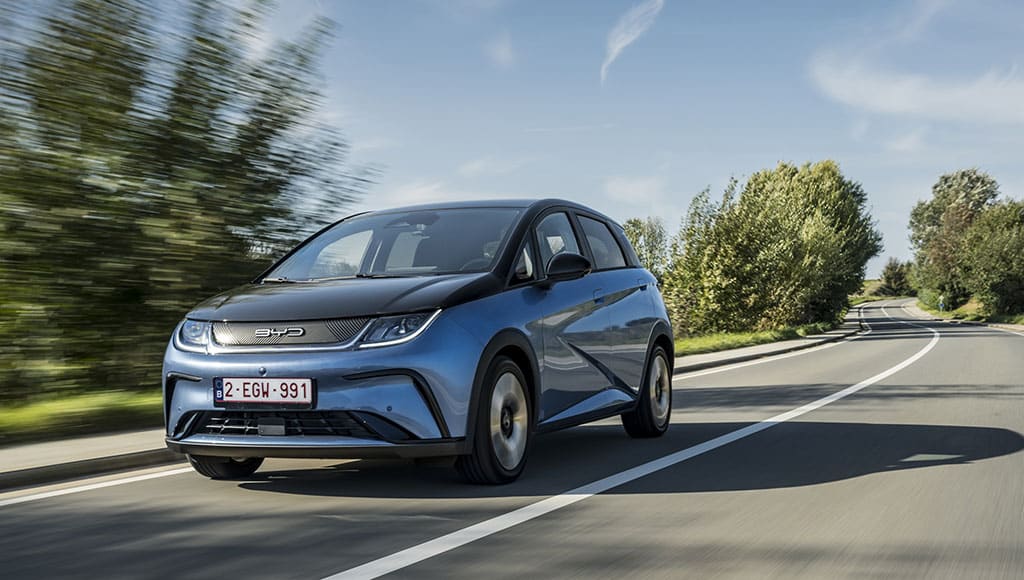
In the world of electric cars, it’s hard to have two more disparate offers than (last time around in these pages) the Porsche Taycan Cross Turismo and this week’s BYD Dolphin. It’s not the whole EV spectrum in two cars, but they paint an interesting picture when put together.
The Taycan I drove, like I wrote here two weeks ago, was the Taycan 4 Cross Turismo, with prices starting at €121,000. However, the most powerful Taycan, the Turbo GT, is a €253,000 machine. The BYD Dolphin costs €35,000.
Why – you may be asking – am I even talking about both these cars in the same text? Well, because with electric cars, there is this very peculiar thing that makes a €35,000 car easily emulate a €250,000 one – and that is at the same time wonderful and quite scary. Allow me to explain.
At normal speeds, something like 50-60km/h around town, and on most people’s daily commute, all electric cars feel quite the same from behind the wheel. That is a consequence of electric motoring and, no matter how hard the genius minds of the brand engineers work to come up with different calibrations for the chassis, steering or brakes, the truth is that, when all is said and done, the electric car does not have as strong a ‘personality’ as one with an internal combustion engine.
Twenty years ago, if you drove a BMW 5 Series and a Mercedes E Class with a comparable engine blindfolded, pass the absurdity of the situation, of course, you would undoubtedly know in the first 100 meters which car you were driving. That was because constructors instilled their cars with certain traits that made them easily identifiable – and that’s why some always preferred a BMW, others a Mercedes. Building a brand was as much a mechanical job as a commercial one.
I once found myself alone with a high-ranked figure from one of the biggest names in the industry and asked him directly: “How do you make your electric cars feel different from everyone else’s?” His answer was pretty straightforward: “We don’t. We can’t. Neither can anybody. That is the biggest challenge we all face, not only amongst ourselves in the European and Japanese market but, even more worryingly maybe, against all the new brands coming in from China as well.”
And that is why I am talking about the Porsche Taycan in a text about a €35,000 small Chinese EV. Because, around town, when you are just using the car as a tool, the difference between them is shockingly small. Yes, of course there are differences: the Porsche is much higher quality, more comfortable, roomier, better built, much faster and the image it projects dwarfs the BYD, but as a thing to take four people from A to B, there is no way these two cars feel €100,000 or €200,000 apart like, say, a Porsche Panamera with a combustion engine feels from a Fiat Panda also with one.
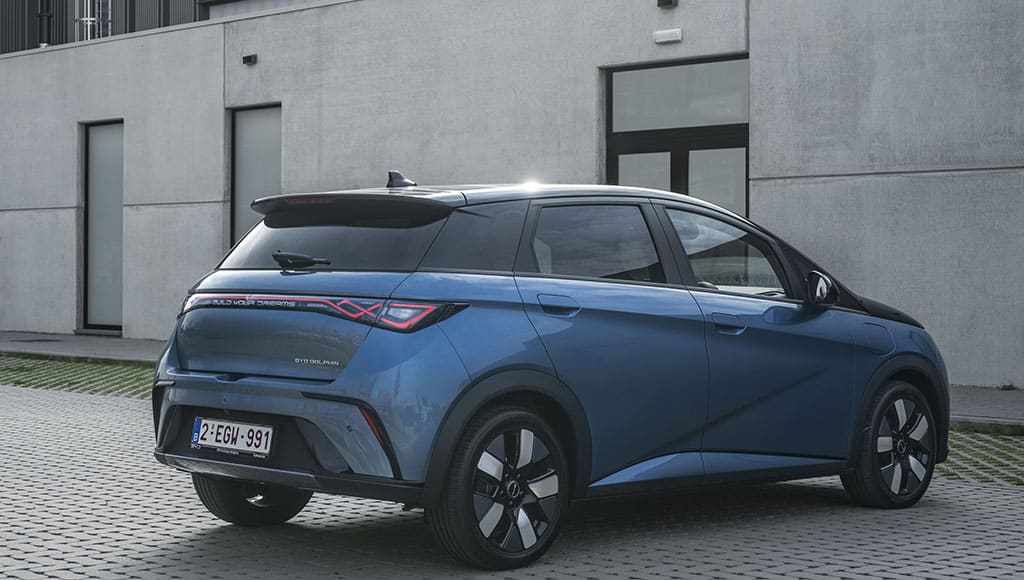
This is not good news in my book, as less differentiation between brands and models means they all become less interesting. If a customer buys a car because of a big central screen and not because of how it behaves dynamically around a corner, then he will have no emotional connection to the car, no love for it – the car will become but a tool, much like a toaster or a fridge.
For newcomers though, this is, on the other hand, excellent news, as they can compete head-to-head with the legacy constructors. And there is no bigger newcomer than BYD. Already the biggest selling name worldwide in electric cars, surpassing Tesla early in the year, it is also topping the charts in Portugal with a range of BEV and PHEV vehicles that bring a new kind of unpassionate customer what they want: practicality, range, super-easy connectivity and ease of use, reliability and value.
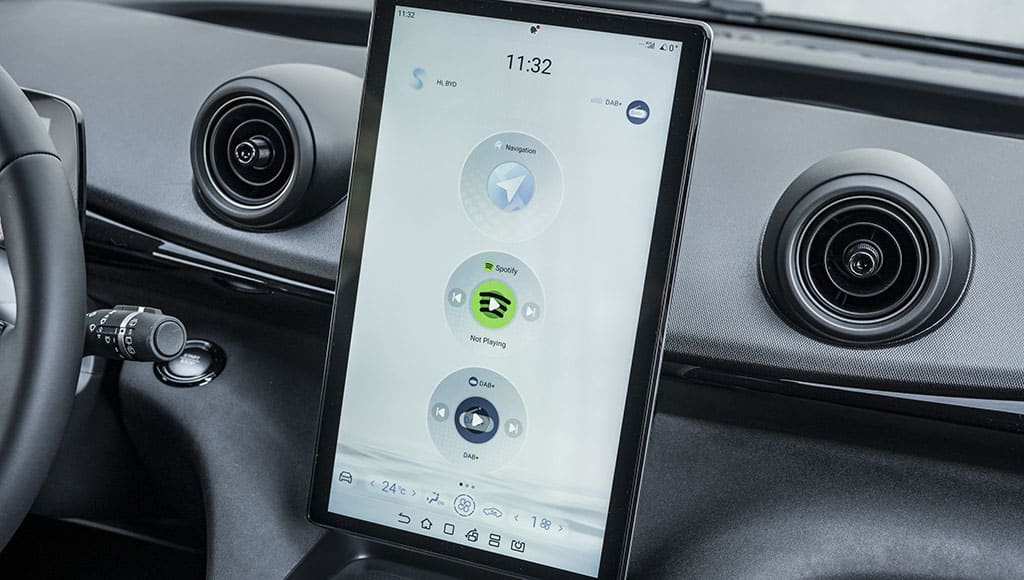
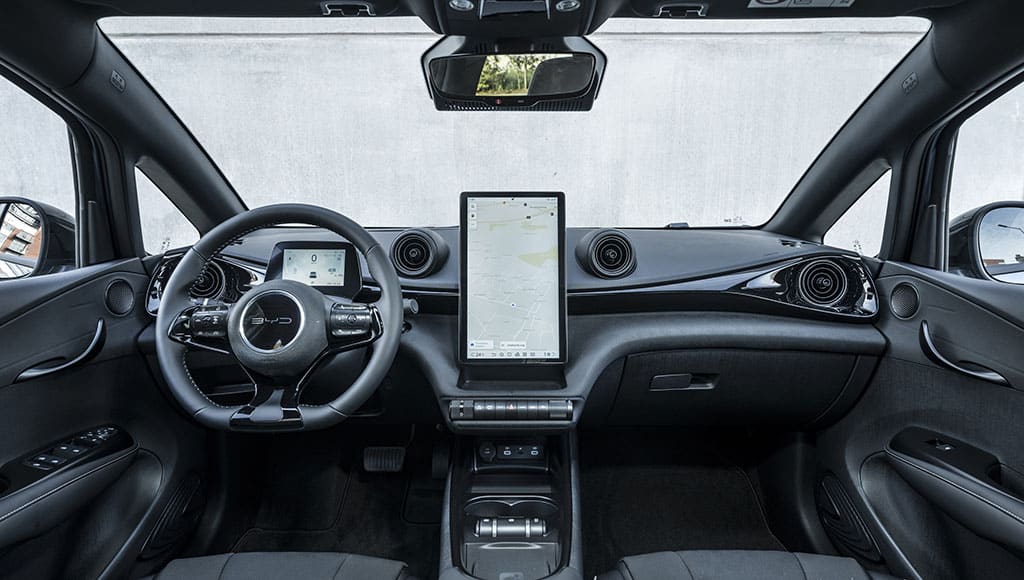
I drove the Dolphin around for almost a week and it was faultless. Comfortable, practical, roomy for such a small car and, at 565km of indicated urban range, absolutely fit for purpose. I must also confess to this: it was the easiest infotainment system I have ever tested when it comes to connecting different phones to the car and start using them – very likely the single most important attribute young buyers are looking for in a small city car these days.
There is not much else to say. It delivers on all its promises with ease and makes you wonder why anyone would spend any more money on an electric city runabout. If you are looking for such a car, you try it, you buy it, that was the impression I got from it.
I am sad to see the European industry in such disarray, but the evidence is clear: Chinese cars make sense and they make sense at much lower prices than ours – end of conversation.
Motoring Trade | Business, Services, Marketplace – click here