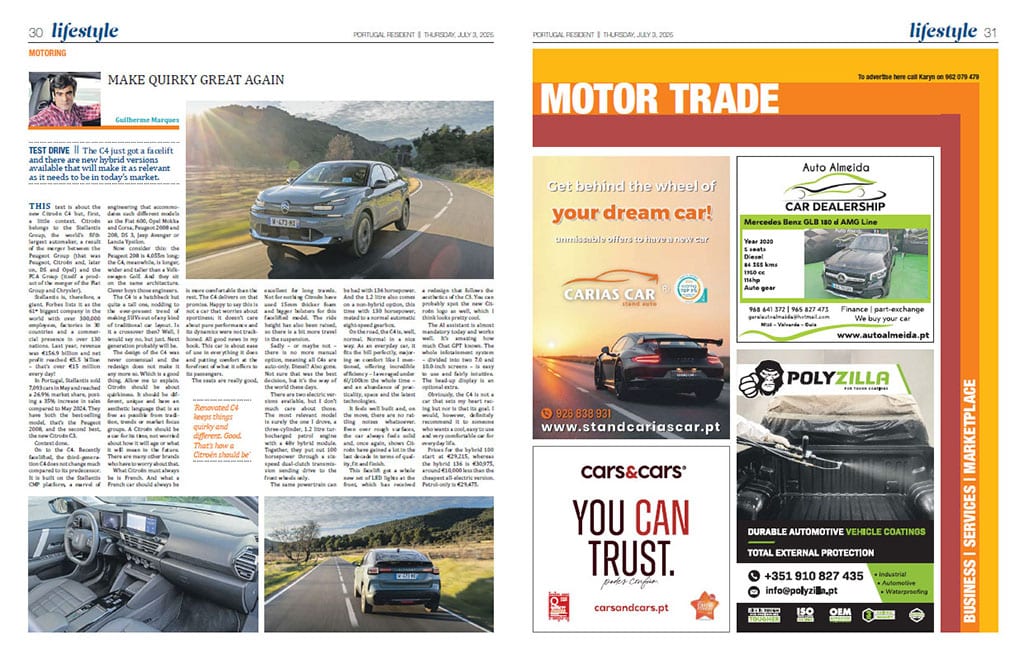
The C4 just got a facelift and there are new hybrid versions available that will make it as relevant as it needs to be in today’s market.
This text is about the new Citroën C4 but, first, a little context. Citroën belongs to the Stellantis Group, the world’s fifth largest automaker, a result of the merger between the Peugeot Group (that was Peugeot, Citroën and, later on, DS and Opel) and the FCA Group (itself a product of the merger of the Fiat Group and Chrysler).
Stellantis is, therefore, a giant. Forbes lists it as the 61st biggest company in the world with over 300,000 employees, factories in 30 countries and a commercial presence in over 130 nations. Last year, revenue was €156.9 billion and net profit reached €5.5 billion – that’s over €15 million every day!
In Portugal, Stellantis sold 7,093 cars in May and reached a 26.9% market share, posting a 35% increase in sales compared to May 2024. They have both the best-selling model, that’s the Peugeot 2008, and the second best, the new Citroën C3.
Context done.
On to the C4. Recently facelifted, the third-generation C4 does not change much compared to its predecessor. It is built on the Stellantis CMP platform, a marvel of engineering that accommodates such different models as the Fiat 600, Opel Mokka and Corsa, Peugeot 2008 and 208, DS 3, Jeep Avenger or Lancia Ypsilon.
Now consider this: the Peugeot 208 is 4,055m long; the C4, meanwhile, is longer, wider and taller than a Volkswagen Golf. And they sit on the same architecture. Clever boys those engineers.
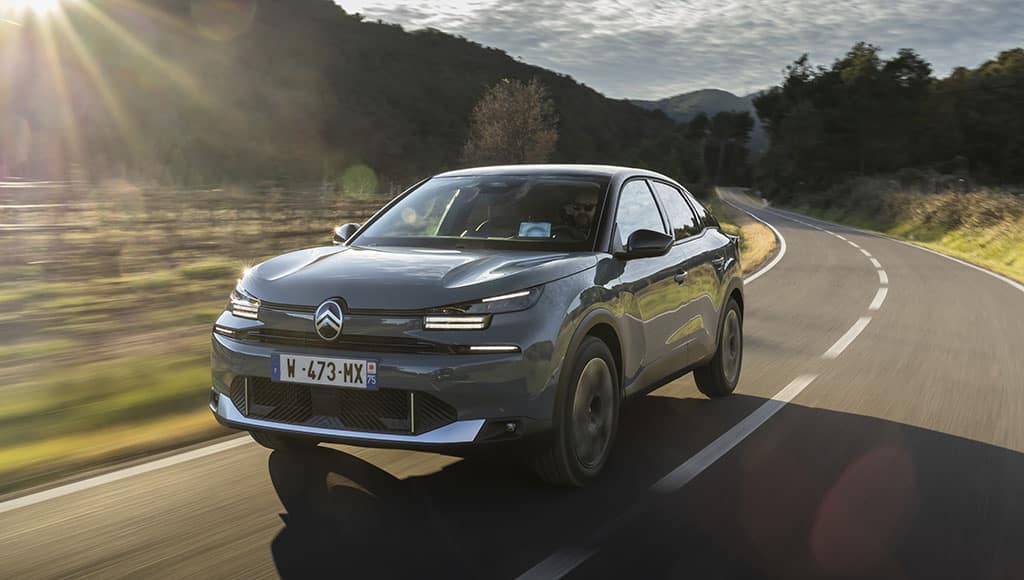
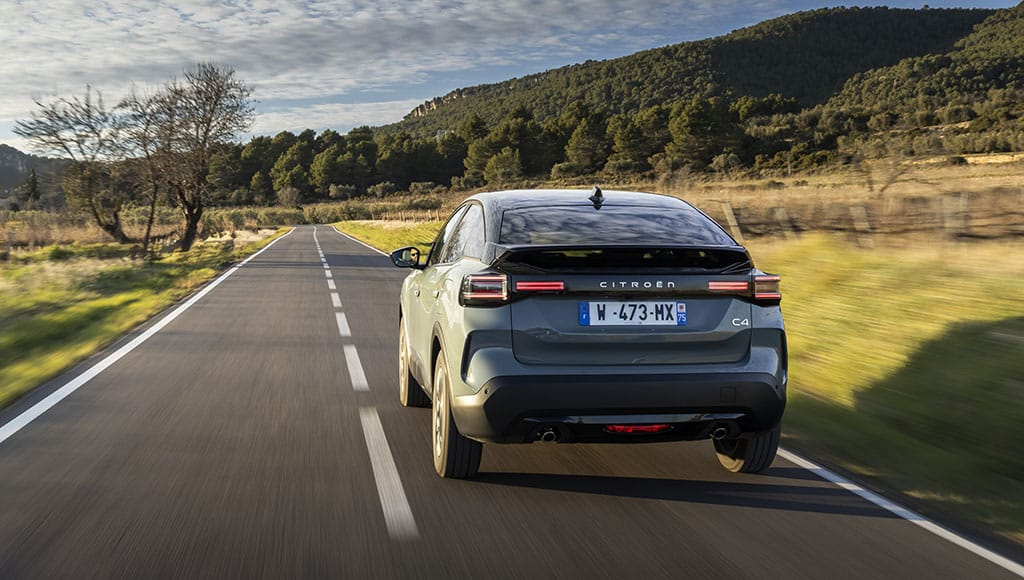
The C4 is a hatchback but quite a tall one, nodding to the ever-present trend of making SUVs out of any kind of traditional car layout. Is it a crossover then? Well, I would say no, but just. Next generation probably will be.
The design of the C4 was never consensual and the redesign does not make it any more so. Which is a good thing. Allow me to explain. Citroën should be about quirkiness. It should be different, unique and have an aesthetic language that is as free as possible from tradition, trends or market focus groups. A Citroën should be a car for its time, not worried about how it will age or what it will mean in the future. There are many other brands who have to worry about that.
What Citroën must always be is French. And what a French car should always be is more comfortable than the rest. The C4 delivers on that promise. Happy to say this is not a car that worries about sportiness; it doesn’t care about pure performance and its dynamics were not track-honed. All good news in my book. This car is about ease of use in everything it does and putting comfort at the forefront of what it offers to its passengers.
The seats are really good, excellent for long travels. Not for nothing Citroën have used 15mm thicker foam and bigger bolsters for this facelifted model. The ride height has also been raised, so there is a bit more travel in the suspension.
Sadly – or maybe not – there is no more manual option, meaning all C4s are auto-only. Diesel? Also gone. Not sure that was the best decision, but it’s the way of the world these days.
There are two electric versions available, but I don’t much care about those. The most relevant model is surely the one I drove, a three-cylinder, 1.2 litre turbocharged petrol engine with a 48v hybrid module. Together, they put out 100 horsepower through a six-speed dual-clutch transmission sending drive to the front wheels only.
The same powertrain can be had with 136 horsepower. And the 1.2 litre also comes on a non-hybrid option, this time with 130 horsepower, mated to a normal automatic eight-speed gearbox.
On the road, the C4 is, well, normal. Normal in a nice way. As an everyday car, it fits the bill perfectly, majoring on comfort like I mentioned, offering incredible efficiency – I averaged under 6l/100km the whole time – and an abundance of practicality, space and the latest technologies.
It feels well built and, on the move, there are no rattling noises whatsoever. Even over rough surfaces, the car always feels solid and, once again, shows Citroën have gained a lot in the last decade in terms of quality, fit and finish.
This facelift got a whole new set of LED lights at the front, which has received a redesign that follows the aesthetics of the C3. You can probably spot the new Citroën logo as well, which I think looks pretty cool.
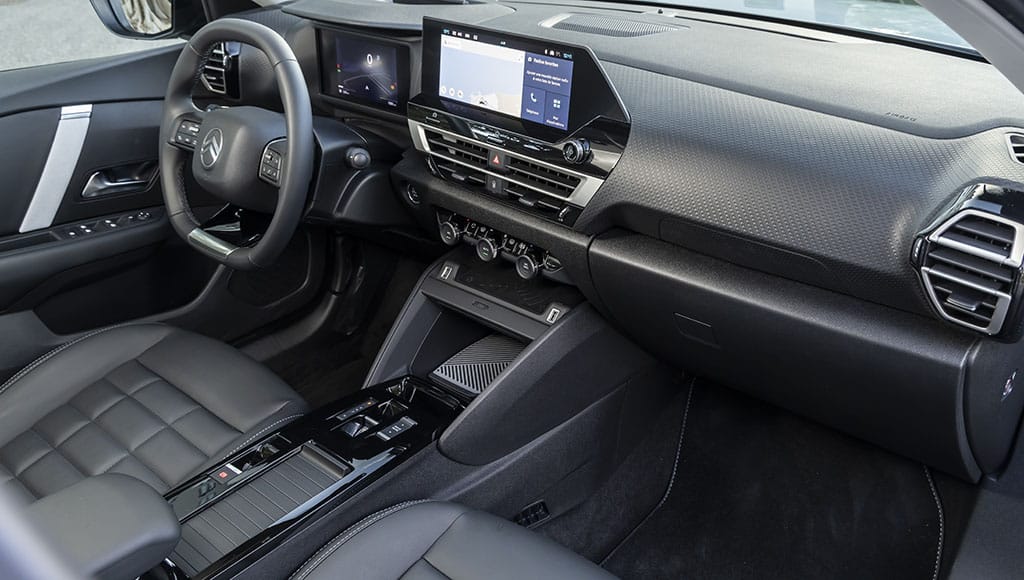
The AI assistant is almost mandatory today and works well. It’s amazing how much Chat GPT knows. The whole infotainment system – divided into two 7.0 and 10.0-inch screens – is easy to use and fairly intuitive. The head-up display is an optional extra.
Obviously, the C4 is not a car that sets my heart racing but nor is that its goal. I would, however, definitely recommend it to someone who wants a cool, easy to use and very comfortable car for everyday life.
Prices for the hybrid 100 start at €29,215, whereas the hybrid 136 is €30,975, around €10,000 less than the cheapest all-electric version. Petrol-only is €29,475.
Motoring Trade | Business, Services, Marketplace – click here