by CHRIS GRAEME
chris.graeme@theresidentgroup.com
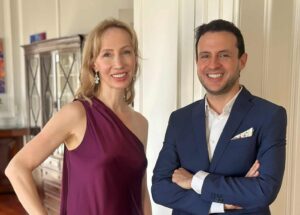
Leonor Beleza is a member of the Council of State and President of the Champalimaud Foundation. Born and raised in Porto, she studied Law and later taught at Lisbon University. Joining the PSD political party in 1974, she became a parliamentary deputy in the Portuguese Parliament in 1983. She served as the Secretary of State for the Presidency of the Council of Ministers and in 1985 spent five years as the Minister of Health during the Cavaco Silva government. Today she is President of the Champalimaud Foundation.
A world-class medical research centre specialising in cancer research and front-line treatment has officially opened in Lisbon.
The Champalimaud Centre for the Unknown will be fully operational from January, combining both research and clinical practice and employing a team of international specialists at its state-of-the-art centre at the mouth of the River Tejo.
Addressing the American Club and Chamber of Commerce, Leonor Beleza, the President of the Champalimaud Foundation, which started with a €500 million bequest, explained how the aim was to “create a hotbed of ideas attracting top researchers, academics and scientific technicians from all over the world”.
The centre’s work, which will focus on cancer and neuroscience research, both at the laboratory and front-line clinical levels, was defined as “scientific study that begins in the laboratory and progresses to the patient’s bedside”.
“We hope that by having it based in Lisbon that we will be able to encourage more research work to be done in Europe rather than just the United States,” she said.
Leonor Beleza said how she had been impressed by a research facility built by Indian architect Charles Correa for the Massachusetts Institute of Technology.
“We felt he was perfect for the project and that the Lisbon location at the mouth of the Tejo would be the ideal setting since it was here that Portugal’s Discoverers had set sail to discover new lands.
“The complex was built in just two years resulting in a delightful collection of buildings allowing free access and circulation between the research and clinical areas and including offices, laboratories, patient areas, gardens, a grand auditorium, an open-air amphitheatre, Darwin’s Cafe and restaurant,” she said.
“One important area we’re proud of is the Chemotherapy Garden where patients can relax in beautiful surroundings after what is often a harrowing and difficult treatment,” she added.
Now it is hoped that clinicians and researchers will embark on a new voyage of discovery in finding better and more effective treatments for one of the most common and devastating illnesses today.
The centre will gradually build up a team of up to 500 researchers from all over the world who will be working alongside 100 doctors handling around 300 patients daily.
The site from which the centre, opened by Portuguese Prime Minister José Sócrates on October 5, will operate was provided by the Portuguese government and built overlooking the River Tejo river with breathtaking panoramic scenes of the surrounding riverscape. The cost of the project was €100 million (UShttp://www.27 million).
The Champalimaud Foundation was created in 2004 at the bequest of the late Portuguese industrialist and entrepreneur Antonio de Sommer Champalimaud.
It was officially incorporated as the Anna de Sommer Champalimaud and Dr. Carlos Montez Champalimaud Foundation in honour of the benefactor’s parents.
“One of the first things we had to do was create a network of contacts in various fields, finding scientists, humanists and thinkers to advise us on how to go about setting up such a project,” explained Lenor Beleza.
One of the first and most important points of contact in the early days had been the then American Ambassador to Lisbon, John Palmer, who helped the Foundation establish contacts in the United States.
Soon the Foundation had such prestigious advisers and supporters such as the former President of India, himself a scientist, A.P.J Abdul Kalam and Professor James Watson who in 1962 was awarded the Nobel Prize for Physiology and Medicine after having co-discovered the DNA double helix and who is also the President of the Centre’s Board of Scientific Directors.
Dr. Leonor Beleza explained how it supports individual research teams working at the cutting edge of bio-medical research and aims to stimulate novel theoretical and practical methodologies by using the experience of both research scientists and medical practitioners.
The Foundation and its new medical research centre aims to maximise the work being done in the fields of cancer research and neuroscience with the objective of making advances in these fields.
The Champalimaud Foundation, which is a private organisation whose research initiatives and funding programmes extend beyond the borders of Portugal, is also trail-blazing the way in vision research in the fight against eye-related illnesses.
Each year it presents the Champalimaud Vision Award, a global initiative for the prevention of blindness launched in association with the World Health Organisation and the International Agency for the Prevention of Blindness.
In 2010 the Award recognised the joint efforts of scientists Dr. Anthony Movoshon and Dr. William Newsome whose research has had an impact on scientific understanding of how the brain reconstructs images so that human beings can perceive the world.