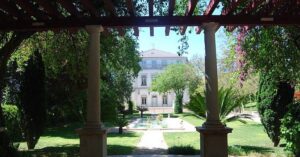
At the quiet end of a residential street in Lisbon’s Chiado neighbourhood, Palacete das Chagas is headquarters to a new non-profit association, Horizonte Musical do Tejo.
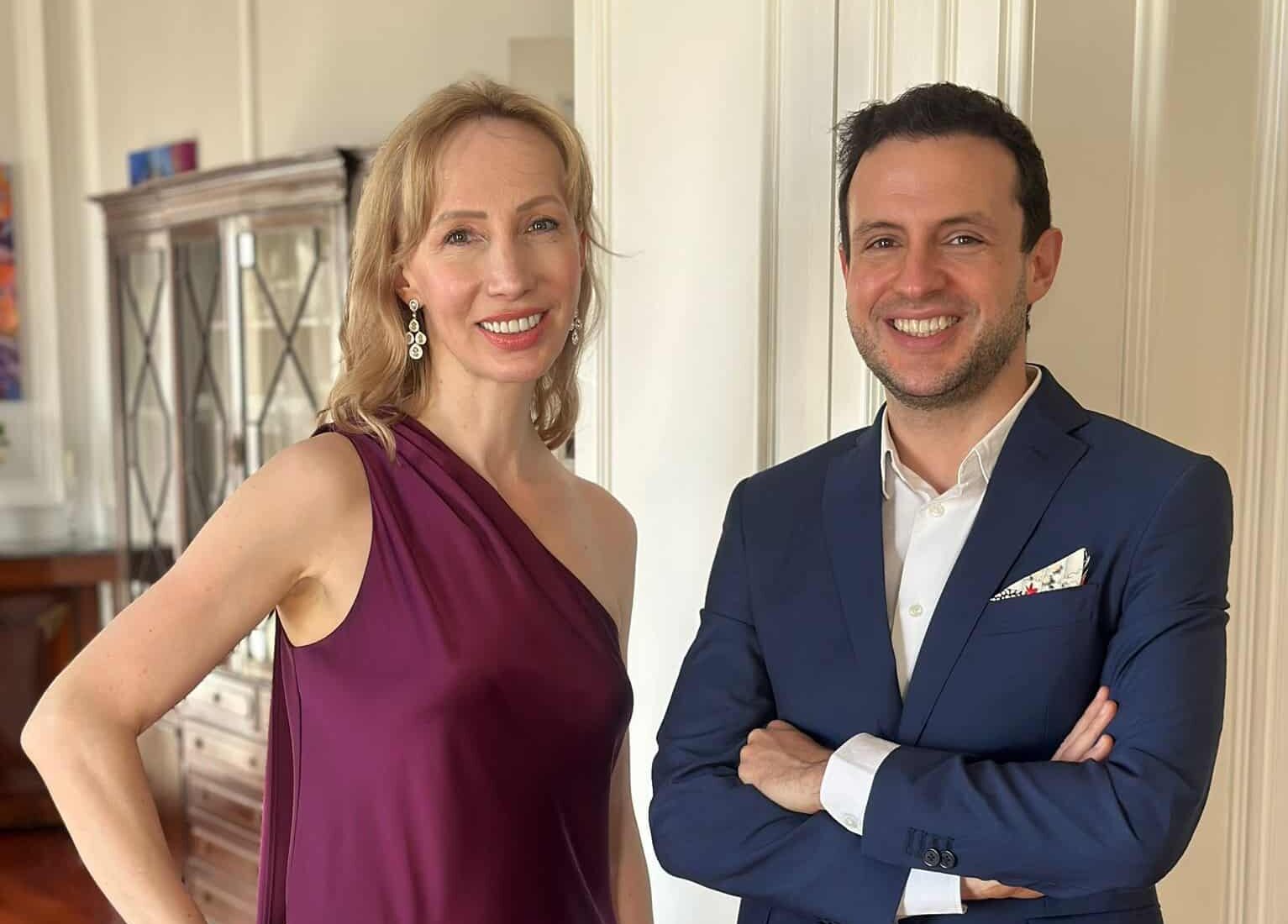
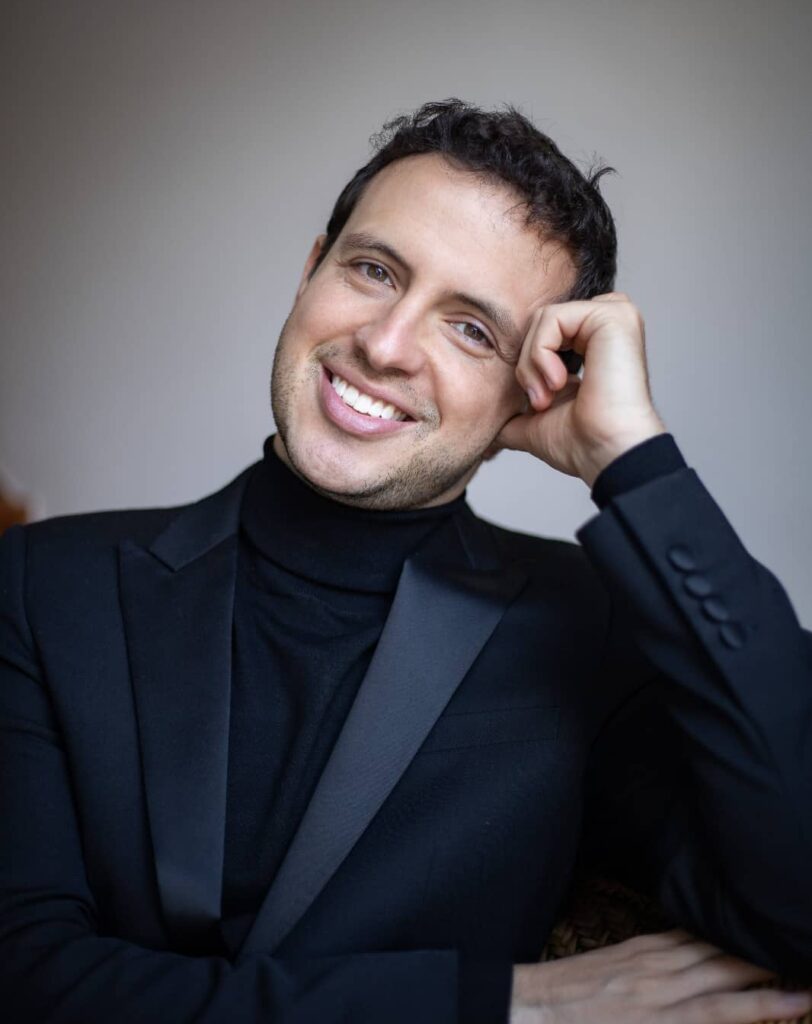
I’m with two of the association’s founders: Jolanta Klarka, Horizonte Musical’s President, and Leonardo Hilsdorf, its Artistic Director, in a room with a dramatic view over the Tagus estuary.
“We aim to expand musical horizons through concerts and recitals of classical music and our community-based social programmes. Everyone is welcome,” introduces Jolanta.
Leonardo adds, “through stimulating people’s curiosity, we would like them to experience a sense of artistic amazement. We want to be disruptors of a global trend where people need to consume things fast and easily, when in fact you can get a lot from slow living. There is high demand for concert music in Lisbon; the Gulbenkian, for instance, is always sold out. We’re also seeing a new social landscape in Lisbon which now includes a public from countries with extensive cultural offerings”.
“As an association, we’re multicultural and inclusive, a group of like-minded people passionate about music and art!” explains Jolanta, “we want to be a cultural lighthouse”.
Two pianists
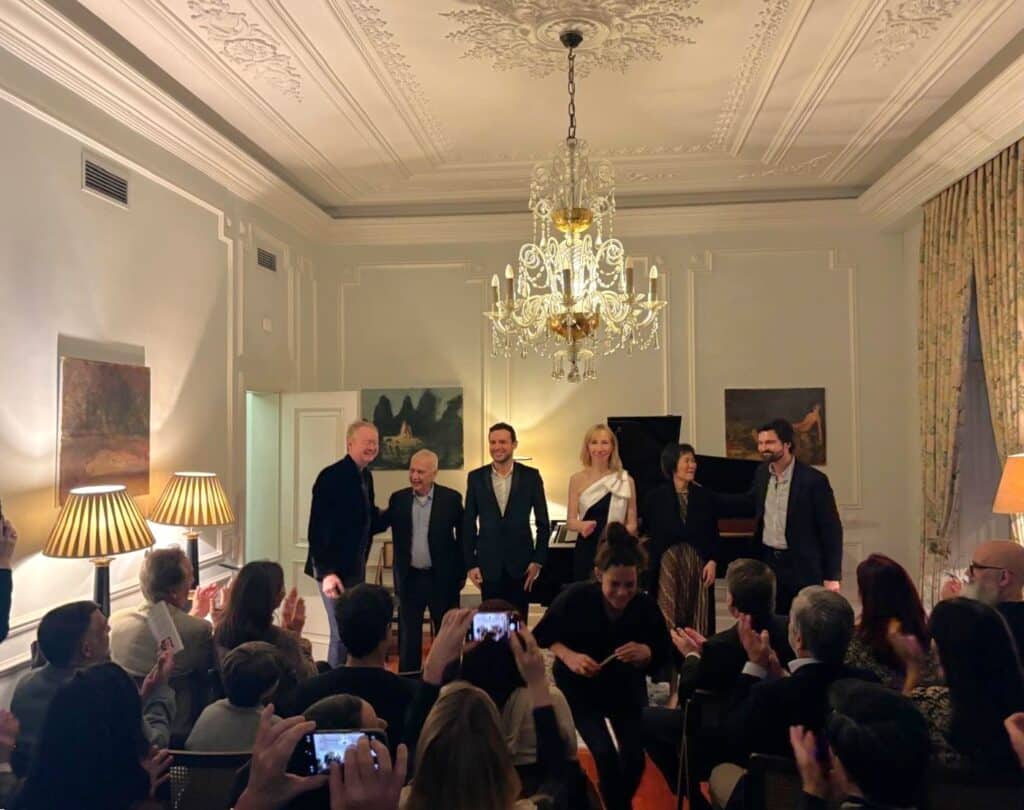
I first met Jolanta and Leonardo at Horizonte Musical’s inaugural concert in January, at which Leonardo gave a dazzling performance of Franz Liszt’s difficult ‘La Campanella’.
Jolanta is frank about her childhood in Latvia: “My parents had no interest in music at all!” Her basic musical education took place at a school for music and the arts, where rigorous studies were funded by the state.
“The challenge is to educate parents on the benefits music can bring to a child’s life. Concert music is, of course, only one form of music which can be beneficial,” Jolanta states.
She is currently undertaking a Master’s in Music Education, at Trinity Laban Conservatoire of Music and Dance, in London, while teaching the piano in Lisbon to children of different ages. She references how children as young as three or four are already able to develop musical ability.
Leonardo, a Brazilian-Italian, studied the piano under the great Portuguese pianist Maria João Pires, “an amazing encounter which really changed everything for me. She said to me ‘Leonardo, you need to get engaged in some social projects…’ And so, I worked in a psychiatric hospital for kids. It was remarkable how they responded to music”. Leonardo has a Phd in Cultural Studies.
The universality of music
Leonardo comments: “I prefer the term ‘concert music’ to ‘classical music’; after all, how do we define ‘classical music’? It can be so many things! Equally, the term ‘classical music’ can sometimes feel distant to people, even off-putting. But I think if you introduce the music you’re performing, then it’s simply about universal human feelings.”
The programme at the inaugural concert included pieces by Rachmaninov and Shostakovich. I ask the two pianists whether, in the current context of Russia’s invasion of Ukraine, they had any hesitation before including works by Russian composers. Jolanta responds, “members of my family were deported to Siberia… but music crosses borders at all times”.
“Rachmaninov had nothing to do with the current regime,” Leonardo affirms.
I’m reminded of Daniel Barenboim’s West-Eastern Divan Orchestra, with its combination of Israeli and Palestinian musicians. Leonardo comments, “in order to play with other people, you have to listen and be open to the needs of the other players”.
In addition to offering a programme of concerts and recitals in Lisbon, Horizonte Musical is launching several community-based educational and social projects.
A piano, children and the elderly
Chagas Church, next to the Palacete, is a no-longer-functioning church where Horizonte Musical is this year offering a season of chamber music. Successful community fundraising for a piano will broaden musical scope – “it’s been incredibly touching to receive so much support,” Jolanta says.
‘Future in a Major Chord’is a project focused on supporting emerging musicians through mentorship and performance opportunities with professionals, to invest in the future of concert music. Leonardo comments: “We need to encourage kids to be open to their feelings and parents are central to this.”
Harmony of Belonging
“Many elderly people who visit the doctor don’t really need a medical appointment, they need a social appointment, social interaction.”
Leonardo and Jolanta believe music can be a source of stimulation and joy to mitigate isolation among Lisbon’s ageing population.Horizonte Musical partners with the charity Santa Casa da Misericórdia which has mapped elderly people living alone in the city and will transport them to concert venues.There’ll be opportunities for active participation, such as singing in a choir. Attendees will be observed by medical doctors, who, before and after the project, will measure its impact on clinical conditions such as depression.
Professionals and amateurs
Performers at Horizonte Musical’s concerts will include talented Portuguese and international amateurs as well as professional musicians.
Leonardo, a professional musician with a full calendar, observes: “It’s a good position to be an ‘amateur’ because you benefit from the power of music, without having to earn a living from it!” He references the competition and demanding travel schedules – it’s not all glamour!
Lisbon residents Andrew Readman and Yuki Konii are two of these pro bono musicians. Both cellists, they met while playing in the orchestra of their English university. “Yuki was the lead cellist, and I was somewhere at the back,” Readman recalls. After high-powered careers, they are now available to give full expression to their passion for music. “The term ‘amateur’ often comes with connotations of ‘not good’, when in fact it only means you’re not getting paid.” Their accomplished playing proves Readman’s point.
In addition to its concerts and social projects, Horizonte Musical is planning a series of exhibitions of the visual arts,as well as an event on April 21, at Lisbon’s Goethe Institut, at which Jolanta and Leonardo will join other musicians to play a programme of German music.