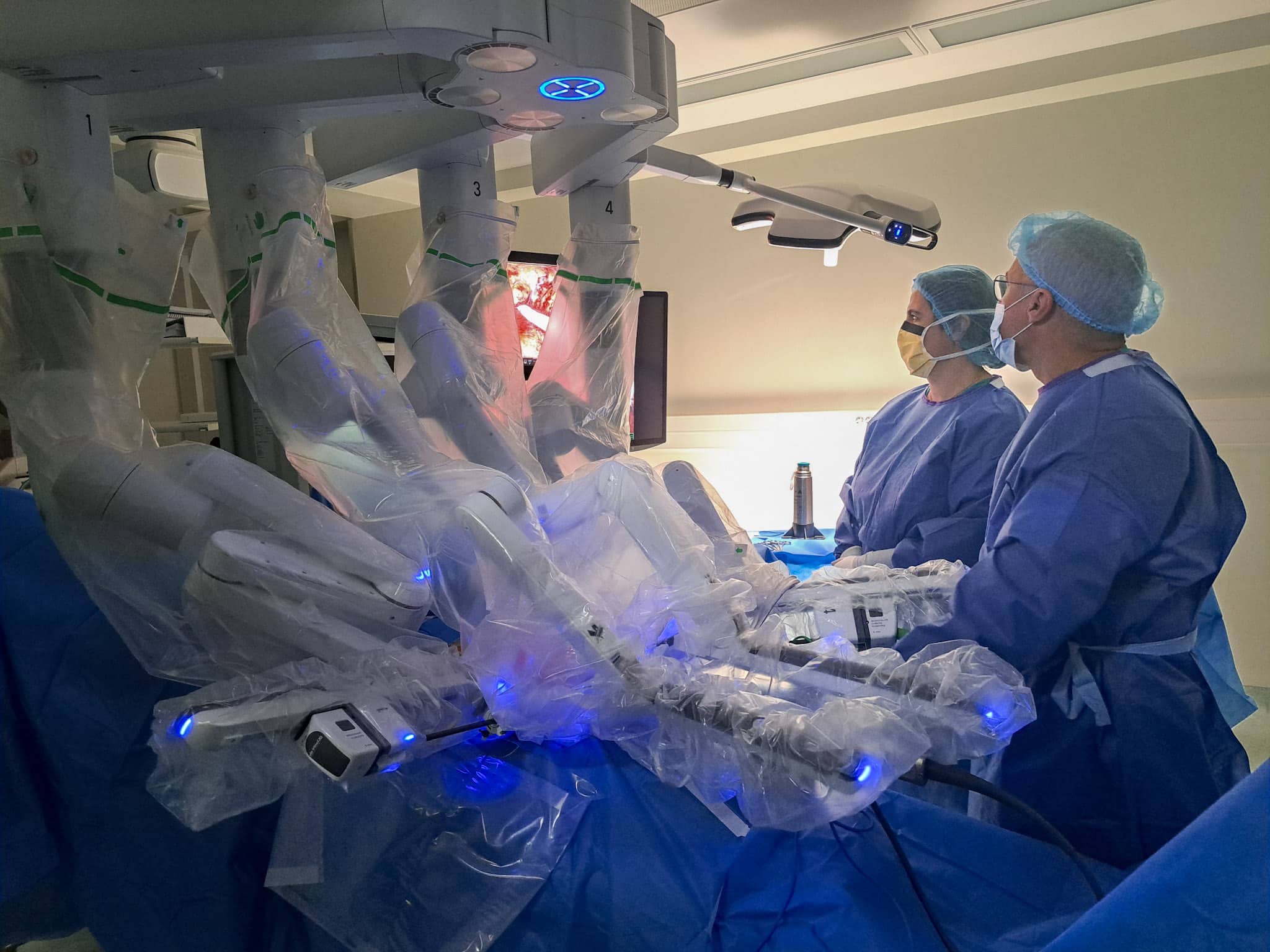
Faro Hospital carried out its first robotic surgery on November 20 – a moment described by the Algarve’s Local Health Unit (ULS Algarve) as a milestone in modernising care for patients in the region.
The new system, designed for minimally invasive operations, gives surgeons some of the “most advanced technology” available, allowing them to treat complex conditions with greater precision. Meanwhile, patients benefit from quicker recovery times and shorter hospital stays.
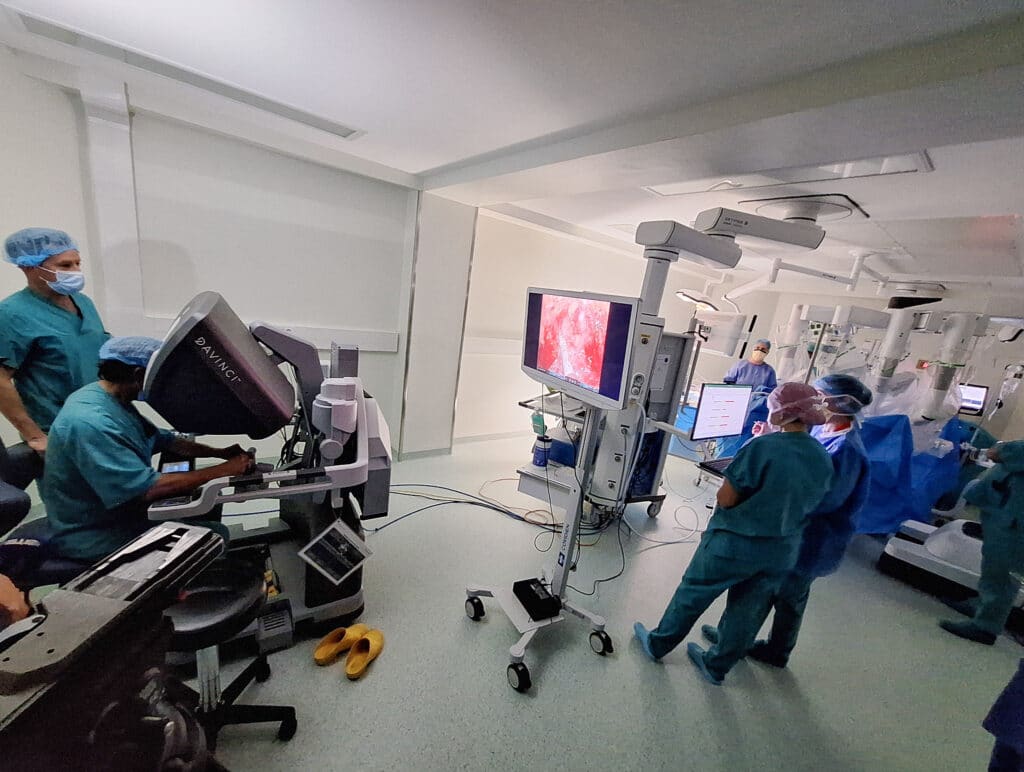
“This technique has a clear advantage over open surgery. It is good for everyone,” explained urologist Miguel Cabrita, the coordinator of Robotic Surgery at ULS Algarve.
More than making recoveries easier for patients, the move is also helping to attract top surgical talent to Faro. Luís Campos Pinheiro – director of Surgery and Urology at ULS São José and described as a pioneer of robotic surgery in Portugal’s National Health Service (SNS) – witnessed the first total prostatectomy performed with the Da Vinci Xi, the most advanced version of the Da Vinci robotic platform.
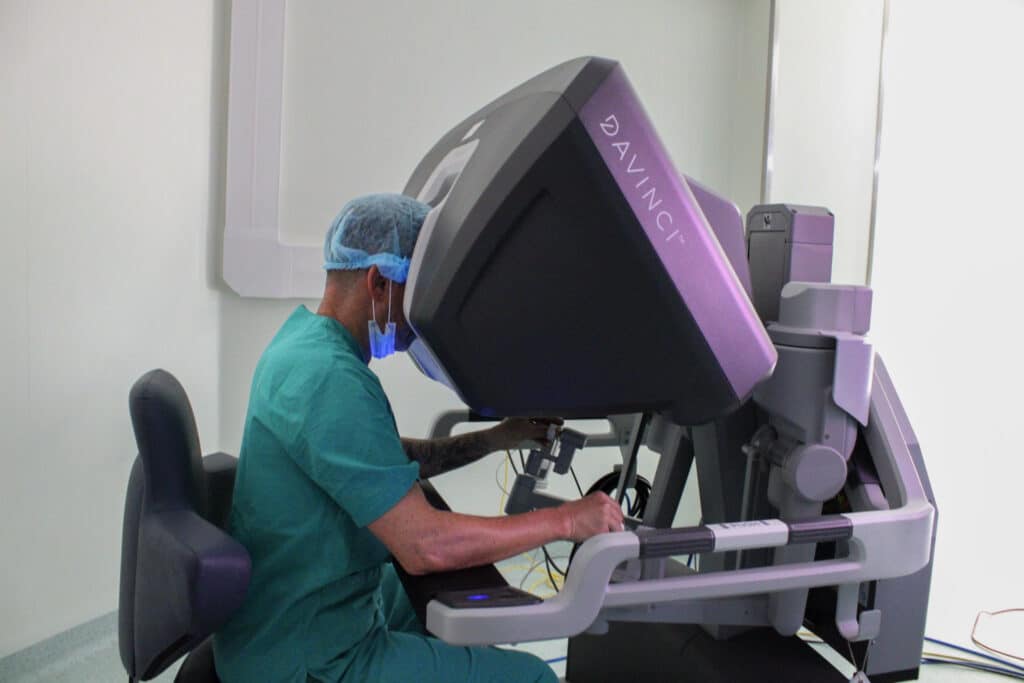
“Surgeons like to use the most modern technology, and we now have the most modern technology at Faro Hospital, which is known for its shortage of specialist staff. This is a great reward for those who are here and a big advantage for anyone who is unsure whether to stay in the SNS or not. Here they have an opportunity that in the private sector they won’t have as easily,” he said.
Aníbal Coutinho, director of Surgery and Urology at ULS Algarve, also spoke of the importance of the new technology. “The existence of robotic surgery allows greater surgical efficiency. The robot enables more precision in the movement and, in more complex surgeries, which are the oncological ones, there are immediate gains,” he stated.
For him, there is no turning back: “Today is the last day of the past, we are taking a step into the future. I have no doubt that all hospitals will move to robotic surgery, and that from that wonderful team over there, the surgeon will be the first to ‘disappear’ in a few years.”
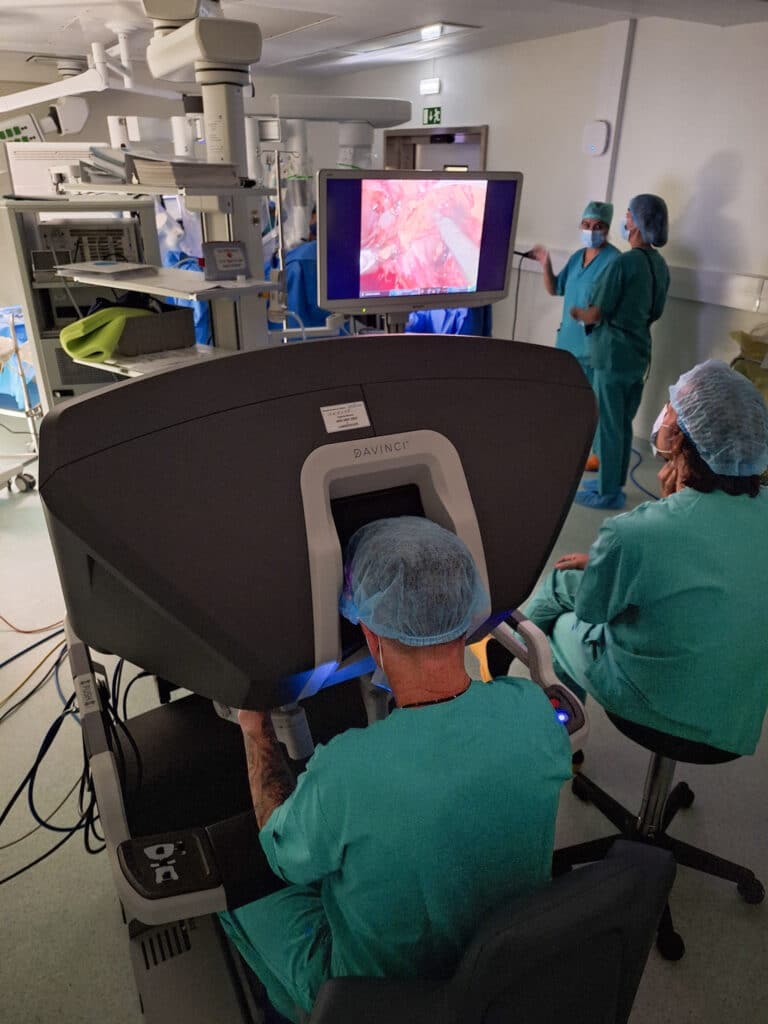
Faro’s public hospital is now the second unit in the south of Portugal to perform robotic surgery, after its counterpart in Portimão adopted the technology in April 2025. The introduction of robotic systems at both hospitals is part of the SNS Technological Modernisation Programme, backed by a €4,1 million investment funded through the Recovery and Resilience Plan (PRR).
In Portimão, the innovative Hugo™ RAS (Robotic-Assisted Surgery) system has already been used in more than 50 surgeries over just six months, including 14 total prostatectomies and around 30 operations on the stomach, abdominal wall and colon.
“The results have been excellent and the surgical times have been magnificent – on November 19, a total prostatectomy was done in two hours and 30 minutes,” said Aníbal Coutinho, noting that after three to four months, improvements in surgical productivity become clear.