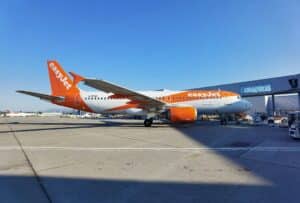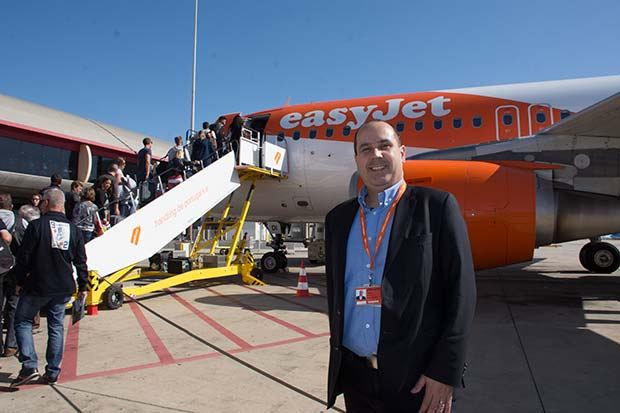
The managing director of easyJet Portugal believes TAP’s reprivatisation will lead to the release of slots at Lisbon airport – which his company will want to take up.
In an interview with Lusa, José Lopes (running easyJet since 2012) explained that TAP is currently the dominant operator in Lisbon, which will force the European Commission to impose countermeasures, as it always does when there are consolidation processes.
“In the case of Lisbon airport, it is a market where TAP is dominant, it is the number one player (operator); it has close to half of the available slots (time slots for landing and take-off),” he said.
According to Lopes, any entry of a new significant shareholder into TAP’s capital will, as has already happened in other countries, lead to the imposition of ‘corrective measures’ by Brussels. These remedies typically involve redistributing slots at the most congested airports, such as Lisbon.
“Therefore, a consolidation with any other player – and the three bidders (interested parties) are publicly identified – will lead to a consolidation of this dominant position,” which, “as a rule, will lead – as was recently the case with Lufthansa’s purchase of ITA – to remedies,” he commented.
At issue is the interest of the three European groups, Air France-KLM, IAG and Lufthansa, in purchasing up to 49.9% of TAP.
“There will certainly be more slots to be distributed. EasyJet (…) wants to take advantage of this opportunity that will arise,” Lopes summarised, explaining that the company sees this privatisation as a concrete opportunity to grow at an airport where there is currently no available capacity.
Easyjet has already received slots in Lisbon as part of the remedies imposed by the European Commission during TAP’s restructuring process, following state aid granted during the pandemic.
Asked whether easyJet has any preference for the ‘winner’ of TAP’s reprivatisation , Lopes said that he is following the process as an “outsider” (spectator), but with a direct interest in its competitive effects.
In 2025, across the country, easyJet operated 96 routes to and from Portuguese airports and carried more than 10.5 million passengers, with an average occupancy rate of 92% – one of the highest in its network.
The company provided more than 11.4 million seats in Portugal, consolidating its leadership in Madeira and its second position in the main airports on the mainland — Lisbon, Porto and Faro.
When asked whether, in view of this growth, easyJet has been approached to sell its Portuguese operation, José Lopes ruled it out.
The goal “is to continue to grow,” he stressed.