Resources available to fight rural fires will be reduced starting today – but five of the 11 aircraft that were supposed to be withdrawn from service will continue to operate.
According to the Special Rural Firefighting Unit (DECIR), the season that mobilises the most resources and is considered the most critical ended yesterday (September 30), with fewer operational vehicles and aircraft on the ground from today.
In a response sent to Lusa news agency, ANEPC, National Emergency and Civil Protection Authority, has said that five aircraft will extend their period of operation for another 15 days, leaving the Air Force with six fewer helicopters than those that have been operational in the last three months as of Wednesday.
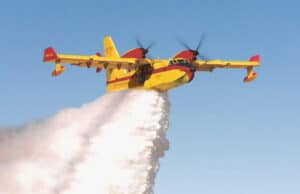
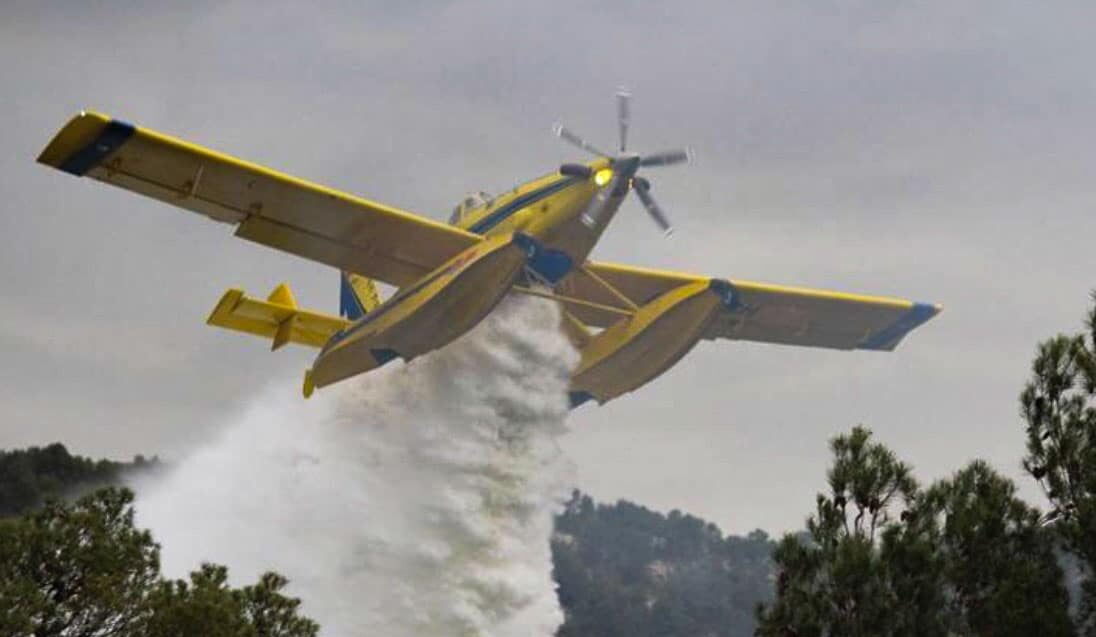
ANEPC indicates that, contrary to what was planned in the DECIR, the operation of the two medium amphibious aircraft from the Beja Air Resources Centre (CMA) will be extended, as well as the three light helicopters from the CMA in Montijo, Monchique and Cachopo.
According to Civil Protection, the air fleet will consist of 67 aircraft as of today (Wednesday), but two are ‘currently inoperative’.
Level “Charlie” in force
In addition to these aerial resources, over the next 15 days, during which “Level Charlie” – the third level, which mobilises the most resources – will be in force, 12,789 personnel from 2,133 teams, 2,810 vehicles and 19 bulldozers will be operational.
This fire season has seen almost 270,000 hectares of land burned, the fourth worst year in terms of area after 2017, 2003 and 2024, and four deaths, including a firefighter, several injuries and the total or partial destruction of primary and secondary residences, as well as farms, livestock holdings and forest areas.
Portugal was affected by heat waves between July and August, which contributed to the occurrence of several rural fires, in the main in the interior north and centre of the country, with 25 consecutive days of fires, some of which, such as those that started in Piódão and Trancoso, lasted 11 and eight days respectively.
In total, 7,715 fires broke out this year, according to data from the Integrated Rural Fire Management System (SGIFR), which shows a decrease in the number of fires in recent years, despite this year recording the highest number since 2022.
The regions most affected by fires this year have been the Centre, with 185,461 hectares of forest burned, and the North, with 70,690 hectares.
Down in the south where the only ‘major fire’, taking in the boroughs of Aljezur and Lagos, was extinguished after intense days of firefighting, trees in the Mata Nacional de Barão de São João are still being found ‘smouldering’ at the roots.

Residents who have been communicating via Whatsapp groups since the fire broke out on (Sunday September 21) have been sharing details of these occurrences, and some still patrol areas, carrying water, in order to put out smouldering hotspots.
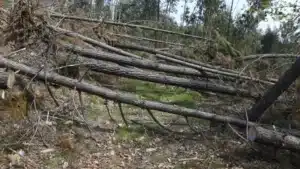
One explained online yesterday that “the roots are burning underneath the ground. This is how the trees explode and leave the big holes in the ground. It’s all underground channels that have spread the fire too. You can see many trees with a ring of ash just around the trunks. They were burning from underneath and the inside . Some exploded”.
Fortunately firefighters are still aware of these hotspots, and have reacted quickly to incidents reported.
Source material: LUSA/ Whatsapp