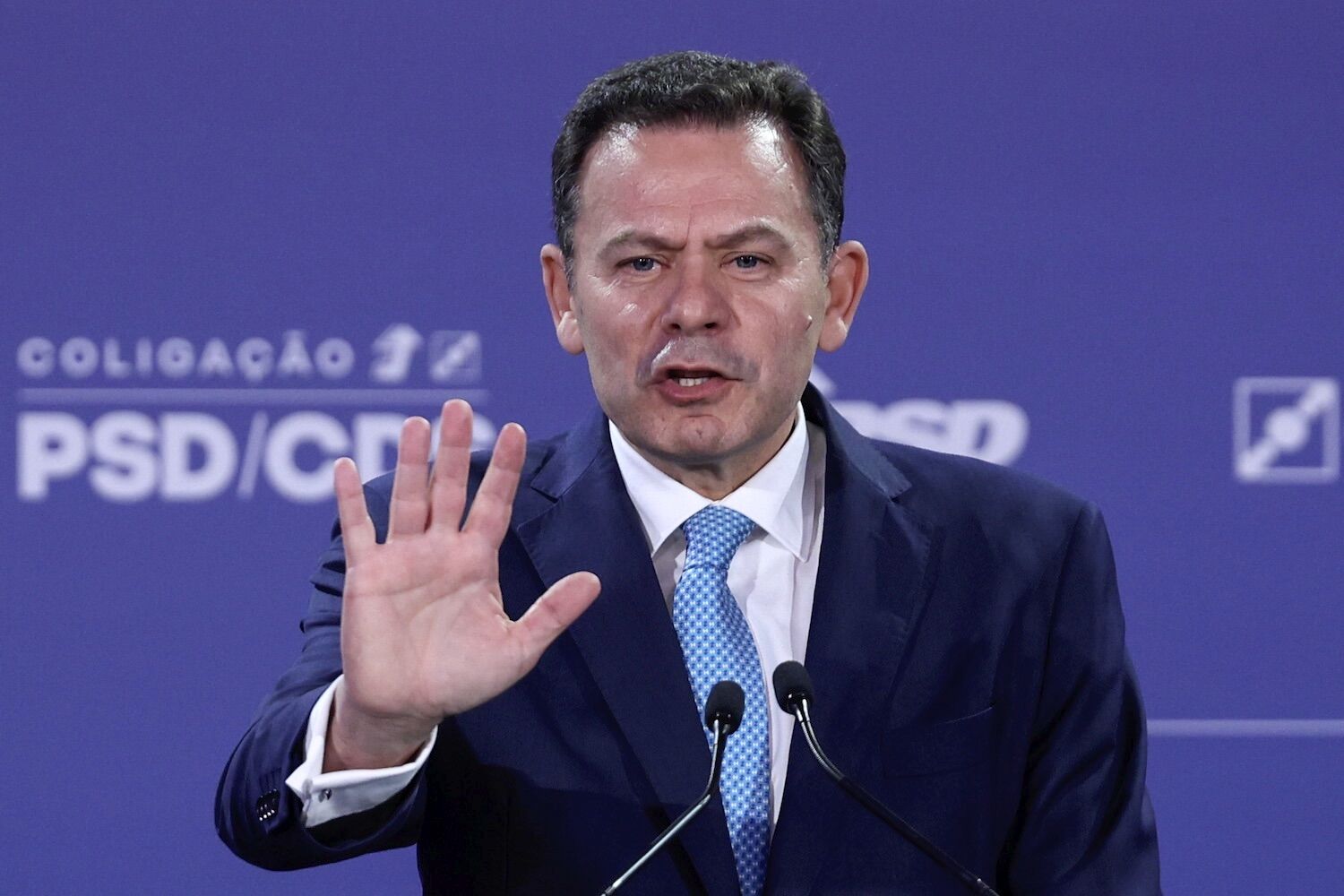
With emergency paramedics signing up to the general strike next week – and political parties warning the government to ‘start listening to society’ – the prime minister has repeated his mantra: the strike makes no sense, and is politically motivated.
Speaking at the opening of the bi-weekly debate in parliament, Luís Montenegro actually said that the changes to labour legislation are simply being used as a pretext to see public sector unions down tools on Thursday.
It is a position he has taken since this strike was first mooted, and in apparent defiance of advice from within his own party.
Today the prime minister made a show of ‘putting himself in the position of a unionised worker’ (not a union member, he stressed).
“Am I going on strike because I’m earning less? No, I’m earning more. Am I going on strike because I’m paying more taxes on my work? No, I’m paying less taxes. Am I going on strike because my job is in danger? No, in the vast majority of cases my job is not in danger,” he told the House – recalling that his government’s labour reform is “still a draft under negotiation with partners in the dialogue”.
As a unionised worker, Mr Montenegro said: “I have to wait and see if anything is coming that will actually harm my life.
“As a unionized worker, I will read what is on the negotiating table today and conclude: No, there is no revolution coming, there will be no loss of my rights, there will be an improvement in our economy, and therefore it is worthwhile to continue working, and this strike makes no sense.”
Ergo (according to the PM’s thinking): “the strike is political” (…) motivating those who “will never, ever reach an agreement” over this change to legislation (a direct address to the CGTP, suggests Lusa) and those who “sincerely fell into the CGTP’s trap” (this being an implicit reference to the UGT, says Lusa).
The PM added that the government’s intention to review labour law was “already expressed” in its electoral programme, and in the tripartite agreement signed last October with the UGT and business confederations.
Opposition parties differ, unsurprisingly, with Isabel Mendes Lopes of LIVRE giving an impassioned intervention on why it is vital for the government to start listening to society: “For the sake of stable labour legislation that is consistent over time, I leave you with a proposal, a challenge: throw out this draft bill and start again, truly listening to the unions, businesses, workers, families and the scientific community,” she said, stressing that “it was the government, with this inopportune document and this arrogant, incomprehensible attitude, that led to the scheduling of this strike – and it does not show signs of reversing”.
Mr Montenegro gave the appeal short-shrift, suggesting Ms Mendes was showing “political hypocrisy” (…) considering “those who present their ideas with a willingness to negotiate arrogant, while those who say ‘your ideas are rubbish, throw them in the bin’ are the icons of democratic tolerance”.
Three weeks ago, when the probability of the strike ratcheted up considerably, presidential candidate Luís Marques Mendes warned of the risks to social peace. He stressed there is a marked difference between an authoritative government and an authoritarian one – insisting that the government needs to rethink. In the absence of this happening, more and more sectors have signed up to the strike which will have wide-reaching effects on the economy. TAP, for example, has cancelled all flights on December 11 and is allowing passengers to rebook free of charge, but only for flights either three days before the strike, or three days after. This suggests the repercussions that one day of strike action across the entire country will have on business’s day-to-day schedules.
As this text went up online, the SPAC pilots syndicate was convening to decide whether its members too would join the strike.
Source: LUSA/ SIC Notícias