The world may have moved on since the terrible events of Wednesday, September 3, in Lisbon, but Portugal is now locked in an unseemly political battle which appears to have lost sight of what is most important.
For the families of all those caught up in the catastrophic derailment of the Elevador da Glória (one of Lisbon’s iconic “fin-de-siecle contraptions”, to use the words of The Guardian writer Larry Ryan), the only thing that is important is finding out what caused this tragedy in which 16 people died – 11 of them foreigners – and 22 suffered injuries, some of which will have been life-changing.
The seriousness of the victims’ injuries has still not been fully explained (if it ever will be), but early eyewitness accounts referred to at least “one woman, covered in blood and dust, missing a leg”.
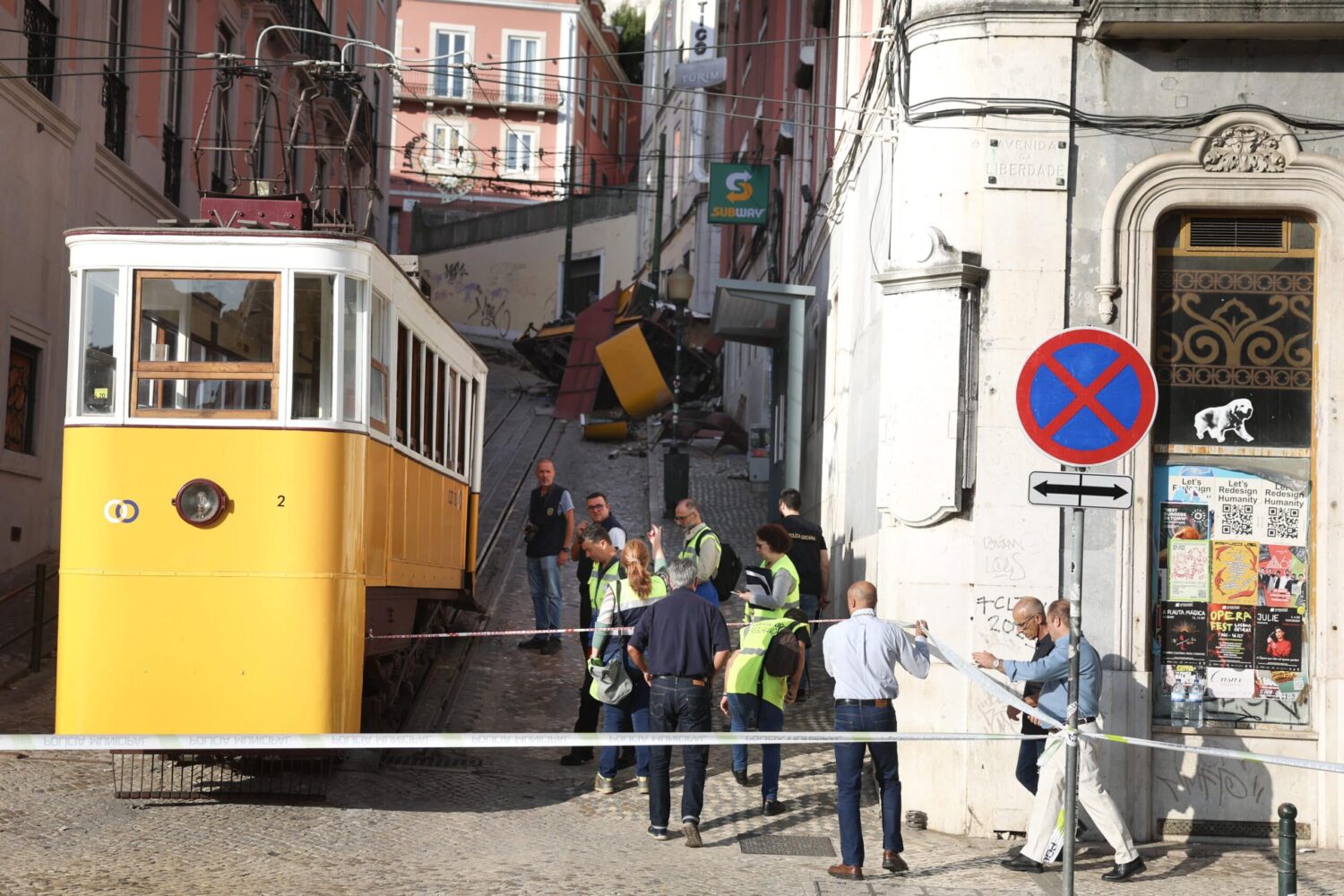
This was a brutal incident. Debris scattered over the Calçada da Glória looked more like the aftermath of a bomb explosion.
Various investigations are now underway, the most crucial being that of GPIAAF (Office for the Prevention and Investigation of Accidents involving Aircraft and Railway Accidents), which has already issued an information note, explaining that the cable joining the two cabins of this funicular – a piece crucial for the integrity of the system – “gave way at its attachment point”: a part that was not visible to the operative who signed off on the visual safety inspection earlier in the day.
Brakeman André Marques – the first victim to be formally identified – desperately tried to action the pneumatic and manual brakes when the cable snapped, “to no effect”. The braking system was simply incapable of stopping 14-tonnes of cabin (before factoring in the weight of 38 passengers) careering downhill on a steep gradient that quickly saw speed pick up to more than five times the funicular’s normal pace of travel.
The cabin, known as cabin nº 1, came off the rails at a bend, crashing into a building (a hotel) at what GPIAAF investigators have estimated at 60 km/hour.
As some have already observed, had cabin 2 been any further up the hill behind cabin 1, the loss of life and injuries would almost certainly have been even worse. As it was, cabin 2 had barely started the upward journey, and only ‘fell back’ a metre and a half when the cable joining the two cabs gave way.
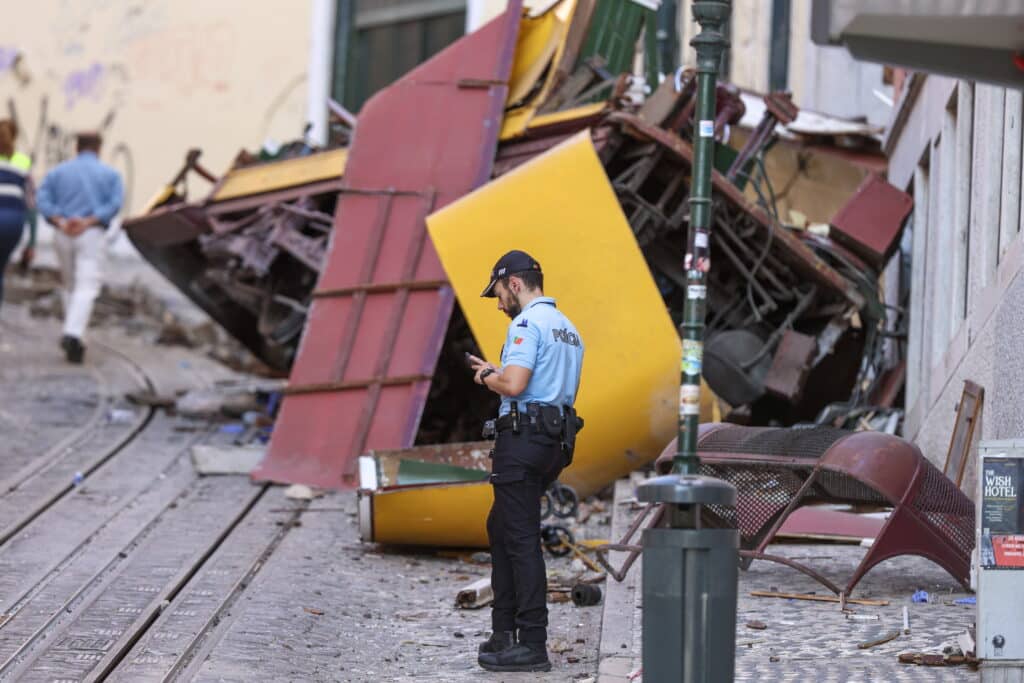
GPIAAF’s information note also explains that, “at this point in the investigation, it has not yet been unequivocally determined exactly how many people were in each vehicle” (this because at least one of the bodies is believed to have been a pedestrian, caught by the cabin as it crashed to a halt).
The way forward now, in terms of getting answers, depends on the next 45 days of GPIAAF investigation.
PJ police are already investigating the private company to which maintenance had been ‘outsourced’, while critics – including workers of municipal public transport company Carris – suggest profit was put first in the original decision to take maintenance away from Carris’ own employees.
All this should be clarified, or otherwise, by investigators.
In the meantime, Lisbon City Council has agreed to create a solidarity fund for the victims; it has agreed to name a street in the capital after the deceased brakeman; it has approved the setting up of a transparency portal to allow public scrutiny of public contracts/reports, etc., it has approved the designing of a new ‘technological system’ for the city’s funiculars and it has suspended all other ‘funicular systems’, pending technical inspections.
These last two decisions point to the vulnerability of the ancient ‘attractions’ – increasingly used by visiting tourists who have been (increasingly) coming to the capital – but also relied upon by local residents, in order to get to and from work without traipsing up and down punishing hills.
The twist in this dismal story is that this terrible incident happened weeks before local elections which ‘could go either way’ in Lisbon (and indeed in many other municipalities) – and, some would say, the mayor ‘fighting to stay in power’ hasn’t helped himself.
Carlos Moedas complains that the incident has been politicised, but he himself has played into that politicisation by casting aspersions on critics, and seemingly refusing to take ultimate responsibility as the city’s top decision-maker.
Belatedly appearing on television this week, Moedas conceded that he will resign if “anyone can prove that any action I took, anything I did as Mayor in relation to this company (Carris) led to this company not spending enough on maintenance, to this company not doing what it had to do”. But even President Marcelo Rebelo de Sousa has stressed that the buck stops at the top, and anyone at the top should be aware of this.
Talking to journalists over the weekend, Marcelo said there was no point pushing Moedas for a resignation as voters will make their decision at the voting booths in Lisbon on October 12.
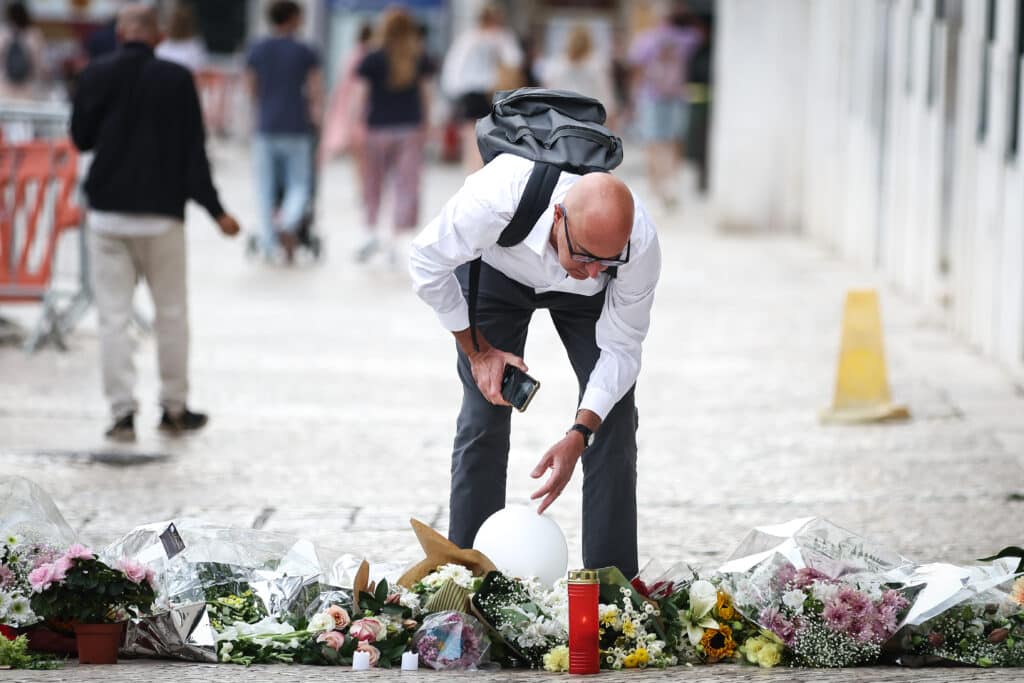
This far, there have been no opinion polls taken to suggest how people feel, but certainly opposition politicians are scathing.
MP Rui Tavares, who sits on Lisbon City Council, and is the lead spokesman for LIVRE (the left-wing party with six MPs in parliament), has described the “pattern of a mayor who has attached more importance to some vanity projects than to these essential projects for the life of the city,” such as rubbish, public lighting, etc.
In the words of The Guardian’s Larry Ryan: “It all speaks to a sense of a city that is overburdened with tourists and underserving its residents.”
Movers’ and shakers’ desires to ‘put Lisbon on the lips of the world’ appear to have lost sight of the need to properly take care of the city for those who live and work in it. As such, last week, Lisbon was indeed on the lips of the world, but for all the wrong reasons.
How does a funicular work?
The idea uses gravity and the counterbalancing weight of two carriages to go up and down hills. The two cars are connected to each other with a cable. As gravity pulls one car down, it is counterbalanced by the other car going up. In the case of the Glória funicular, there is the added ‘help’ of an electric cable overhead.
Lisbon has three funiculars (Glória, Lavra and Bica), all of which were designed by the Portuguese engineer Raoul Mesnier de Ponsard in the late 19th century. Ponsard is also responsible for the design of the Santa Justa Lift, which, like the funiculars, is now out of commission, awaiting results of the technical inspections.