Once again, the government is under pressure over immigration and the way it is changing the social fabric of rural communities.
Público today writes that council services are ‘in rupture’ in the municipality of Odemira (where foreigners far outnumber locals. The last percentage count taken in 2024 by AIMA – agency for integration, migrations and asylum – put foreigners in Odemira at 68.7% of the local population).
Services are also under significant strain in Ferreira do Alentejo (where they are not enough houses for the immigrants in the borough), while the schools of Vila Nova de Poiares are juggling with pupils of 17 nationalities.
Citing a new report by the Observatory of Migrations (OM), Público stresses that ‘rural territories’ are now every bit as affected by immigration as cities used to be: but they don’t get central government support – and they need it.
Indeed, the report by the OM warns of the consequences of not receiving sufficient support, including “the intensification of social tensions linked to residential segregation” – a situation that is already being felt in areas of Odemira.
Thus, council chiefs are calling for “investment” by the government to reduce the situation of ‘municipal overload’ and the aggravation of social tensions.
As the OM report has explained, immigrants have moved into some areas with a vengeance: Odemira’s 68.7% of foreigners (in 2024) is followed by Albufeira’s 55.1%, Vila do Bispo’s 51.1% and Aljezur’s 49.2%.
Of course, some of these incoming foreigners will be those who arrive already ‘sorted’ (people with good incomes/ online jobs) but not all of them: and it is those who arrive seeking ‘a better life’ in rural communities that are putting the most strain on public services.
“Housing, education, health centres, even rubbish collection, are all under greater pressure in recent years”, explains the article – and this is why various municipalities are asking the government to “reinforce mechanisms of municipal financing”, and create “differentiated public policies based on territorial profiles”.
The fear is that if this does not happen, services generally will deteriorate – and social tensions will increase.
Odemira is the municipality that ‘most leaps out’ as problematic – one of the main issues with the influx of foreigners being a lack of housing available that precludes the hiring of qualified people from other parts of the country.
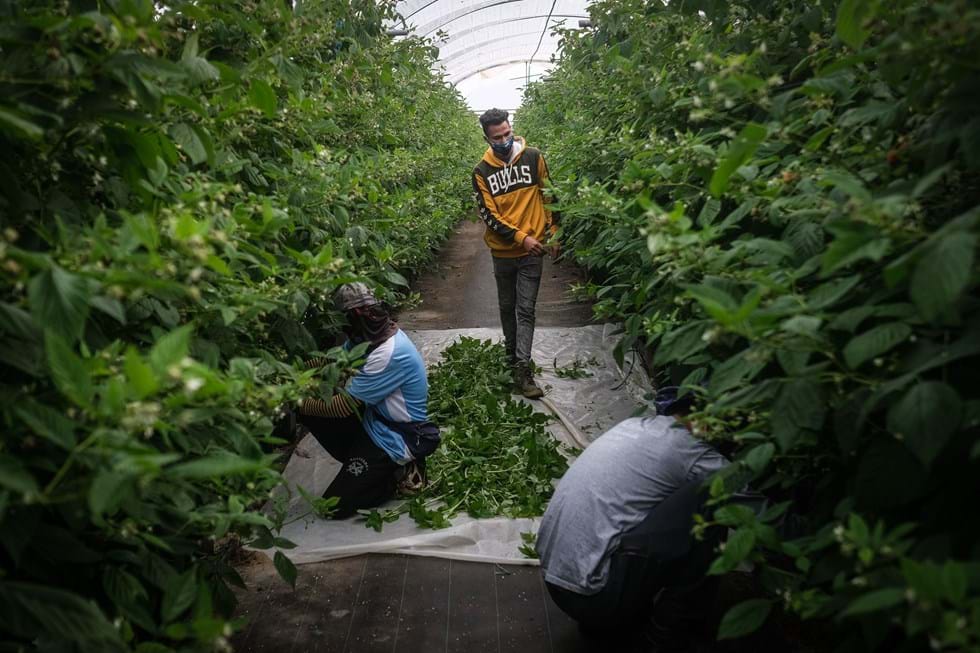
Ferreira do Alentejo is another ‘critical situation’ – the influx of seasonal agricultural workers has exhausted the supply of housing and forced the council to contract the help of an external refuse-collection company.
The situation in Vila Nova de Poiares sees immigrants as only 10% of inhabitants – but they have ‘overburdened local schools’ by introducing 17 nationalities – many of which need ‘individual help’ due to the language barrier.
As Públic stresses, the one ‘danger’ that does not present itself is an increase in criminality as a result of immigrant influxes. The problem is much more “discomfort due to cultural differences” – and this is what municipalities are keen to tackle, before it becomes any larger.
Source material: Público cited by ZAP/ Observatório das Migrações