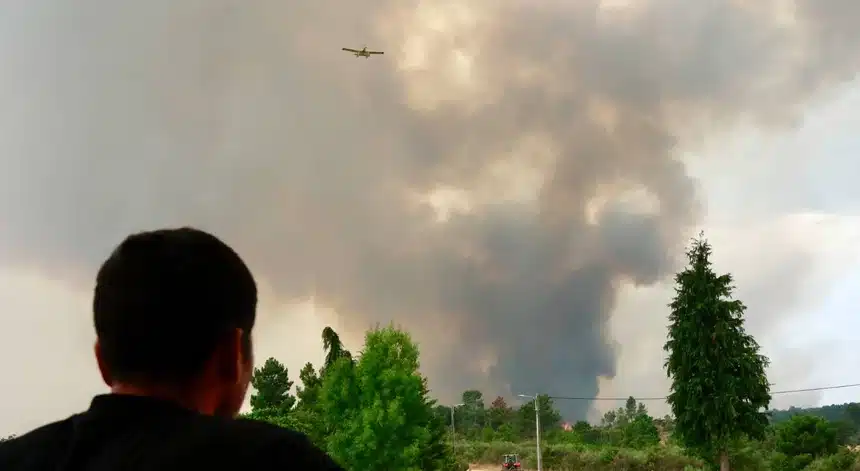
With wildfires still raging in the north and central regions, economist Carlos Brito – president of the northern regional branch of the Order of Economists – has estimated the damage to the economy so far at around €700 million.
News bulletins have only touched on this subject, because it changes by the day. But every night there is an interview with a farmer/ producer who has ‘ lost everything’, or with an entrepreneur who has seen his/ her rural tourism project stopped in its tracks by the impossibility of ‘providing hospitality’ in a blackened wasteland.
According to Carlos Brito, the worst affected sectors are agriculture and forestry exploration, followed by tourism/ restaurants, transports and energy/ communications and health (due to the respiratory problems these fires provoke).
As he explained, wildfires have direct and indirect impacts, as well as systemic consequences, due to the degradation of natural ecosystems which in turn lead to the loss of confidence by the public in ‘institutions’ (principally the government, municipalities, fire stations etc.)
It is still too early for a clear picture of how much these terrible fires will cost the country, but nothing this week is looking ‘good’.
What Carlos Brito did explain, in part, was why the north particularly has been so ravaged this year. He said it is down to various factors , especially “land structure characterized by smaller plots, many of which are abandoned, forest composition with a predominance of eucalyptus and pine in discontinuous mosaics, rugged topography and summer weather conditions that favour spread, not to mention a greater number of human ignitions – whether due to negligence or premeditated”.
As to actions needed, Brito stressed the need for “quick and simple compensation for minor losses, credit lines and advances for businesses, and specific support for tourism in affected areas (…) At a more structural level, public policies should translate into the economic valorisation of biomass and grazing, territorial reorganization, land consolidation, and incentives for agroforestry activities based on less flammable species”.
Source: noticiasaominuto