
For several millennia, wine has claimed a special status in Mediterranean cultures, with the earliest examples of wine and grapes in art appearing in ancient Egyptian tomb paintings as early as 1550 BC. The grape harvest has been celebrated with bacchanalian fervour and wine has been the alcoholic drink of choice for both celebrations and the Communion ritual of the Catholic church.
But is wine now going out of fashion? Alcohol consumption is declining in most OECD countries, and wine is being particularly affected. A recent Nielsen survey reported wine consumption in France has declined a staggering 80% since 1945. A concerned drinks industry is declaring we have reached ‘peak booze’.
What is going on?
Climate change has raised the alcohol content of red wine to a level some consumers find almost undrinkable. In France, again, 70% less reds are now consumed than in the 1970s. A global shift has occurred to drinking more white and rosé wines, often perceived as more drinkable.
According to IWSR, an alcohol data company, the volume of wine sold in major markets in 2024 was 9% lower than at its height in 2014. This drop is particularly affecting mass-market wines.
Both Millennials and Gen Z are drinking less alcohol, and in particular wine. In Australia, wine consumption among 18-24-year-olds halved between 2010-2023.
As lifestyles become less rigid and more flexible, the lines between drinks categories are blurring, with allegiances to a particular category less defined. Sales of spirits (such as sake) and beer (the taste of which is improving as more craft beers enter the market) are rising. Wine is the only drinks category for which sales are declining. There are many reasons why.
Recent decades have seen significant changes in the social fabric of western societies and their eating habits. One of these changes is that we now have fewer of the extended or ‘slow’ meals which are so conducive to wine drinking.
Today, there are also more people living alone, with, according to the United Nations, single households expected to account for 35% of world population by 2050. This trend has been mirrored by the vertiginous rise of snacking and the consumption of fast food.

Although wine consumption rose during the pandemic, with a shift to domestic consumption and online buying, post-pandemic there are more under 30s eating alone. Less socialising means less consumption of alcohol, although single-serve packaging of wine in small cans, designed for home drinking, is on the rise.
There has been an exponential increase in the alcohol-free beverage market, encouraged by the ‘sober curious’ movement who cut out alcohol to improve physical and mental wellbeing.
The fall in wine consumption is not, however, entirely linear. The post-pandemic years have seen growth in wine bars with kitchens. And, when dining out, an increasing number of people are choosing cocktails, considered fun and less complex, over wine.
Lastly, to introduce consumers to their wines and maintain sales, more vineyards are developing wine tourism, offering tastings, meals, the option to spend the night, and the opportunity to ‘buy from the cellar door’.
A glutted market
In December 2025, the European Union, the world’s largest producer, consumer and exporter of wine, reached a preliminary agreement to use EU funds to uproot vines to curb grape glut. The French government is making funds available for farmers to switch from growing grapes to olives.
Weather patterns continue to be increasingly unpredictable and sometimes extreme. After a series of adverse weather conditions, in 2024 global wine production reached its lowest level since 1961.
Post-pandemic inflation increased the price of wine production. Higher retail costs, particularly for entry level wines, have dampened demand affected by the overall increase in the cost of living.
No end to dry January?
The era has ended during which Louis Pasteur, the 19th century French chemist and microbiologist, could proclaim “wine is the most healthful of beverages”.
Nearly 20 years ago, in 2008, the European wine sector launched a ‘Wine in Moderation’ programme.
This was followed by a January 2023 World Health Organisation announcement which seriously rattled the wine trade. “There is no safe level of alcohol consumption. Alcohol is toxic, psycho-active, dependence producing, and a Group 1 carcinogen,” the WHO admonished.
Fifty-three percent of Americans now say drinking (even in moderate quantities) is bad for their health, up from only 22% two decades ago.
Popular slimming jabs, such as Mounjaro, in addition to making people want to eat less, are also making them less inclined to drink alcohol.
Are we perhaps heading towards ‘risk of cancer’ warnings on wine bottles coupled with high taxes like those levied on tobacco?
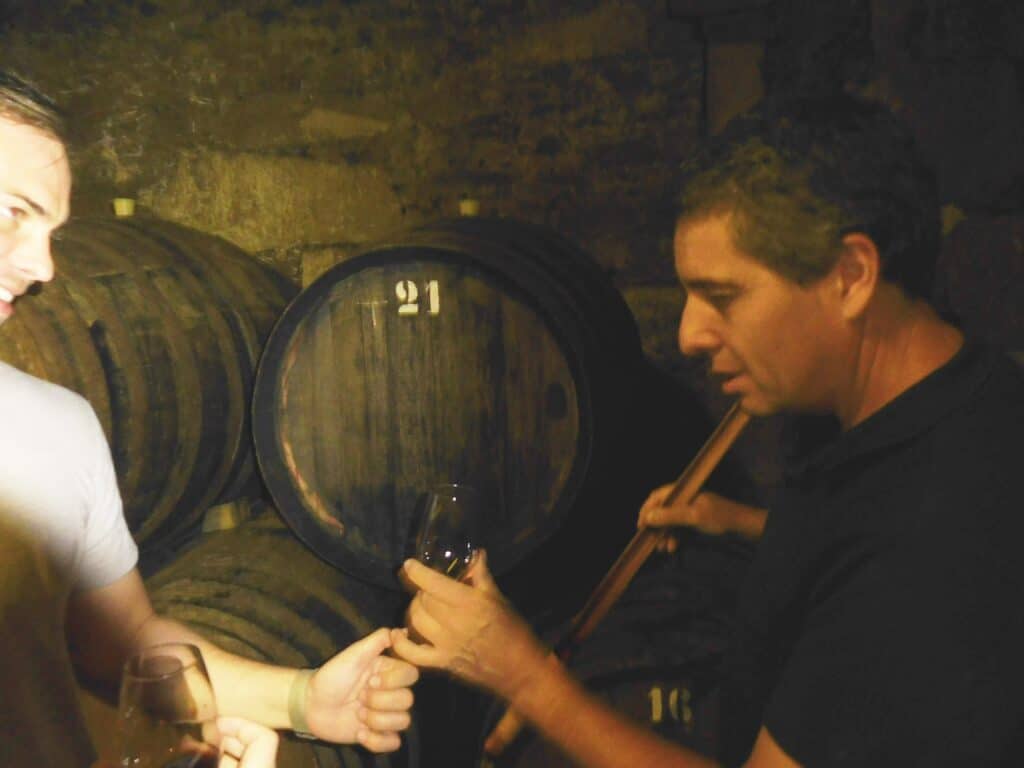
What’s happening to wine in Portugal?
A few years ago, Paul Symington, former chairman of Symington Family Estates, told me that, in his opinion, Portugal is currently producing quality wines from north to south of the country.
However, 2025 saw Portugal’s wine production at its lowest level of the past 10 years. Intense winter rainfall, followed by a mild spring, created the conditions for mildew, which with extreme summer heat reduced the number and weight of grapes, reflecting a pattern of less predictable crop yields.
In 2024, production in the Douro was down by 34%. The 2025 harvest yielded 53.9% reds, 39.4% whites and 6.7% rosés. Room for more Portuguese rosé wines perhaps?
Portugal appears so far to be bucking the trend for declining wine consumption, with consumption in 2024 at 61.1 litres/capita (well over a litre every week of the year!), making it the leading country in Europe. Italy ranked second at 42.7 litres per person…
Where is wine heading?
Today’s consumer base is more curious, open to experimentation in its choice of wines (for example, embracing natural wines) and sensitive to environmental issues such as lightweight bottles.
We are seeing the development of more wines with low alcohol content, or even none, a phenomenon known in the industry as ‘NoLo’.
Less frequent consumption is favouring a switch to premium wines, rather than entry level ‘wines to quaff’. More billionaires, and those who aspire to become one, feed the market for ‘trophy wines’, compensating for the retreat of the Chinese ultra-premium wine consumer.
Some wine industry experts are seeing an opportunity to revitalize the wine industry, with more informality, more experimentation, and lower alcohol levels.
Wine drinkers disheartened by dismal winter weather can feel cheered the slump in demand has also created a drop in prices. This is an exciting time for wine lovers searching for value…