Empty premises can also be used for university residences/ community organisations
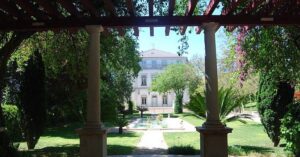
Lisbon city council on Wednesday has decided to ask the government to mobilise disused state property, including the former Council of Ministers’ office located on Rua Professor Gomes Teixeira, for housing, university residences and community organisations.
Following a proposal by the Communist Party (PCP), at a private meeting of the city council, the motion to mobilise the state’s disused assets was approved by a majority, with votes against from the PSD/CDS-PP leadership, which governs Lisbon without an absolute majority, and with votes in favour from all opposition councillors, namely the proposers, PS, Livre, Cidadãos Por Lisboa (elected by the PS/Livre coalition) and BE.
In the motion, the PCP states that in July 2024, the government consolidated the ministries in the building known as Campus XXI, on Avenida João XXI, and the property of the office of the Council of Ministers, located on Rua Professor Gomes Teixeira, was handed over to Estamo, a public company responsible for the management and enhancement of public properties.
According to Communist councillors João Ferreira and Ana Jara, the list of properties identified as decommissioned state assets shows that “the majority”, due to their type, location and urban context, including that of the Cabinet office on Rua Professor Gomes Teixeira, “are suitable for rehabilitation for housing purposes and could be mobilised to respond to the recognised crisis in access to the constitutional right to housing”.
“Others, such as the buildings of the Ministry of Education located on Avenida 24 de Julho, due to their type and proximity to public transport, could be rehabilitated to respond to the recognised lack of university residences, which is, in fact, within the remit of the transferred government sector,” indicates the PCP.
The communists also point to the existence of other buildings in the decommissioned state heritage that, due to their type and particular architectural expression, could house relevant associations in the social, cultural and sports sectors, responding to associations “at risk” due to “precarious leases and increasing speculation on rent figures”.
Arguing that decommissioned built heritage “cannot be considered a mere asset to be capitalised”, but should serve to ensure the right to housing, equal opportunities in access to higher education and the right to cultural enjoyment and creation, the PCP motion calls on the Government to carry out “a careful assessment of the potential functional use of the buildings” to respond to identified needs, triggering the rescue of state heritage transferred to Estamo.
“Proceed with the transfer of real estate assets that can be rehabilitated for housing to the Institute for Housing and Urban Rehabilitation (IHRU), and the remainder to the appropriate government departments for mobilisation in the most appropriate manner,” suggests the motion, which also advocates the necessary rehabilitation of the buildings.
At this meeting, also at the proposal of PCP communists, the council unanimously decided to request the government launch, within the European Council, an initiative to extend the implementation period of the PRR – Plan for Recovery and Resilience Plan – in order to ensure better conditions for the effective use of available financial resources.
The motion to extend the deadline for the implementation of operations financed by the PRR follows reports of “substantial delays in the financial implementation of PRR projects at national level, particularly in the housing component,” explains the PCP.
With European funding, the PRR has an implementation period until 2026 and aims to implement a set of reforms and investments for the country’s economic and social recovery.
LUSA