Plan is to have the Algarve’s Alportel Dam completed by 2030
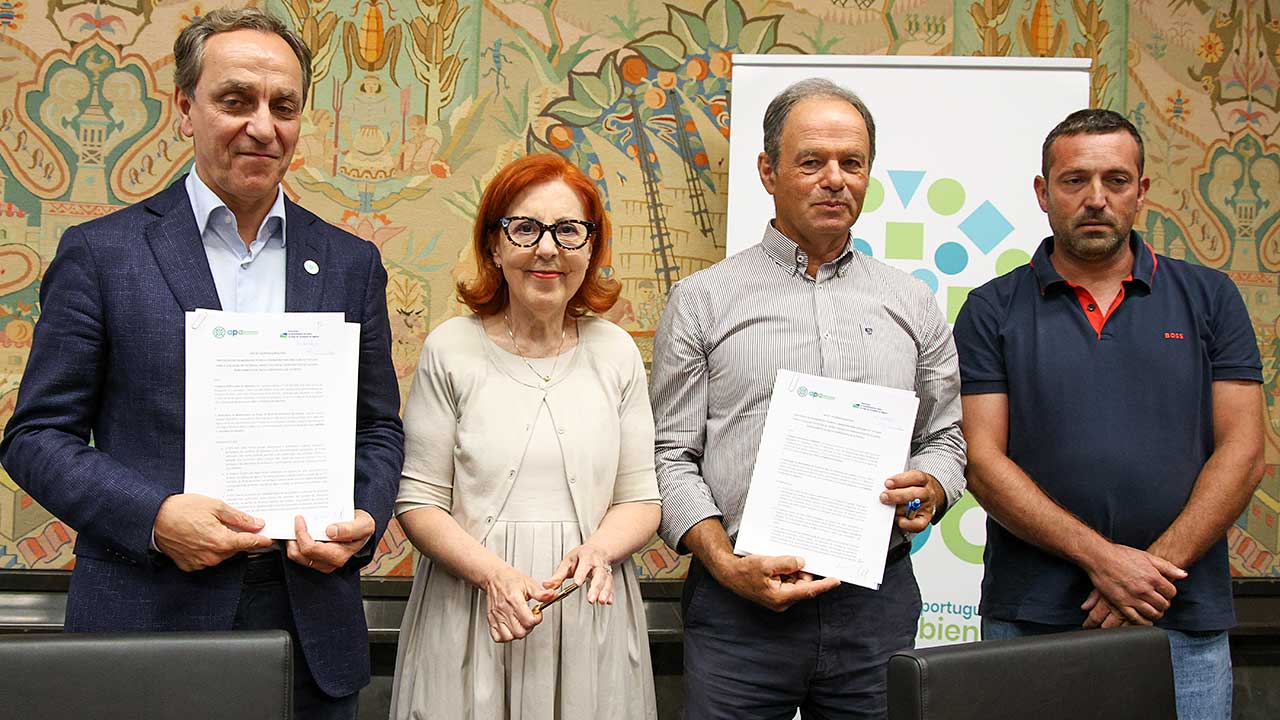
After a nearly 100-year delay, plans for the Alportel Dam have officially been set in motion, with completion expected by 2030. The announcement came on Friday morning (July 4) in Faro, where Minister of Environment and Energy, Maria da Graça Carvalho, signed a protocol formalising the start of the long-awaited project.
The dam will be built in São Brás de Alportel, currently the only municipality in the Algarve without a water retention system, the minister highlighted. “This is our chance to finally correct that gap,” the minister said during the ceremony at the Algarve’s Regional Coordination and Development Commission. The agreement was signed between the Portuguese Environment Agency (APA) and the Association of Beneficiaries of the Sotavento Irrigation Plan (ABPRSA).
The new dam will be vitally important for the municipalities of São Brás de Alportel and Tavira, said ABPRSA president Macário Correia, stressing that it will have the capacity to hold between 10 and 15 million cubic meters of water. “We’re still finetuning details but it may be enough to irrigate thousands of hectares, and be used for agriculture and urban consumption,” said Correia, adding that its primary use will be civil protection.
APA president, Pimenta Machado, said the dam will be used for multiple purposes – one of which will be to reduce the risk of floods in Tavira. The planned dam, located upstream in the hydrographic basin that feeds into the Gilão River, will capture excess rainfall, thus helping regulate the flow of water into the Gilão River. In other words, during heavy storms, it will act as a buffer, storing runoff that would otherwise overwhelm the river. According to the APA boss, the dam will stand out as a “strategic water reserve,” playing a complimentary role to other reservoirs across the region.
Meanwhile, Macário Correia revealed that the project is close to final design stage and could be built within four to five years after formal approval and contracting, meaning it could be completed by 2030. The estimated cost is around €20 million, he added.
The Alportel Dam is expected to receive EU funding through the Sustainable 2030 Climate and Sustainability Program, which prioritises large-scale projects aimed at flood control and water security. “It fits in perfectly with the program because it is a dam with two goals: to minimise the risk of floods, and above all, act as a strategic reservoir.”
Foupana dam also set to move forward… but still at least 10 years away
The Portuguese government is also planning to move forward with the long-awaited construction of the Foupana Dam in the eastern Algarve – though this project is much larger, more complex and will take longer to complete.
So said Macário Correia, explaining that the project is still in the early stages of environmental assessment and feasibility studies.
Foupana involves international waters in the Guadiana basin, meaning negotiations with Spain are required before any construction begins. “We’re realistically looking at a timeframe of at least 10 years before works could be completed,” said Correia.
“We need to launch an international public tender which may attract bidders or not. So, we’re still a few years away before we reach the signing of a contract for the works and the start of construction,” said Correia.
Compared to the Alportel dam, costs are also much higher, with an estimated budget of between €80 million-€90 million.
Minister Graça Carvalho confirmed that EU funding will be available for the Foupana project at a time when the European Commission (EC) has set water and defence as two main priorities for investment.