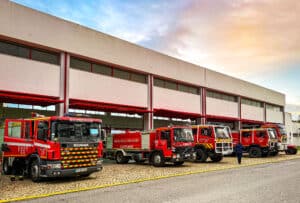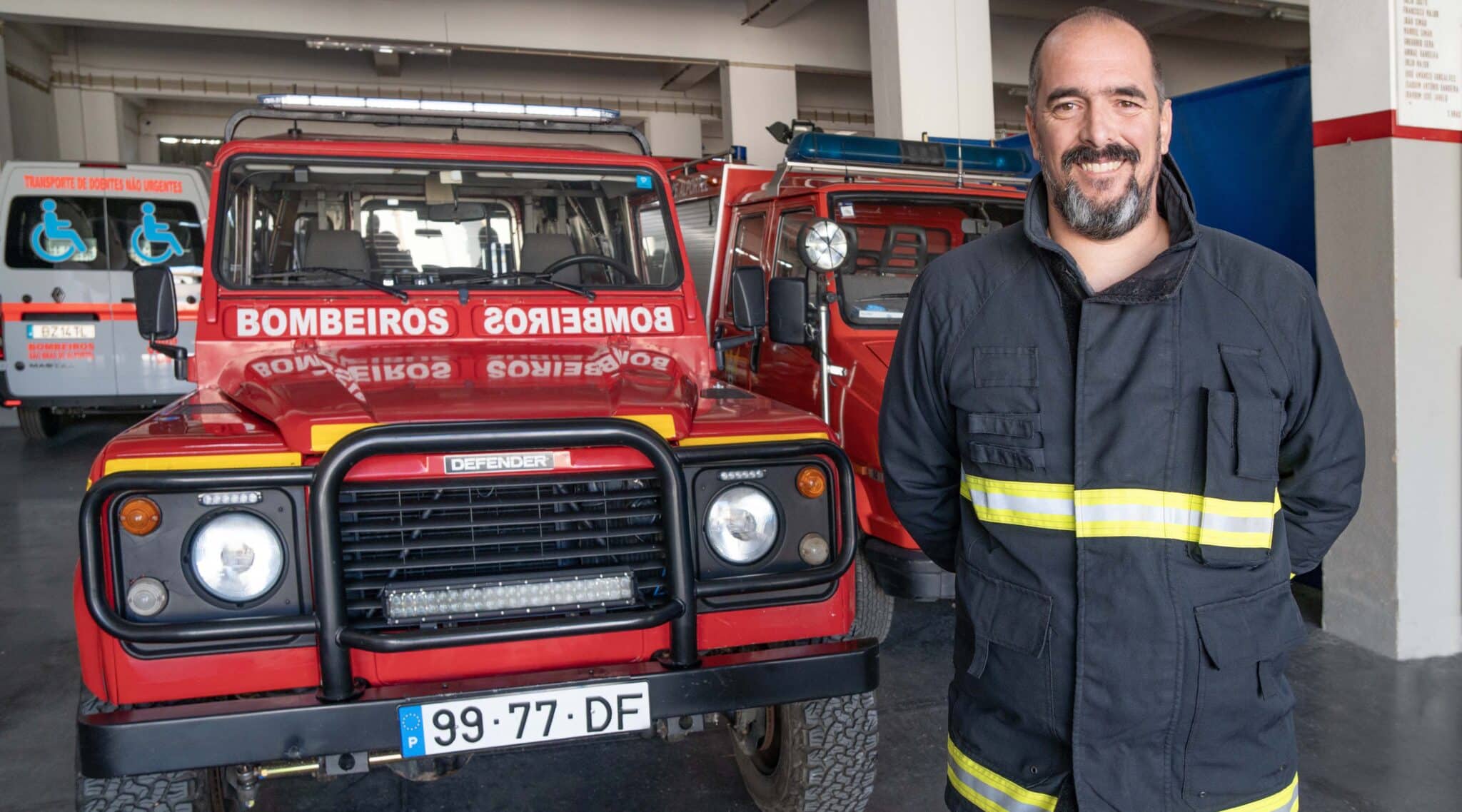
We hear an approaching siren, and then we are dazzled to see the flashing blue lights of a red firetruck or ambulance with the white letters “Bombeiros”, as it goes streaking by. Sometimes I wonder how it would feel to be in that vehicle racing to an emergency.
The Bombeiros are always waiting in the background, protecting us from a multitude of hazards. “Who are these people?” I thought. Then I learned that 80% of Portugal’s firefighters are volunteers! I wanted to know more about their lives.
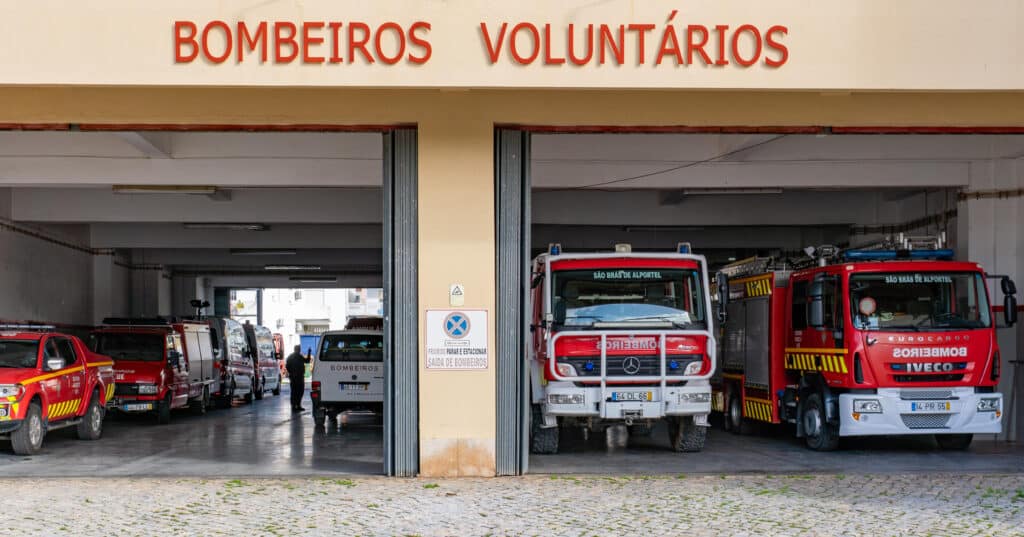
I decided that I better talk to one of these brave individuals, and I soon met volunteer Bombeiro Pedro Rafael, age 44, at his firehouse in São Brás de Alportel. He offered to help me understand what his life was like as a Bombeiro. I confessed to him that I knew very little about the Bombeiros, but I was eager to learn.
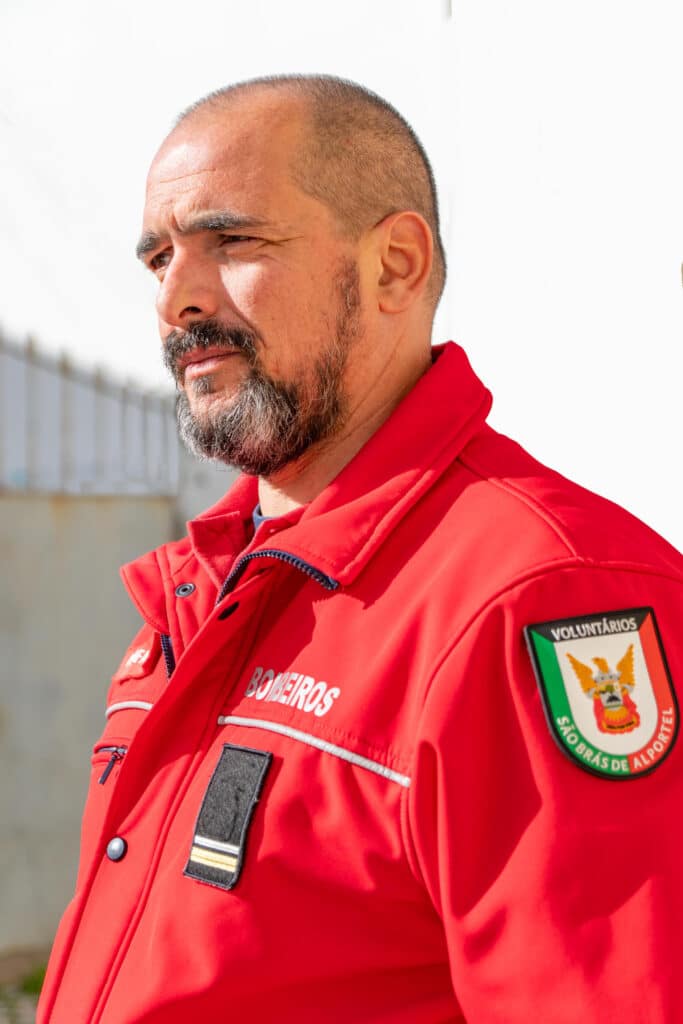
“Most people don’t realize how many different emergencies we are trained to handle.” As he spoke, I was astonished at how many services they provide.
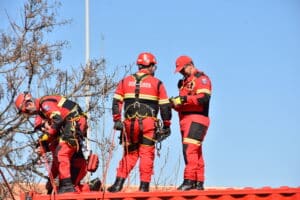
Besides fighting wildfires and urban fires, they are usually the first responders to all kinds of medical emergencies, road accidents, other kinds of accidents and dangerous situations like hazardous chemical spills or a building collapse.
They helped countless people during the area’s recent storms and flooding, and even last year’s electrical blackout. They perform rescues from cliffs, wells, bodies of water, and buildings. They sometimes assist stuck vehicles and even rescue animals.
They also provide non-emergency services such as hospital transfers, water deliveries to rural properties and swimming pools, and fire prevention surveys and education. They work on maintaining the firehouse equipment and vehicles. They also devote time to the recruitment of new Bombeiros, not always an easy task.
To become a Bombeiro, or Bombeira (firewoman), a candidate must successfully complete a yearlong training program of more than 300 hours. This covers many facets of the job. After that, training is given for many specialized and technical skills.
When I asked Pedro about his life as a Bombeiro, he discussed some of the sacrifices they make. “Last week on holiday, I was on a camping trip with my wife and two daughters (ages nine and 11). In the middle of our holiday, I was called to a fire. I had to leave them there,” Pedro shook his head. “They were very disappointed to see their dad go off. They understand it’s just part of our life.”
The role requires total physical and mental devotion, and often disrupts family life. It’s a commitment for the whole family. All those around the Bombeiro have to support his or her commitment.
Pedro’s full-time job as a teacher of physical education in a public high school allows for his service as a volunteer Bombeiro. He can be called to a fire during his workday, and as a state employer, the public school supports this. Private employers of volunteer Bombeiros usually feel a sense of prestige to have one on their staff, and will accommodate the emergency calls. The actual pay to the volunteer Bombeiro for active service is only around €3 per hour, obviously not a living wage.
During the summer wildfire season, Pedro and his colleagues take turns staying overnight at a dormitory in the remote hill town of Cachopo. In the event of a wildfire in the northeastern Algarve, this saves a precious 45 minutes of initial response time, rather than having to drive all the way from São Brás de Alportel.
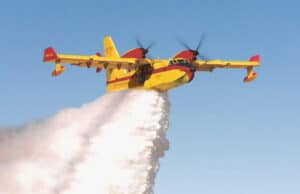
In this territory, these Bombeiros are often in contact with aircraft, giving positions to douse the fire with water. This is another hidden example of the constant devotion these people provide.
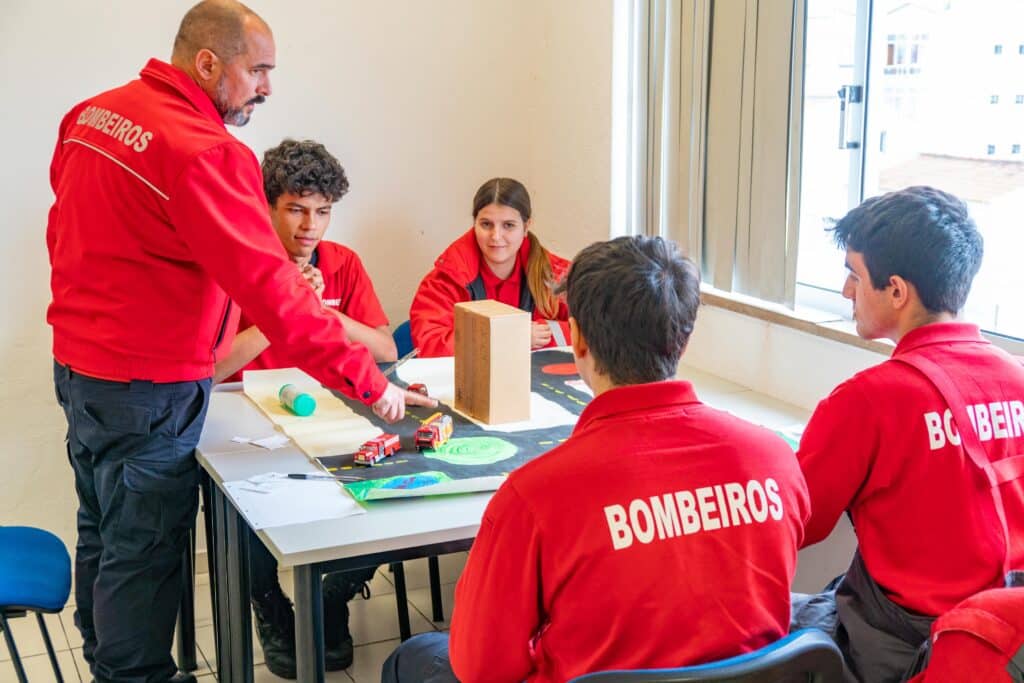
Pedro has also spearheaded a program to educate high school students about the work of a Bombeiro. Some of them might become future Bombeiros. I met a group of four students who were attending a class at the firehouse. The subject was “safety logistics during an urban fire”. Pedro instructed them about the positioning of fire vehicles and equipment, blocking the area from curious bystanders, and how to approach the burning building. The students were fully engaged in the lesson, which I also found fascinating.
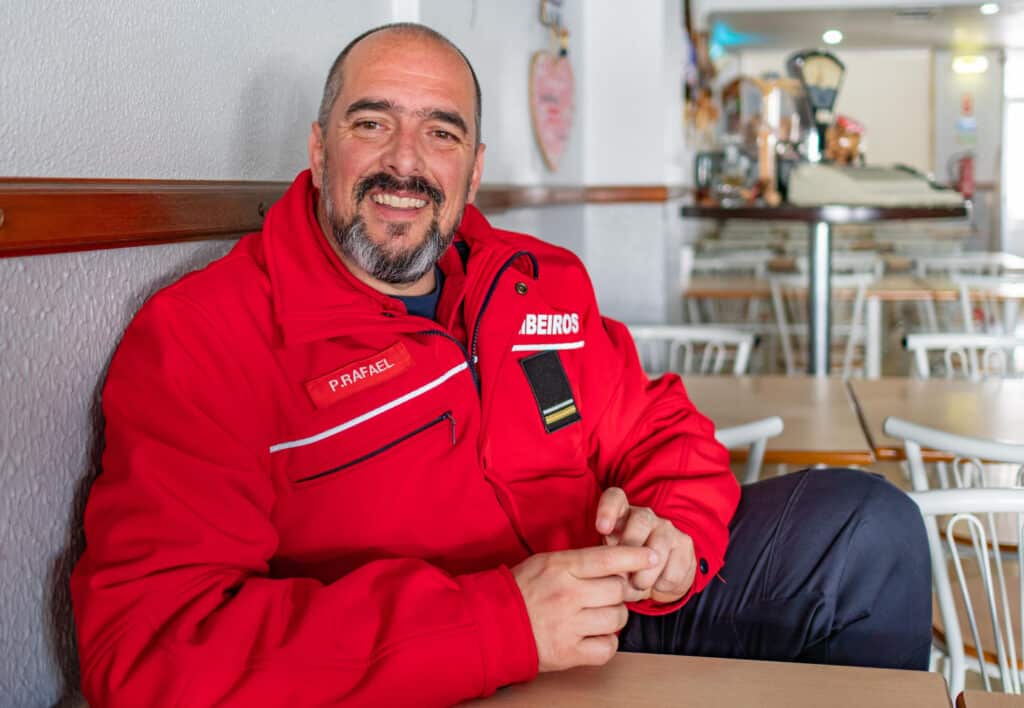
I asked Pedro what the public can do to support the Bombeiros. “We are thankful for donations of food, water, and clothing during an emergency. We appreciate knowing that people think about us,” he said. “Also, where you live, think about fire prevention. Don’t cook outside during fire season. Try to make it safer and easier for firefighters. For instance, trim the bushes and don’t stack firewood against the house. Make sure there aren’t big obstacles around the house, so we can access the area. Keep a fire extinguisher. If you have a swimming pool, keep the area clear for helicopter access.”
Considering all the challenges and personal risks entailed in being a Bombeiro, I wonder; why are they so motivated to have this life? So, I asked Pedro why he has chosen this path for himself. He began by telling me that from 2010 to 2016, he was in the Portuguese Army 1st Infantry Regiment based in Tavira. He worked with Bombeiros in firefighting and prevention. “I enjoy the satisfaction of helping the community,” he explained, “I like the camaraderie, and the feeling of doing a good thing.”
From what I can see, it’s his passion in life. In his heart, he is fearless, and it’s what moves him. His reward is how it feels to save a life.
If you wish to donate to the volunteer Bombeiros, I recommend the charity “Alerta”. This dedicated group purchases much-needed supplies and equipment and distributes them to Bombeiros across the Algarve.
Photos: ERIC ROTH