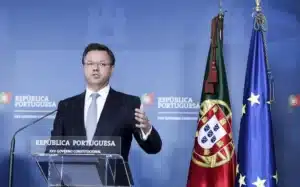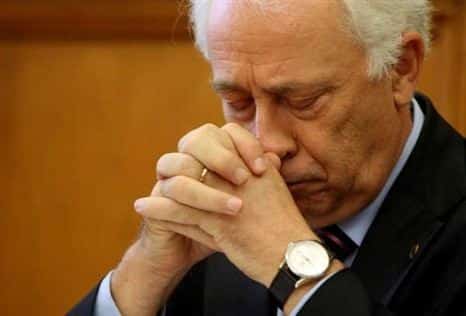
Carlos Costa – governor of the Bank of Portugal – will once again be fighting for his professional integrity today after Novo Banco, “the good bank” he created out of the detritus of BES, has declared its worst ever losses: almost €1.4 billion.
The “exceptional results” (as the bank’s president António Ramalho sought to term them) leave taxpayers once again ‘lumbered’ with what many claim is a white elephant that will only go on and on costing the country money.
In this case, the Resolution Fund – made up of the country’s main banks – will have to inject at least €800 million. As it doesn’t have this money, the State will “have to give a hand”, said last night’s news bulletins, while the folly constructed by BdP was being slaughtered by all and sundry.
“Disastrous”, said left-wingers Bloco de Esquerda, who recalled they have “always said that the government opted for a solution that would be a disaster” (click here).
“Obscene”, said PCP communists, who stress taxpayers are paying for a bank that should, in PCP eyes, be theirs.
“Enormously worrying”, said PSD centre-right through parliamentary leader Fernando Negrão, who stressed Portugal has “already paid €17 billion recapitalising banks”.
Bloco de Esquerda’s financial ‘whizz’ Mariana Mortágua claims the disasters will simply continue. The way we are going, she said: “Portugal will see its entire financial system destroyed, bit by bit”.
Outside the country, the quietly fuming Novo Note Group (major-league investors who lost wardrobes full of shirts in Bank of Portugal’s retrospective accounting preparing Novo Banco for a sale that left Portugal liable to pick up exceptional losses) has ventured once more into damning print.
Novo Note’s ethos is to shame BdP into reversing its ‘€2 billion bond dump’, deftly effected between Christmas and New Year in 2015 “when everyone was looking the other way” – and, in Novo Note’s eyes, unlawfull.
Yesterday, the group used Novo Banco’s “unprecedented losses” to stress yet again that it is time for Portuguese authorities to “engage” with them “to find a mutually beneficial solution that bolsters financial stability and mitigates the ongoing cost to taxpayers”.
Carlos Costa’s BdP “failed to engage with all stakeholders”, said the statement, “before making decisions which “imposed undue costs on taxpayers and destabilised the country’s banking system”.
As an evaluation of an institution set up to uphold a country’s banking system, it could not get much worse.
Meantime, there has been nothing in the press from Carlos Costa. Instead, the bank has released unrelated statements to the effect that it hopes employment will continue to rise over the next two years; that it sees 2018 as the year when the country will recover the level of wealth it had in 2008 and that it was “taken by surprise” by the growth in tourism last year, and that is why its predictions for growth were so ‘off’ (1.8% as opposed to the 2.7% in fact registered).
What is going on behind the scenes as the government takes stock of this dismal PR moment and looks forwards to legislative elections in 2019 will no doubt emerge in leader columns and political commentary over Easter.
But what will certainly follow are the Novo Banco branch closures and staff reducations already announced early this month (click here).
natasha.donn@algarveresident.com