The complex criminal network – allegedly aided by a ‘mole in the Ministry of Foreign Affairs’ – which appears to have ‘legalised’ thousands of immigrants suffered a further blow this week, with the arrest of a fourth purported member of the group that is facing charges of illegal immigration, corruption, money-laundering and document forgery.
Operation Gambérria hit the headlines with 13 arrests earlier this year, on the back of multiple searches in various parts of the country (Coimbra, Espinho, Carregal do Sal, Amadora, Odivelas, Loures and Lisbon).
At the time, the director of the PJ Judicial Police (PJ) of the Centre region, Avelino Lima, intimated that thousands of illegal immigrants, from “a Portuguese-speaking country in South America (there is only one: Brazil) and from Hindustan”, were recruited by the group on social media and elsewhere, and were told of “possibilities and facilities” in exchange for the payment of “a significant figure”.
“Then, in Portugal, there was a structure that did all the work to allow these immigrants, once they arrived, to legalise their status.
“Many of them never even set foot in Portugal, but had residence permits, with repercussions in terms of taxation and social security, which is a worrying reality that has become increasingly serious,” said Lima.
The organised group – each member with “very clear tasks” – is believed to have started operating in early 2022 – with consulting companies being set up for this purpose.
Among services for which immigrants paid were the obtaining of employment contracts, Tax Identification Numbers (NIF), Social Security Identification Numbers (NISS), National Health Service (SNS) User Numbers, translation and certification of criminal records, the opening of bank accounts, and furnishing of residence certificates.
This latest defendant to be arrested is a 37-year-old foreign national (Diário de Notícias puts his nationality as Brazilian), who has no known criminal record in Portugal.
The man has been remanded in custody (along with the seven businessmen, one lawyer and former employee of the Ministry of Foreign Affairs’ General Directorate of Consular Affairs and the Portuguese Communities arrested in May).
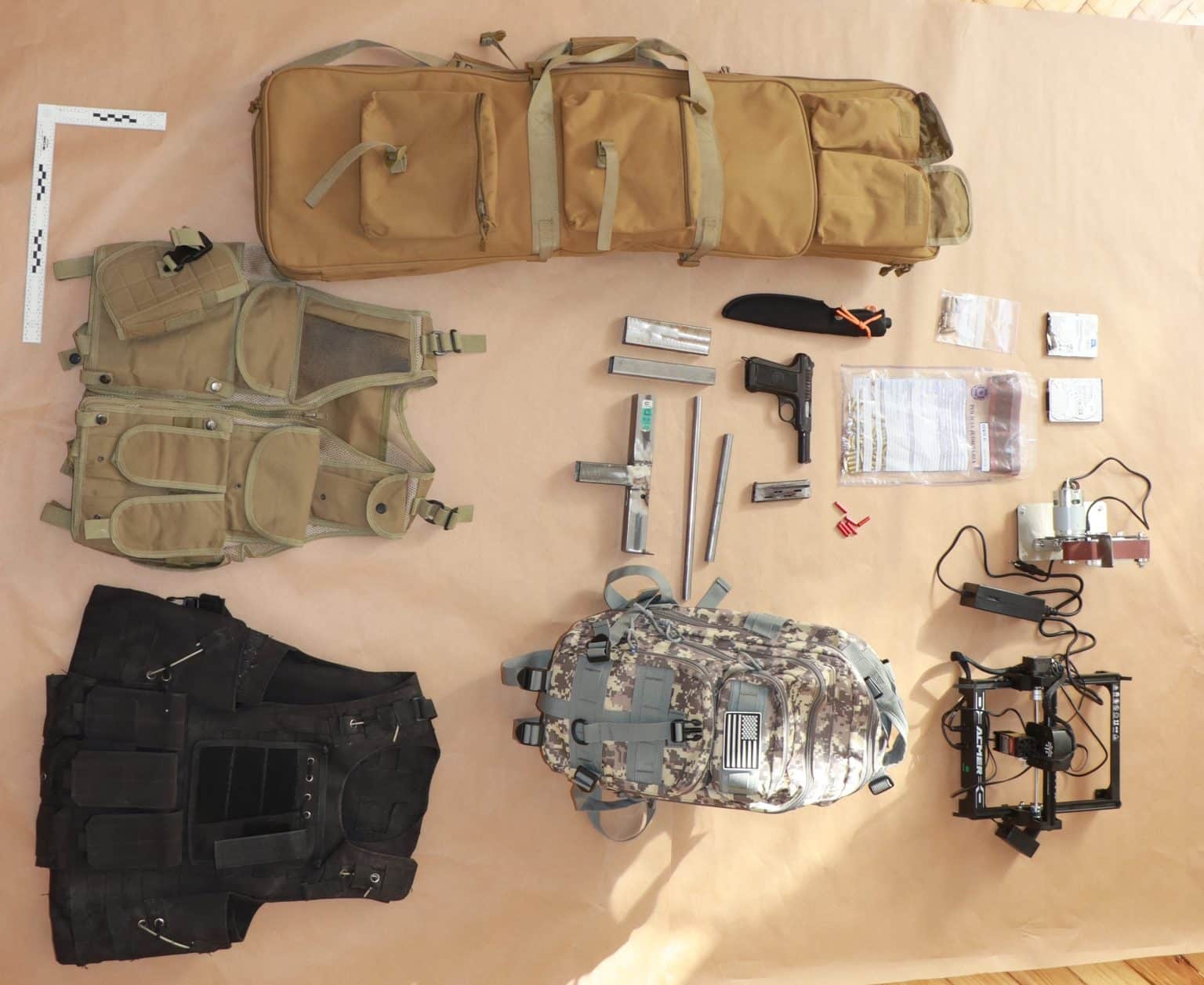
In the searches that led to this new arrest “a huge collection of documentation used in the illegal legalisation of foreigners” was seized, along with a motor vehicle; a 7.65 mm calibre pistol; ammunition; two pairs of handcuffs; tactical vests; a metal detector; sophisticated electronic equipment for copying/ capturing security codes for remote opening; cloning cards; a communications signal jammer; night vision binoculars; a mini laser engraver (which can be used for forgeries); metal parts that were being worked on to design what appears to be a submachine gun; cash and computer equipment”, says the PJ in a statement.
Diário de Notícias has carried an interview with investigation coordinator Carlos Chambel who explains that some of the items apprehended “suggest that the person in question could be involved in other illicit activities”.
The ‘metal parts’ being worked on to design a possible submachine gun being particularly concerning.
From DN’s article, it appears the scam could still be running, in spite of some of its alleged members languishing in preventive custody.
“According to Carlos Chambel, the criminal network is very large and moved tens of millions of euros”, says DN today.
With the end of ‘manifestations of interest, in June last year, the criminals found other ways to operate. One of these was through fake work contracts.
“They quickly changed the scheme and now the process of legalisation is dealt with in territories of origin”, Chambel explains. “They send falsified work contracts from companies that don’t exist, or from companies that are insolvent”.
As to the ‘clients’ – the immigrants desperate to become legalised – Chambel says the investigation so far has revealed “a curious fact. Amounts charged depended on nationality. For people from Africa, for example, the cost was around €2,000. A Brazilian paid less – but for citizens of Bangladesh, charges went up to €15,000” he tells DN.
Chambel has not confirmed whether this latest arrest is the last, or whether further actions will follow. But he did tell his interviewer that it all depends on what is found among the evidence this far apprehended, particularly when it comes to the IT equipment and documents.
“These are very dynamic investigations, involving analysis of digital information obtained from searches, and we may have to move on to other security measures”, he said.
What is still not clear in any way is how the immigrants legalised under this scheme will be treated, or even contacted.
Source material: PJ/ Diário de Notícias/ Lusa