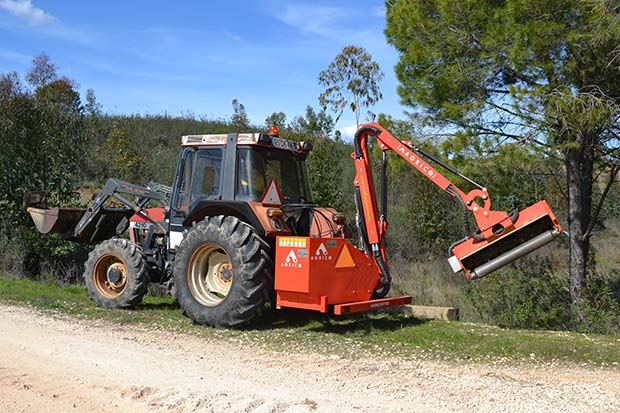
It’s the closest any entity with the government’s ear has got to trashing the current ‘fire prevention campaign’ which has brought whole households to tears as they are forced to topple much-loved trees.
The Technical Independent Commission, set up to analyse the terrible fires of 2017, has stated that the law obliging property owners to clean their land according to strict stipulations “could have a contrary effect to that desired”.
In technical terms, it “could lead to a greater and much more rapid recovery of the combustible material it means to control”.
By razing back undergrowth, ‘superficial combustible material’ like shrubs will be given greater exposure to the sun and “allow a greater speed of wind at soil level which will fan the speed of fire propagation”.
Quoting from the document, various newspapers this morning are finally putting in print what councils and homeowners have been saying for weeks: The government’s knee-jerk reaction to last year’s catastrophes has “no technical justification” and could actually make things a lot worse.
The law brought out in October which now sees the whole country desperately cutting down trees deemed too close to homes (that more often than not are ‘protected’ by comprehensive automatic irrigation systems) is an “example of deficient use of existing knowledge” and sloppy communication to the public (literal translation: ‘not in the least bit rigorous’).
Says tabloid Correio da Manhã this morning, the document also accuses the government of having limited itself “for example, to limiting the height of bushes, without taking into account of the density per hectare”.
“It explains that in the case of gorse and heather this could lead to extreme behaviour of fire”.
As for the rest of the 200-page report, it has served to revisit all the failings cited in the dreadful aftermath of fires that killed 117 people in the worst incidents of their kind in history, not only in Portugal but on a European level.
Associations of victims – both of the fires of Pedrógão Grande, and those that started in the centre on October 15 – have stressed that they are not prepared to let blame “die a spinster”.
The possibility of legal action against the State is lurking in the background, but what effect this could have – particularly after the government has started delivering on compensation claims – is debatable.
What does look likely, however, is that the threat of stiff fines for landowners deemed not to have sufficiently denuded their properties (as per ‘government guidelines’) may now quietly melt away, as the legal implications of fining people could be too easily challenged.
Political parties are chewing over the many messages coming from this report, with accusations that the government has shown “great incompetence” at almost level already coming from CDS leader Assunção Cristas.
natasha.donn@algarveresident.com
Photo: ANA SOFIA VARELA/OPEN MEDIA GROUP