Portugal’s filigree art seeks UNESCO stamp
The northern Portuguese municipalities of Gondomar and Póvoa de Lanhoso have formally submitted a joint application to have Portuguese filigree recognised on UNESCO’s Representative List of the Intangible Cultural Heritage of Humanity.
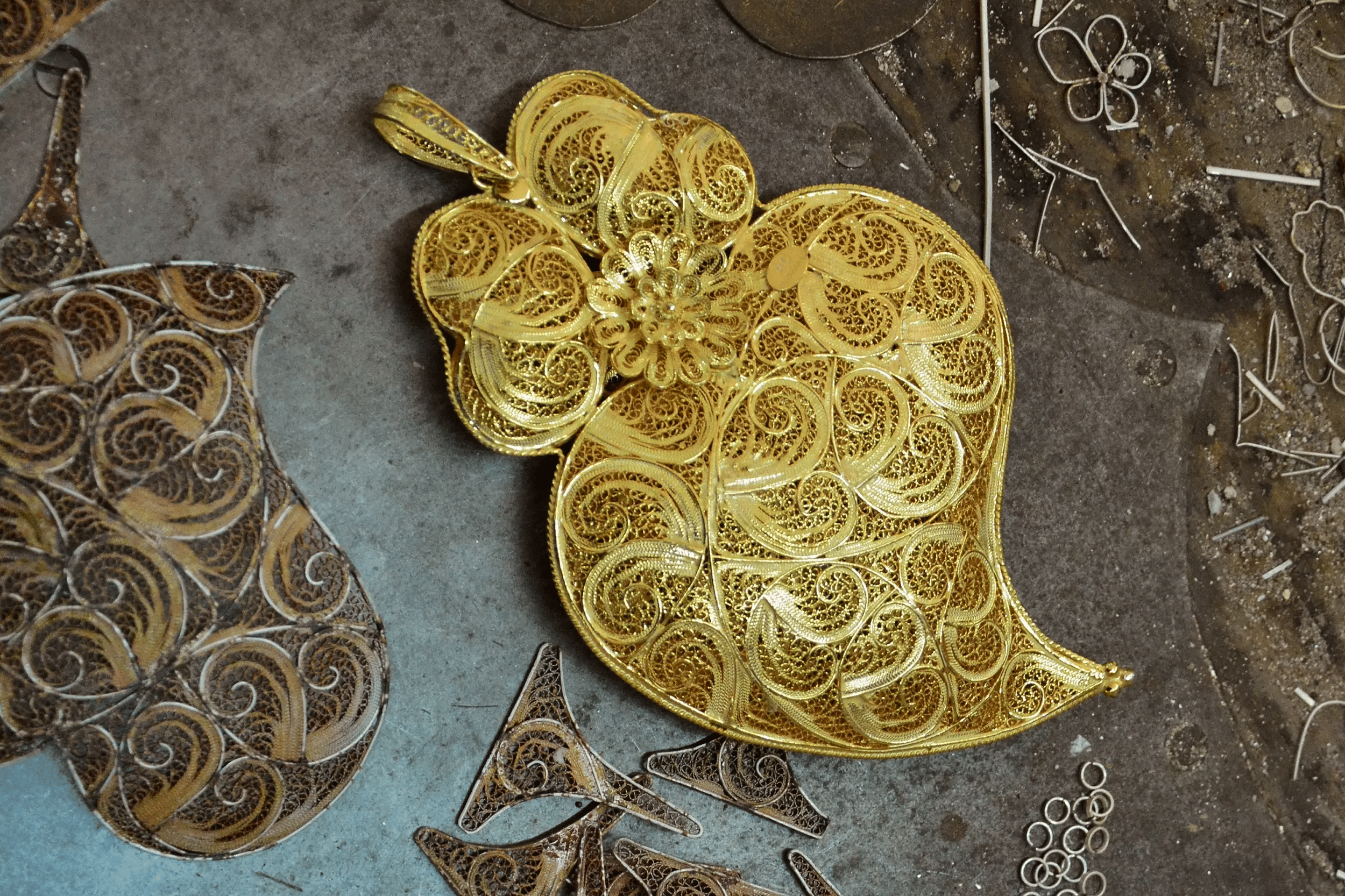
Describing themselves as the “only production centres of traditional filigree in Portugal”, both municipalities aim to safeguard and celebrate what they call a “millennia-old art of goldsmithing” – the intricate crafting of fine gold and silver threads into delicate lace-like jewellery, considered a “symbol of Portuguese artisanal excellence”.
In a joint statement, the councils say Portugal’s filigree is a “living legacy”, passed down through generations of master artisans whose work “continues to enrich Portugal’s cultural identity”.
“This submission represents a strong commitment to protecting and valuing a cultural legacy of exceptional importance,” the two boroughs say. “It also acknowledges the accumulated knowledge and craftsmanship of generations of filigree masters, whose dedication deserves to be preserved, promoted, and passed on to future generations.”
The bid for UNESCO status builds on years of institutional collaboration which started when the two municipalities first signed a cooperation protocol in 2016, leading to official certification of the technique in 2018 and its inclusion in Portugal’s National Inventory of Intangible Cultural Heritage in 2023.
If successful, the listing would give international recognition to one of Portugal’s most iconic and time-honoured crafts.