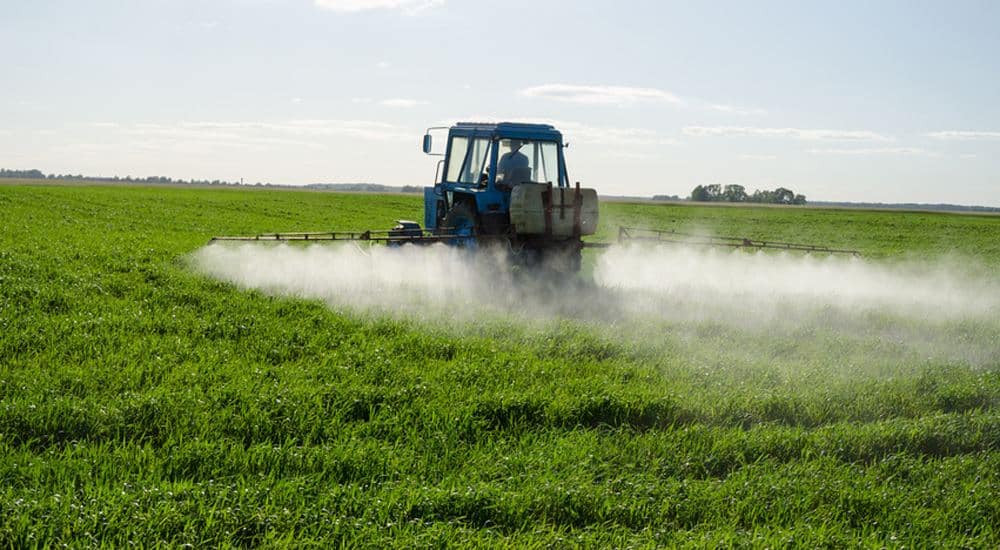
Portuguese agriculture could lose up to €510 million annually due to reduced productivity and increased costs following Brussels’ decision to ban the use of certain active substances.
The warning comes in a study by agricultural consultancy AGRO.GES, presented today by trade association CropLife.
The document assesses the impact of Brussels’ ‘From Farm to Fork’ strategy, which seeks to reduce the use of pesticides in agriculture by 50% in the next five years.
Essentially, 44 active substances are “candidates for replacement by the European authorities”. But these ‘active substances’ (plant phytosanitary products, or in common parlance ‘pesticides’) are seen by farmers and producers as necessary evils to ensure crop yields.
AGRO.GES has carried out 20 case studies, representing eight sectors of Portuguese agriculture, to assess the impact of these pesticides’ withdrawal.
Yields from vineyards, olive groves, corn, industrial tomatoes, Rocha pears, apples, rice and potatoes were all considered, and “vine cultivation stands out, with a drop of €161.8 million”, writes Lusa.
This is followed by industrial tomato cultivation (down €77.1 million), olive groves (down €68.4 million), corn (€63 million), potatoes (€55.7 million), apples (€38.2 million), pears (€28.7 million) and, finally, rice (a loss of €17.3 million).
These losses could amount to €425 million per year in terms of gross margin, equivalent to 10.3% of the Gross Value Added (GVA) of national agriculture.
As for exports, “the losses in the sectors under analysis may have a much greater impact (…). Olive oil, wine, tomatoes, pears and apples would correspond to a loss of €360 million in production, weakening the processing industry and/or the export markets for these sectors”, warns the report.
Indeed, if the active substances at risk were withdrawn, vineyards in the Douro, Trás-os-Montes, Beiras and Alentejo regions, corn, industrial tomatoes and rice in Mondego “would probably disappear” due to the decline in productivity and the increase in costs.
Olive groves, some fruits, vineyards in the Vinho Verde and Lisbon and Tejo Valley regions, potatoes and rice in Ribatejo would remain viable, “but with very significant losses, which could jeopardise their associated investments”.
In view of the conclusions of this study, AGRO.GES recommends that the impacts on the remaining agricultural sectors in Portugal be analysed and that the implementation of the Brussels strategy be carefully considered. Obviously, there has to be a balance when it comes to the use of pesticides, but this balance must be based on “solid scientific data, says the study, recommending “fostering innovation by promoting the integration of biopesticides, digital agriculture and precision technologies, without forgetting the indispensable role of plant protection products in the short and medium term.”
CropLife (formerly Anipla) was established in 1992 and represents entities that research, develop and market solutions to improve agricultural production in a sustainable manner, concludes Lusa.
Source material: LUSA