Government leaders have been left gasping by the Eurostat decision to include the ‘recapitalisation’ of State Bank CGD into the figures for Portugal’s 2017 deficit.
In doing so, the country’s overall deficit went from an ‘historic 0.92%’ – a figure that has already seen Portugal hailed as a poster-child for economic recovery – to a fairly abysmal 3%.
Indeed, 3% puts us right back in ‘excessive deficit territory’ bearing in mind that excessive deficit procedure is triggered if any member state’s budget deficit exceeds that figure.
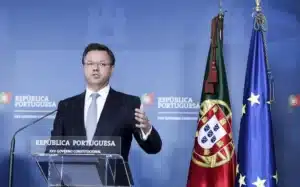
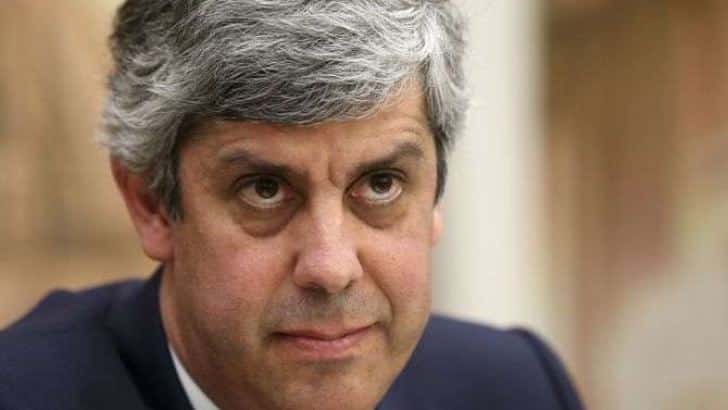
Finance minister Mário Centeno – the new leader of the Eurogroup – is not in the least bit pleased.
“It’s wrong. It goes against the decision of the European Commission, counters European treaties and doesn’t properly represent the investment made in Caixa Geral de Depósitos by its shareholders”, he told journalists, repeatedly stressing the ‘wrong’ accusation.
Good news? The overnight ‘tripling’ of Portugal’s deficit will not have any effect on public accounts and is essentially a ‘technical issue’, albeit irritating for a government that was priding itself on financial fancy-footwork.
As for the reasoning as to why the massive CGD ‘recapitalisation’ (a smart word for a bailout) was wrong, this hinges on the expense being “an investment” as opposed to State aid.
News anchors have been trying to get to the bottom of this mindset, suggesting there is no certainty that the recapitalisation will actually bring returns. But the official line is that it will, and Eurostat has thrown the PS administration a very nasty, curved ball.
Said Centeno, the country has reached the point where “accounts are more sustainable and more sustained in the most sustainable growth in decades”.
Taking a deep breath he continued that this could be seen as a statistical decision “if it wasn’t wrong. But it alters nothing…”
Centeno stressed that even though technically back on the brink, Portugal will not fall back into excessive deficit.
Meantime, SIC television news has honed in on another aspect of the official figures: Portugal is the member state that is most saddled with PPPs, standing for public-private partnerships.
The ‘weight’ of PPPs on GDP here is 11% whereas the European average is just 2%.
Worse, of the money invested in these projects – almost all of which involve roads – two thirds has failed to be recovered: an accounting blip of €12.4 million.
SIC adds that PPPs “allow the State to move forwards with large projects for which it doesn’t have the ready finance”.
Portugal faces paying out another €20 million on PPPs until 2042, adds SIC.
natasha.donn@algarveresident.com