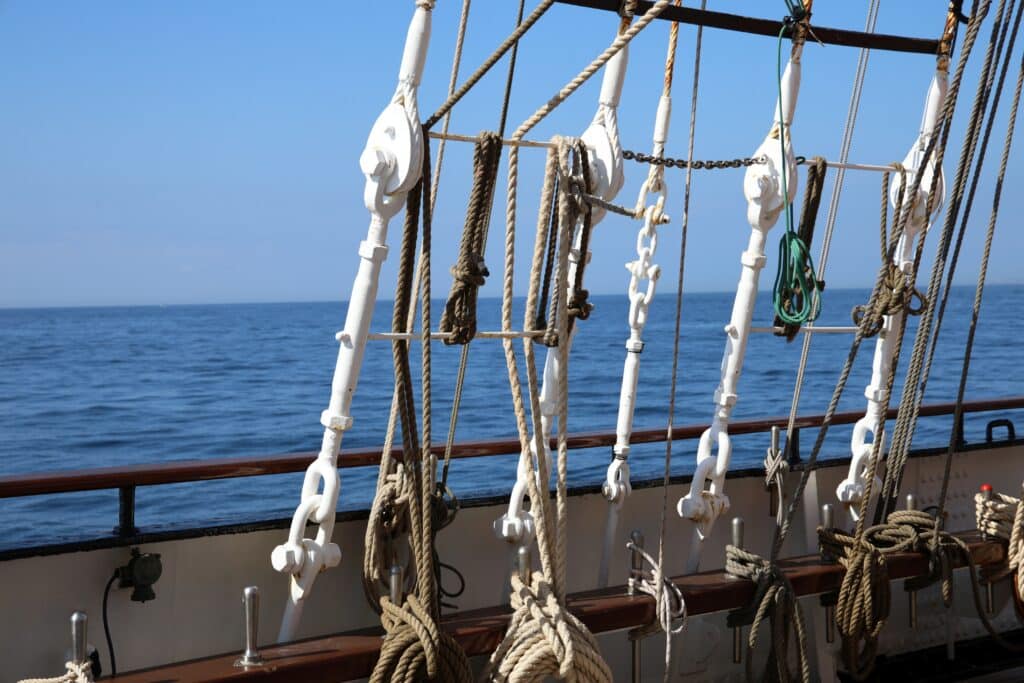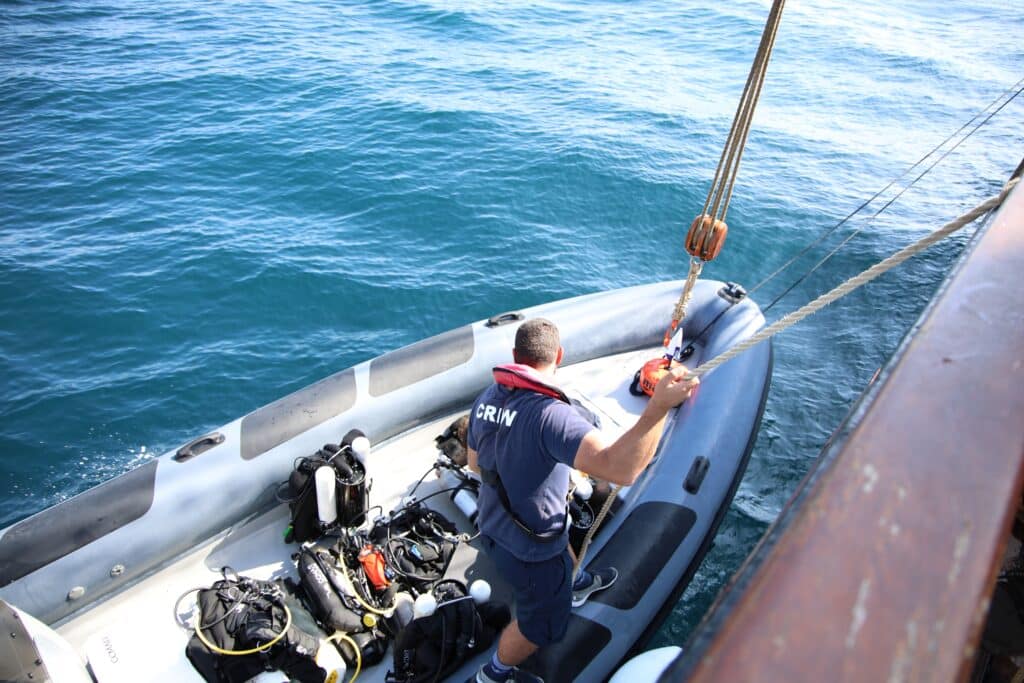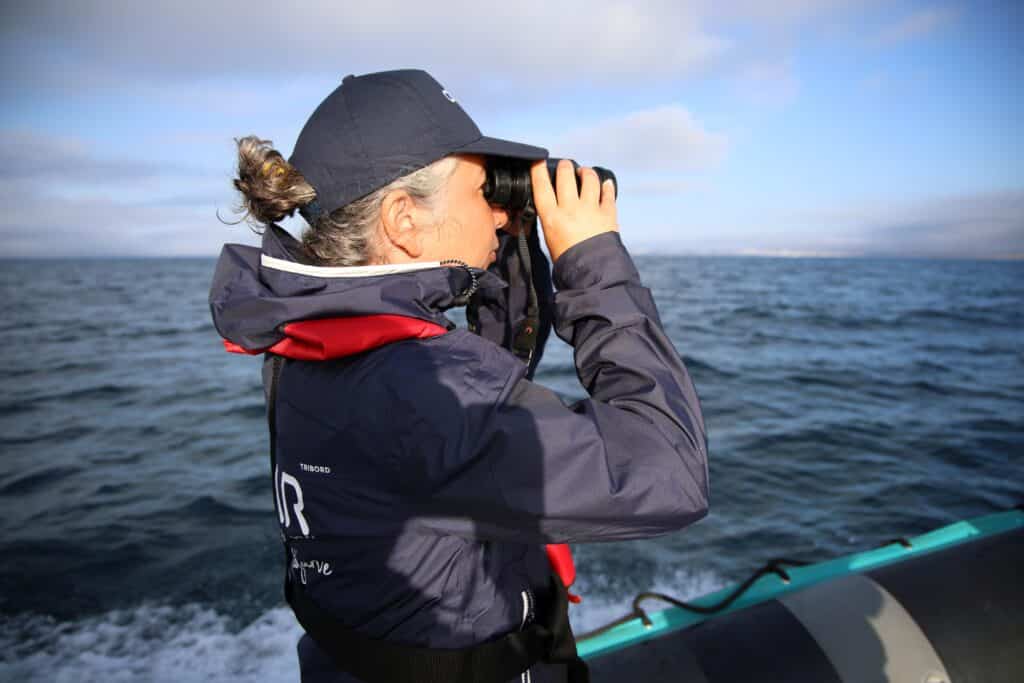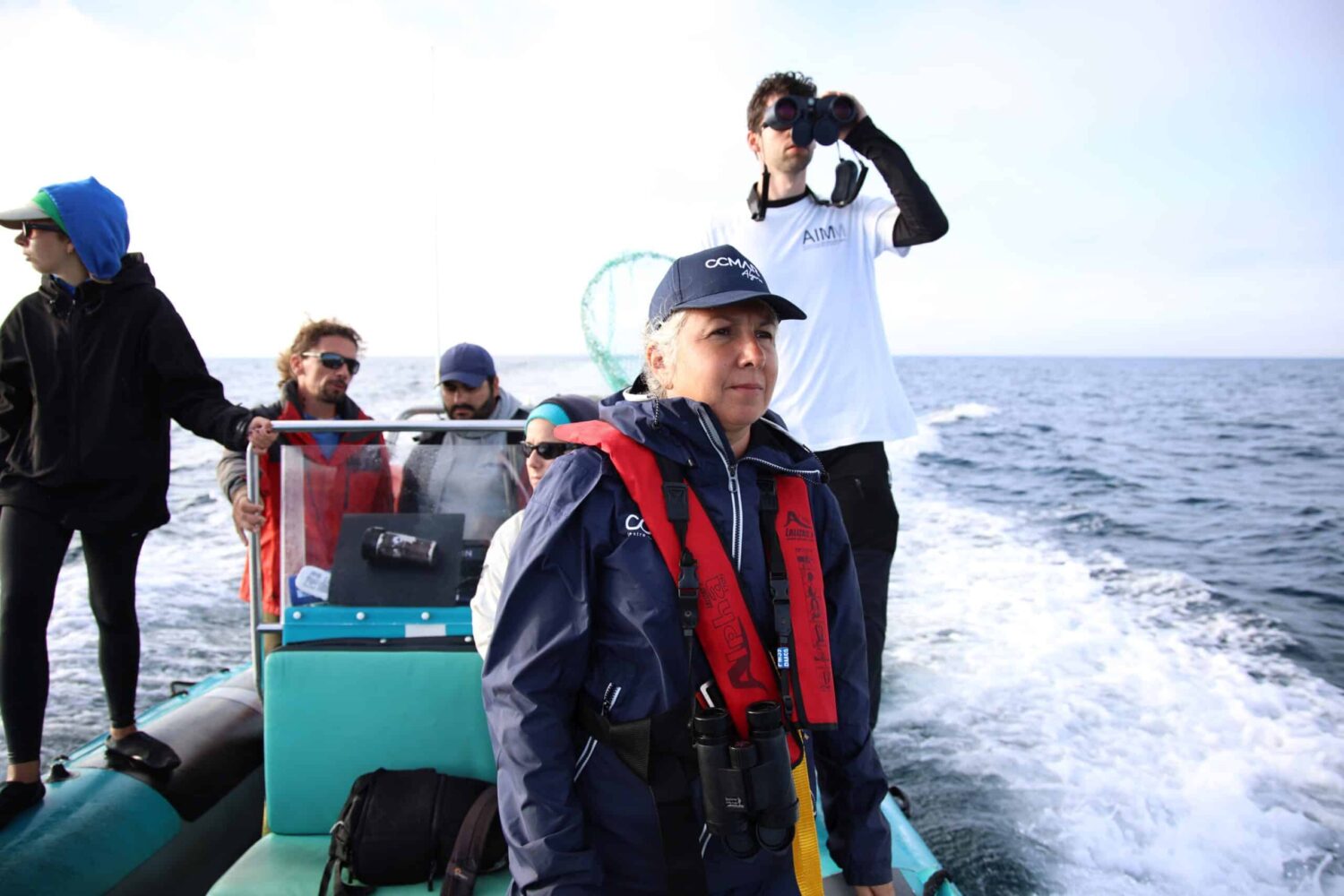
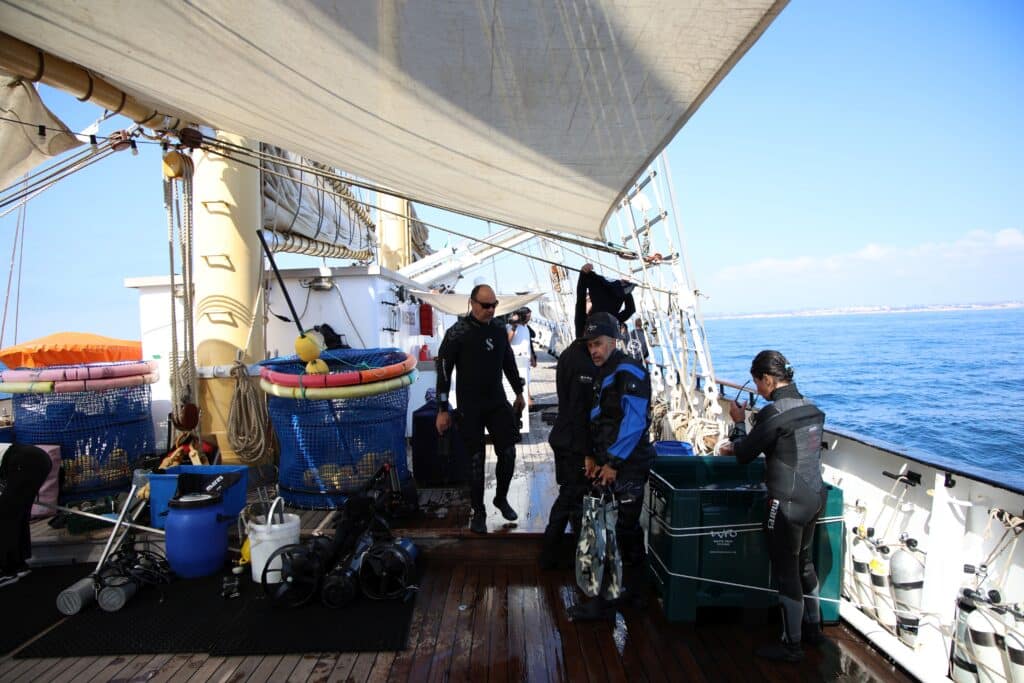
Aboard the historic Santa Maria Manuela ship, a team of over 60 scientists, divers, and marine specialists from the University of Algarve’s Centre of Sea Science (CCMAR), the Oceano Azul Foundation, and the Lisbon Oceanarium spent over one week charting one of Portugal’s most extraordinary underwater landscapes: the Pedra do Valado Reef, off the Algarve coast.
The expedition – which started on September 28 and ended on Tuesday, October 7 – marks the first major scientific voyage to the Pedra do Valado Natural Marine Park, a vast protected area covering 156 square kilometres across the municipalities of Albufeira, Lagoa, and Silves.
Officially designated in January 2024 as the country’s first Marine Protected Area of Community Interest (AMPIC), the park represents a milestone in Portugal’s ocean conservation efforts.
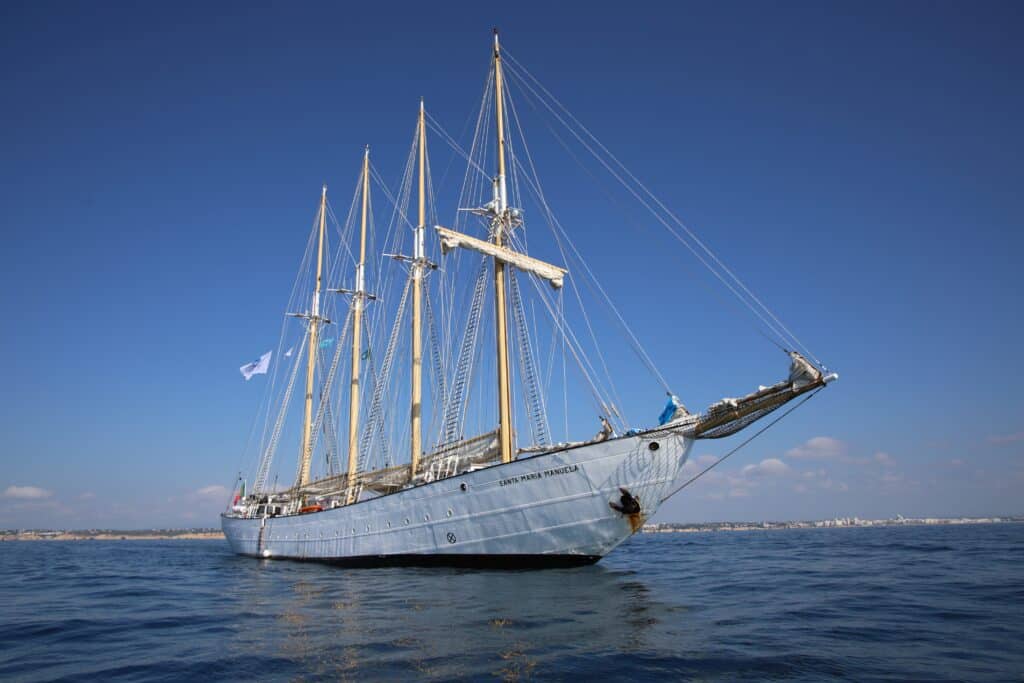
“The goal is to relaunch the implementation process of the marine park,” explains Jorge Gonçalves, lead scientist from CCMAR. “There is a lot to do in terms of mapping.”
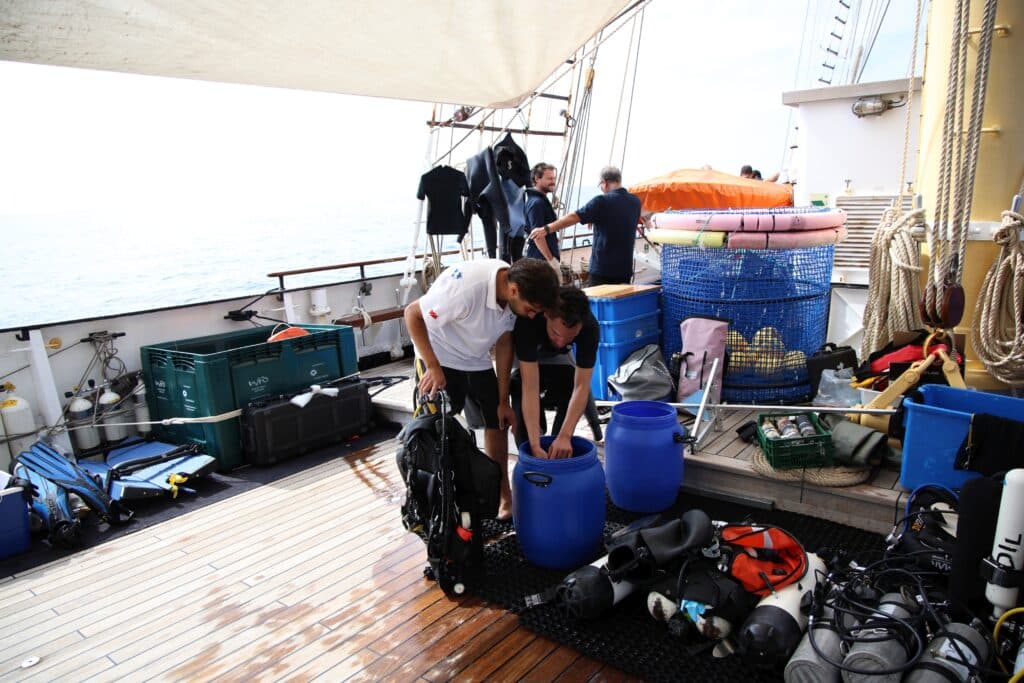
Over the past week, the team has carried out dozens of dives in the Armação de Pêra bay, within the park’s total protection zone. Using ROVs (remotely operated vehicles), BRUVs (baited cameras), hybrid rebreathers, 4K video, and traditional sampling tools, researchers collected a wide range of biological data and images.
So far, the team has identified around 20 species never before recorded in this area. “We found, for instance, a large species of gorgonian coral that had never been documented at Pedra do Valado,” Gonçalves says.
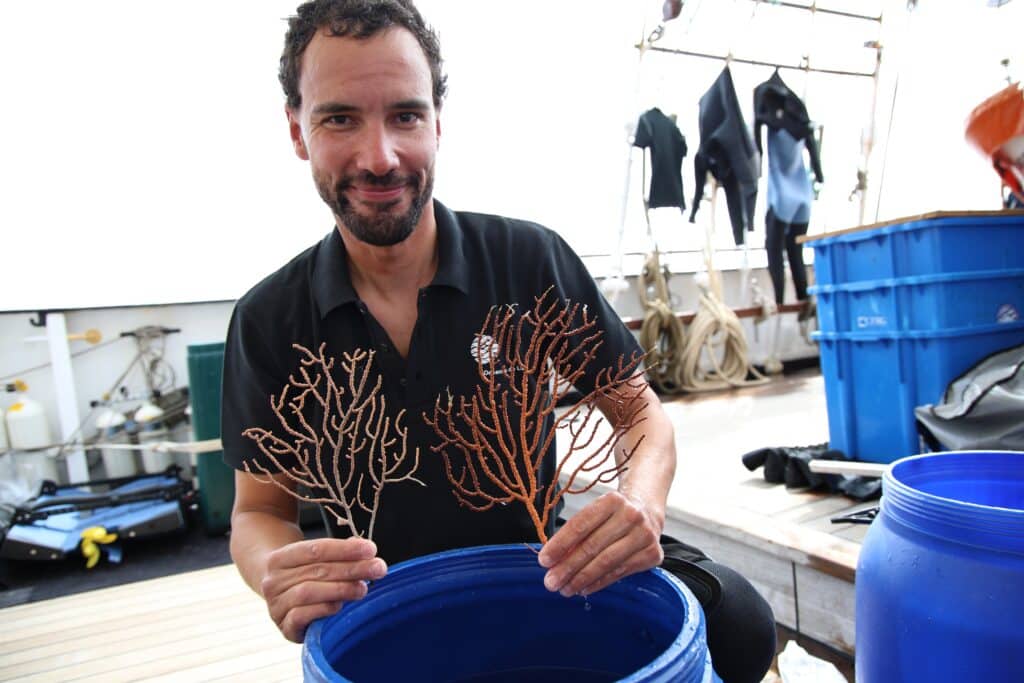
Researchers have catalogued over 1,000 species within the reef – including 754 invertebrates and 152 fish species to 61 seabirds and 82 macroalgae – many of them of commercial, biomedical and touristic interest, and some of them rare or endangered. These ecosystems, scientists note, support hundreds of jobs in small-scale fishing and maritime tourism, generating over €40 million annually for the regional economy.
The Algarve’s marine jewels
One of the expedition’s major focuses has been the fields of coralline algae, known as rhodoliths or maerl, that carpet sections of the seabed and provide shelter for multiple species.
“These algae grow only about one millimetre per year, meaning some deposits are over a hundred years old,” João Silva from CCMAR explains. “Together, they create habitats of high conservation priority, recognised by EU directives.”
One key species, Lithothamnion corallioides, dominates the maerl beds found in Armação de Pêra – the only site in mainland Portugal where this habitat exists. These algae live unattached to the seabed and produce calcium carbonate, acting as major blue-carbon reservoirs, storing large amounts of carbon in the ocean floor. But they are highly vulnerable to ocean acidification, which dissolves calcium carbonate and threatens their survival.
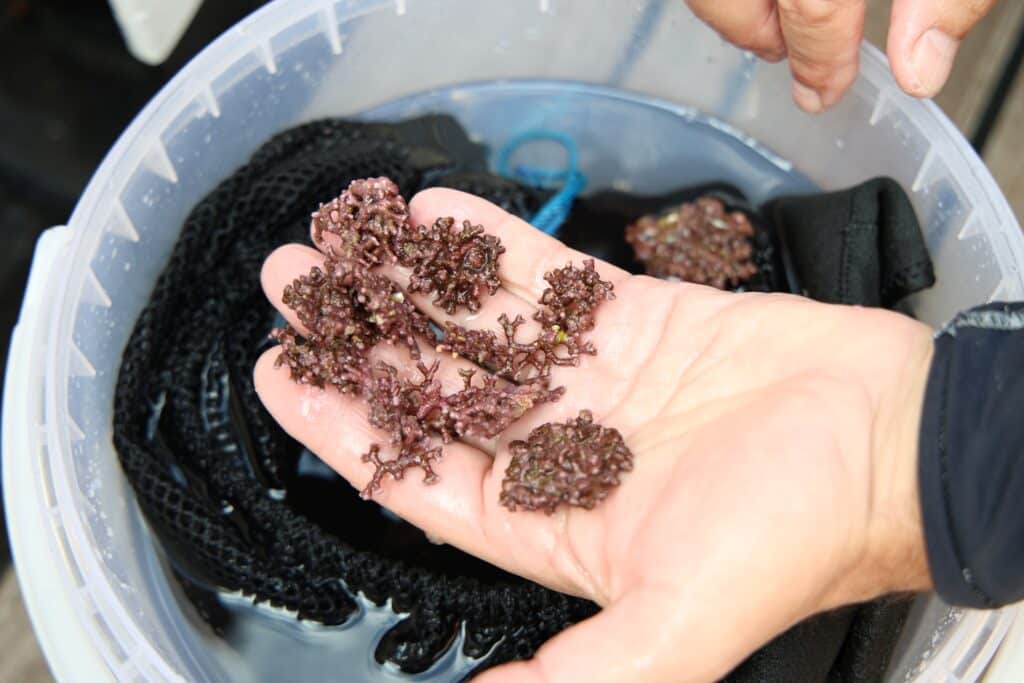
According to Silva, mapping their extent and understanding what other species depend on them is extremely important. As he explained, each rhodolith is a micro-habitat, hosting dozens – sometimes hundreds – of small organisms that support entire food chains. “Protecting them means protecting the next generations of these organisms and the entire ecosystem.”
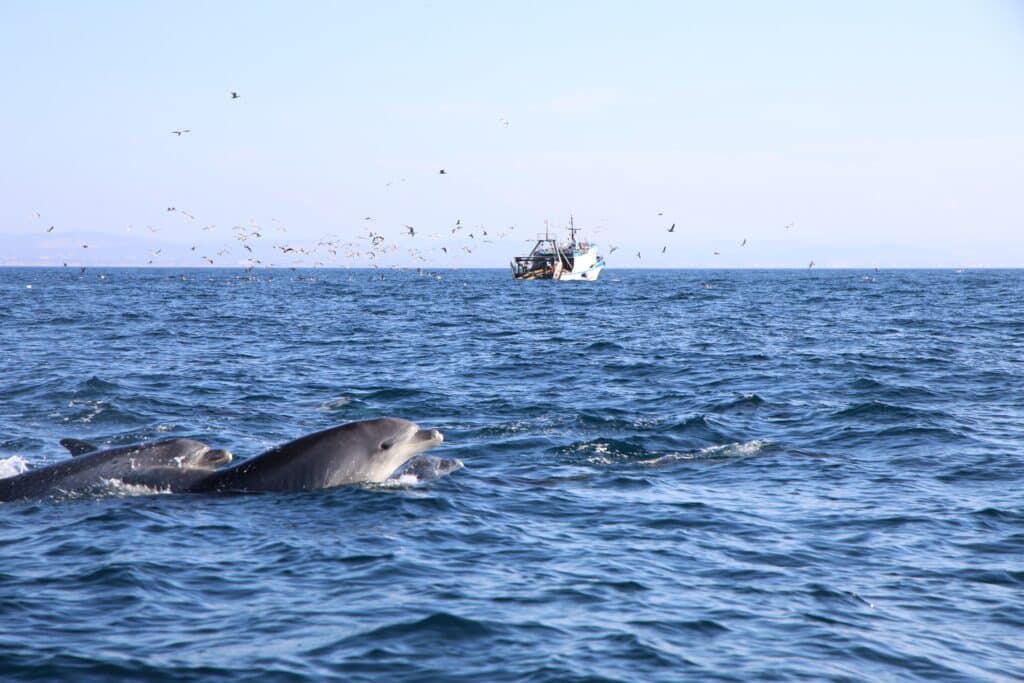
Overall, the expedition found encouraging evidence that the park’s total protection zone is already paying off. During their voyage, team members spotted everything from large fish, healthy corals and even rare species of dolphins and seabirds, according to Diogo Paulo, scientific dive coordinator at CCMAR.
Invasive threat
Despite the positive findings, one major concern remains: the Asian invasive algae Rugulopteryx okamurae. Native seagrass meadows, once a common sight, are disappearing – likely because of this invasive species, warns Jorge Gonçalves.
“Fishermen complain that it fills their nets,” he says – just one example of its negative effects.
The only action that makes sense now, according to experts, is to “keep ecosystems as healthy as possible so that they can resist and find a new balance.”
“It’s not possible to remove (the invasive species), only mitigate its expansion. Restoration will make sense later, when pressure decreases – otherwise, we’d just be chasing the damage,” Gonçalves says.
Community involvement
The creation of the Pedra do Valado Marine Park was the result of a grassroots movement that began in 2018, uniting fishermen, scientists, local councils, and NGOs around a shared goal: protecting the reef. Covering 156 square metres, it’s one of Portugal’s largest rocky reef systems.
“I’ve been diving here for 30 years,” says local fisherman Miguel Rodrigues. “The reef is still in great condition, but it faces real threats, from climate change to pollution. We depend on it and have to protect it if we want to keep using what nature gave us. It is a blessing for fishermen, tourism and science.”
For Diana Vieira, project manager at the Oceano Azul Foundation, community involvement is key. “Marine parks only work if the community is involved from the start. Fishermen helped co-create this park, and that makes all the difference.”
The scientific campaign was promoted by the Oceano Azul Foundation, the Lisbon Oceanarium, and CCMAR in partnership with the Institute for Nature Conservation and Forests (ICNF), the Portuguese Navy, the National Maritime Authority (AMN), the Ports Administration of Sines and the Algarve (APS), and the municipalities of Albufeira, Lagoa, Silves, and Portimão. It also involved collaboration from the AIMM – Association for Marine Environment Research, CEPEA, DiveSpot, A ROCHA – Christian Association for Environmental Study and Protection, the Directorate-General for Maritime Policy, and the Portuguese Environment Agency (APA).
Photos: Bruno Filipe Pires/Open Media Group