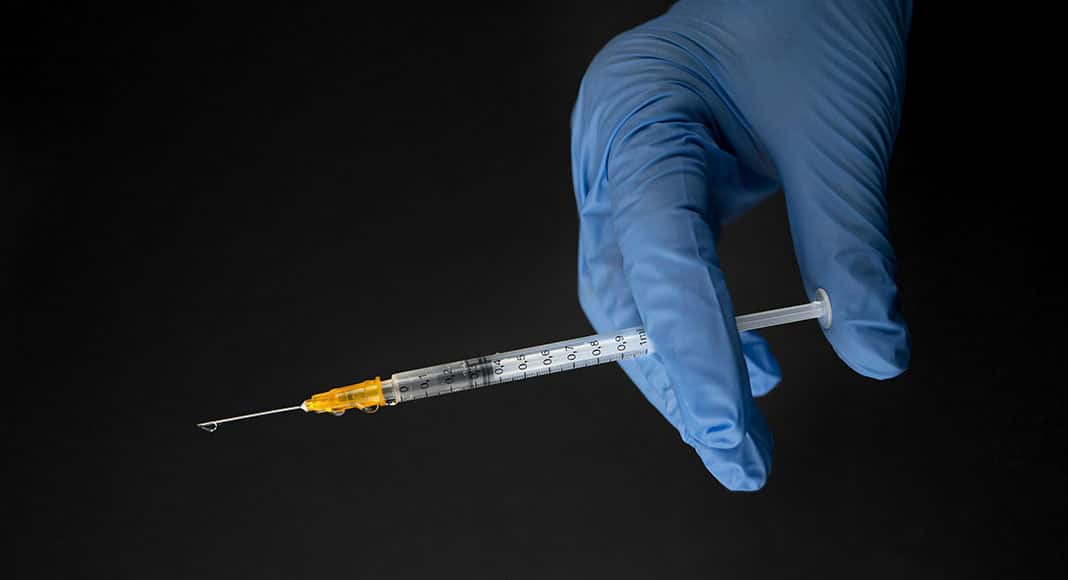
This is not an article about being pro- or anti-vaxxing, nor do I want to engage in any such debate. The intention here is merely to make us more aware of the history behind WHY we actually vaccinate.
Historically, disease-prevention using inoculations was practised in Asia Minor, Middle East, Africa, India and China well before the 15th century, with some sources predating such practices to as early as 200BC.
Inoculation was mainly targeted against smallpox, a disease which carried a mortality rate of over 30% in its milder form and almost 100% in its haemorrhagic variant. It involved exposure of a smallpox-free individual to an attenuated (meaning very weak) or inactivated virus (such as dried remnants of scabs, etc) through direct contact into an open sore or even through sniffing them up the nose.
This concept came through the observation that individuals who recovered from even a mild disease rarely caught it again. Clearly, the “ancients” were onto something with the intranasal administration as there is increasing research into nanoparticle antigens to be administered in this manner as Influenza and Covid vaccines.
Lady Montague brought this novel inoculation practice to England from Istanbul in 1721, and Russia’s Catherine the Great was also similarly inoculated against smallpox during her reign.
In 1774, Benjamin Jesty made the breakthrough link between cowpox and smallpox. This, together with lengthy observational studies of the pox-free skins of milkmaids, laid down the groundwork for Dr Edward Jenner’s final experiment in 1796 which proved that inoculations with cowpox prevented patients getting ill with smallpox. Jenner became known as the ‘Father of Immunology’ and the term “vaccine” is derived from the term Variolae vaccinae (‘pustules of the cow’), which Jenner gave to indicate cowpox.
Jenner’s methodology may have been questionable but maybe not as much so as that of Louis Pasteur, yes, him of the pasteurization fame. Developing on his germ theory of disease spread, Pasteur (although not a medical doctor himself) embarked in 1885 on a series of injections of increasing strength rabies toxin on his subject. Luckily, the subject survived the toxin, and the disease and so post-exposure prophylactic vaccination was born.
The Spanish Flu pandemic of 1918 prompted another big investigative drive in how to harness viruses for disease prevention, from which came the first Yellow Fever vaccine in 1937, whopping cough in 1939, influenza in 1945, and polio in 1954. Thereafter came the measles vaccine in 1964, mumps in 1967, rubeola in 1969 and the first 3-in-1 MMR vaccine in 1971.
Colonisation and the Industrial Revolution brought home the impact of disease spread to vulnerable populations. During the 16th century, an estimated 20 million native deaths in the New World Americas to disease alone has been attributed to colonisation by the Spanish.
Similarly, the first Australians suffered over 80% total population loss during the first 10 years of European colonisation, with smallpox and measles being the main culprits. Introduction of vaccines to these communities was slow and problematic but, once established, helped to significantly reduce mortality.
The history behind the development of vaccines holds one main theme in common with vaccine development even now, and that is to try and prevent mortality and/or morbidity (that is long-lasting health consequences) from a specific disease.
The vaccines themselves remain varied, from live attenuated viruses to dead/inactivated ones; from toxins to pathogen fragments embedded in other inactivated viruses needed for activation of the immunological response. It is these different technologies used in vaccine preparation that address diverse challenges of disease control, for example live vaccines excel against rapidly mutating viruses like measles, while subunit vaccines suit stable pathogens like hepatitis B.
The premise that prevention is better than cure holds true and should always be the guiding element when choosing which vaccine pathway to follow.
First, do no harm to yourself by preventing the most serious diseases which can affect you directly … but also do no harm to your fellow humans by creating a “herd-immunity” such as evidenced historically by the eradication of smallpox and almost complete eradication of wild polio cases.
The choice is always yours, but it should always be an informed one.