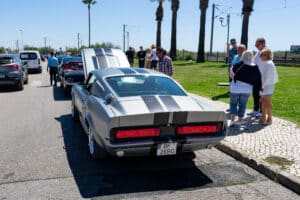
It had been a while since I had driven a Honda. And I always like to drive any new HR-V because my first car was an original HR-V from 1999 that my mom gave me when I took my driver’s test and got my license.
It was bright red, with a 1.6 petrol engine and 105 horsepower. It was not the fastest and had a big appetite for 95 RON, but I absolutely loved it. My first car. Freedom to go anywhere I liked, whenever I felt like it.
I really don’t understand kids today and their iPhones XYZ or something, that cost about the same as a used car. I had dreamed of my first car ever since I can remember. I took my wife for a drive in that car. She was not even my girlfriend then – but the Honda sure helped (wink). Too bad some drunk destroyed it when he ran a red light and crashed into us one night. The memories remain though.
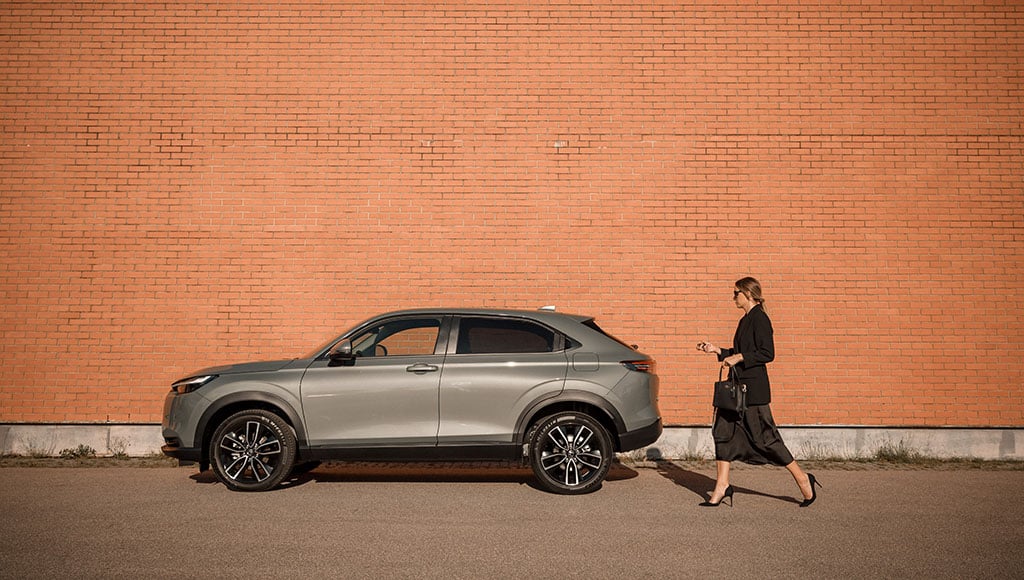
The HR-V is now in its third generation and back to a strong personality in aesthetic terms – something the first one had in spades but the second-gen clearly lacked.
The original HR-V was a model aimed at a younger audience, a car Honda launched to rejuvenate a line-up that seemed to appeal only to Mr. Play-it-Safe. And it did just that. They then went for the grandpas with the second generation but decided this was a car that needed a bit more flair – again. It needed a bit more pizzazz.
Launched in late 2021, the current HR-V sits at the most crowded segment in the market, that of the compact SUV. It was given a very soft facelift at the end of last year and so is back on the press car park.
Small changes have not transformed the overall look of the Honda. There is a new, squared front grille, redesigned front bumper and headlights and the profile lines have been tweaked to make it look bang up to date.
It’s still hybrid-only, making the most out of the electric motor around town and then calling for the petrol engine out on the open road. On mixed conditions, it uses both to make it as efficient as possible – undoubtedly its ultimate goal.
The HR-V is built on Honda’s Global Small Platform, where other models also sit. Economy of scales and all that. The petrol engine is a 1.5-litre and, with a little help from the electric motor, puts out a total output of 131 horsepower. The battery sits under the boot.
The gearbox is an e-CVT sending drive to the front wheels. Ah – I hear you saying – but what exactly is an e-CVT gearbox? Well, it’s a CVT gearbox with electric assistance. Not the best explanation, is it?
A CVT gearbox is not a traditional automatic transmission, with a set of cogs, shafts and forks. Instead, it uses a belt and conical shaped gears, so there is no interruption in power and no steps when changing gears. It seems complex, but in fact it isn’t.
The belt works as an elastic drive that varies the ratio between engine speed and wheel speed without interruption, ensuring the car always stays in the ideal power band. This type of transmission is used for efficiency goals and would never work in, say, a sports car.
Unsurprisingly, the HR-V is not sporty in any way, shape or form. In fact, I always found the Honda to be in its best behaviour when driven at sensible speeds, with the hybrid gubbins doing their thing. When pushed, the petrol engine steps out of its comfort zone, is quite noisy and, no matter how much you press the right pedal, it never goes that fast.
The pleasure in driving this Honda is in the comfort it offers, the quality it has and, mostly, how efficient it is. Under 6 litres of fuel for every 100km is a terrific figure for a car this size. My dear HR-V and its 105 horsepower never used less than 9 litres/100km, meaning the Japanese constructor has lowered its emissions by more than 30% in only two generations. Well done.
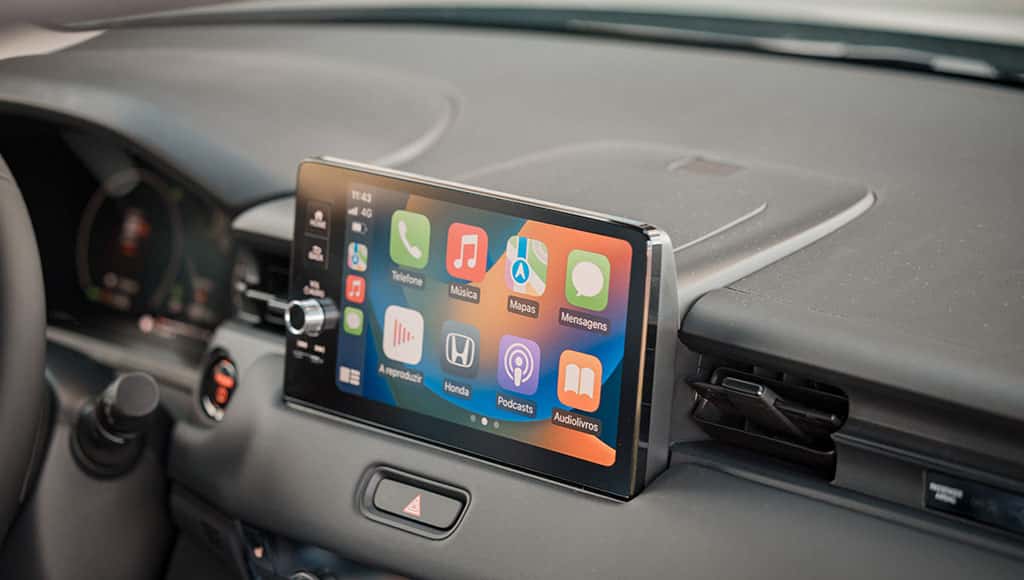
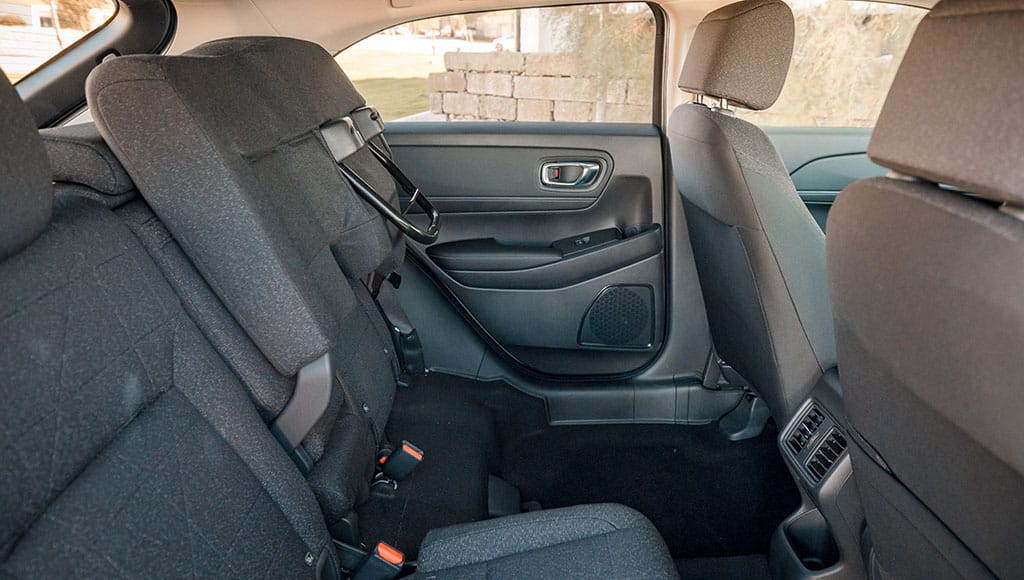
Inside, ergonomics are really good, space abounds, and everything feels solid and very well put together. Perceived quality is high. The infotainment system is based around a 9.0-inch central touchscreen. Apple Car Play works wirelessly, whereas Android Auto is cable-only (!). As a whole, the Honda’s system is fine, if not the last word in responsiveness, graphics or visual appeal.
The HR-V costs from €37.500 but prices can rise up to €45.000 for the top-of-the-line version. Cheap it is not, but sales have been very positive. A car that looks good always has a strong starting point.
I miss my HR-V. It would be amazing to own it still and drive my kids around in it. It never ceases to amaze me the bond you can establish with a piece of metal on four wheels.
Motoring Trade | Business, Services, Marketplace – click here