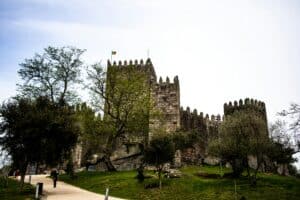
I was staying in Lagoa Santa, which translates to “Holy Lake” – a quiet town nestled between Belo Horizonte and the Serra do Cipó mountains. The town circles a large natural lake lined with trees, parks, cafés, and restaurants. There are plenty of places to sit in the shade, as well as open areas where people fish, play sports, or run.
A full lap around the lake is about 6.5 kilometres, and you see joggers, cyclists, and families out there from morning to night. Capybaras wander near the water, along with the town’s mascot – an alligator named Alfredo, who made the lake his home a few years back. It took me a month to finally spot him on one of my runs; until then, I was starting to believe he was just a local legend.
Lagoa Santa is peaceful and friendly – perfect for relaxing. But after a few days of quiet mornings by the lake, a day trip to Serra do Cipó was the perfect change of pace.
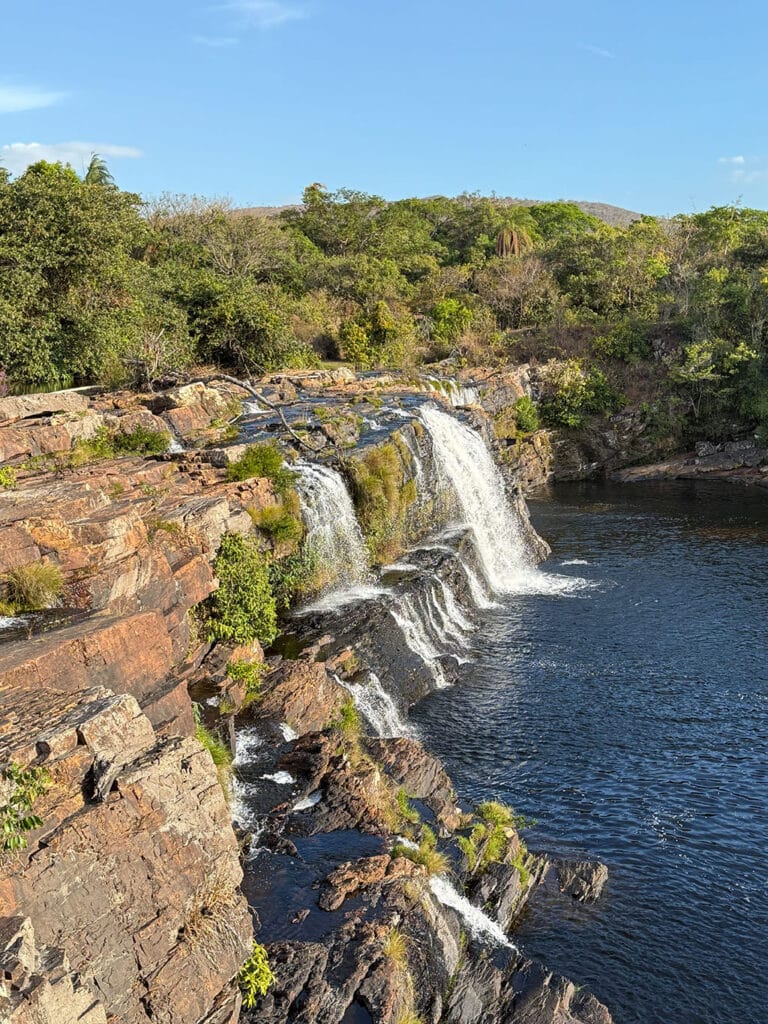
You’d expect a bumpy ride up to the mountains, but this one was something else. The road is full of speed bumps, some marked, others that appear out of nowhere. As you get closer, the landscape begins to change. The dusty, dry terrain gives way to rocky hills, streams, and lush vegetation, home to a surprising variety of plants and animals, many of them found only in this region.
Serra do Cipó sits within the Espinhaço Range, one of the oldest mountain chains in South America. Its rocks shimmer with quartz and mica in the sunlight – a sight that likely inspired the legend of Sabarabuçu, a glowing mountain said to be filled with gold.
What began as a myth among Indigenous people in the 1500s and 1600s soon attracted the attention of explorers. In the late 1600s, bandeirantes – Portuguese frontiersmen from São Paulo, many of mixed Indigenous and colonial ancestry – travelled through the region in search of gold.
The Espinhaço Range became one of the first frontiers of the Brazilian gold rush. Small traces of alluvial gold – flakes and dust carried by mountain streams – were found in rivers connected to Serra do Cipó. These discoveries pushed the explorers further west, where they struck richer deposits and founded the mining towns of Sabará, Ouro Preto, Mariana, and Diamantina.
The bandeirantes were more than treasure hunters. Their expeditions ranged from searching for precious metals to enslaving indigenous people or expanding Portuguese territory beyond its official borders. They played a key role in mapping and colonising Brazil’s interior, including the Espinhaço Range.
Their efforts were influenced by the Treaty of Tordesillas (1494), which divided the newly discovered Americas between Portugal and Spain. Much of the interior remained unmonitored, and the bandeirantes pushed westward beyond the line, effectively expanding Portuguese claims into what had been Spanish territory – shaping the modern borders of Brazil.
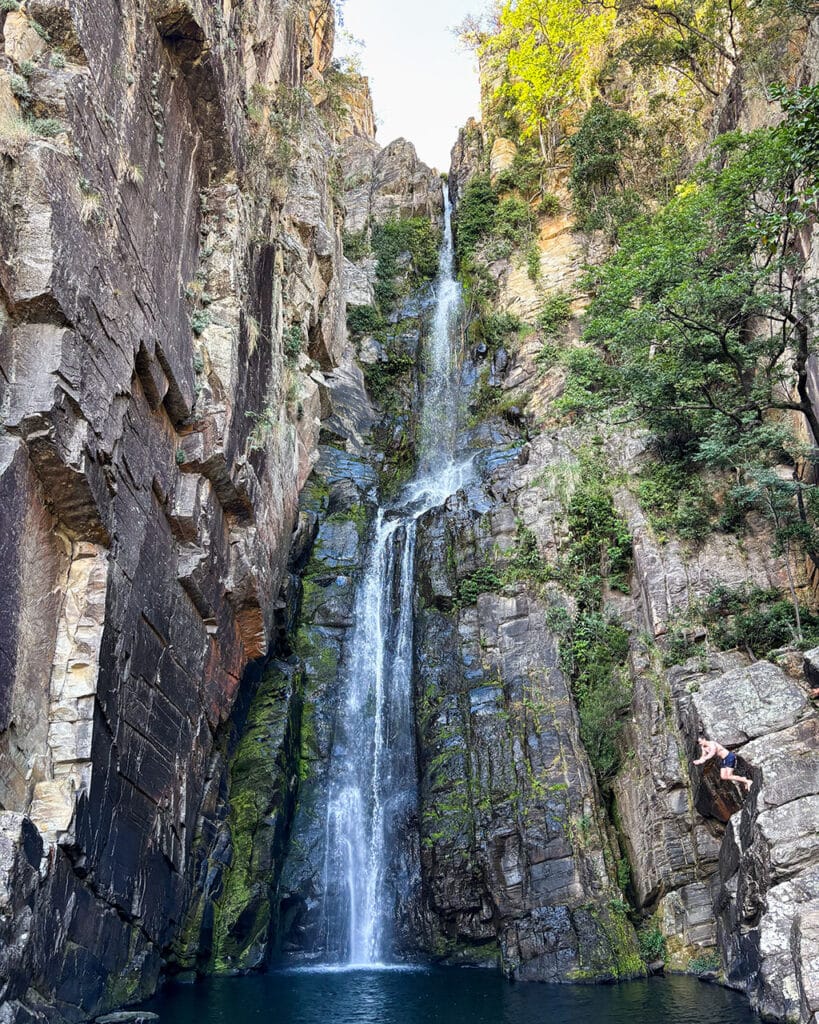
Today, the only thing that glows in the mountains are the waterfalls. Cachoeira Véu da Noiva, or “Bride’s Veil Waterfall”, is one of the best-known spots in the area. The name comes from the way the water spreads thin over dark rocks, forming a delicate white veil. I visited this waterfall on one of my trips, taking an Uber from Lagoa Santa – though getting back proved tricky. Luckily, a woman who worked at the park entrance called a friend with a local taxi service who drove me back to town.
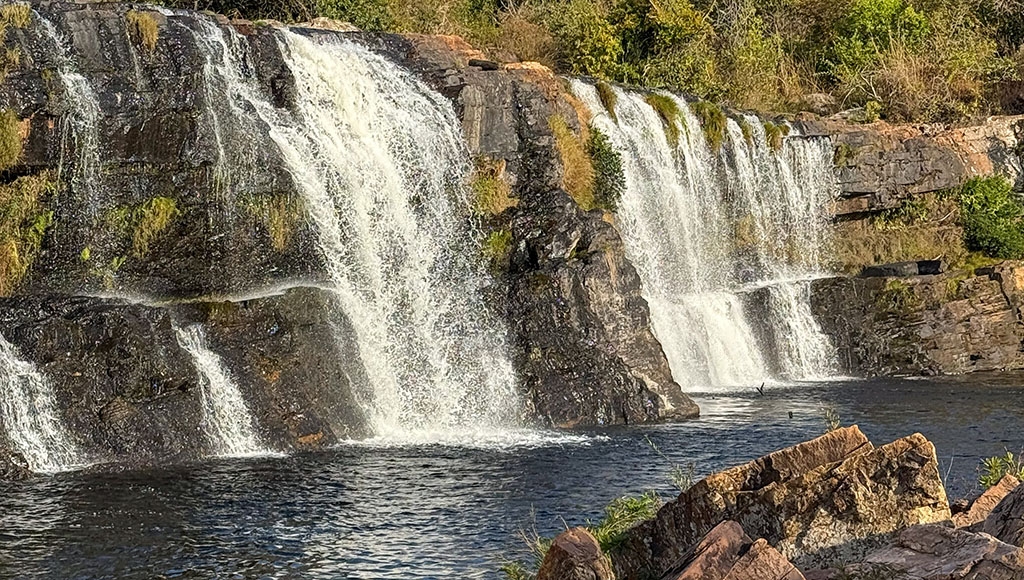
On a separate occasion, after renting a car, I visited Cachoeira Grande, a wider waterfall, just as remarkable, and just as cold. The water comes straight from the mountains, making it freezing even on the hottest days.
Both waterfalls are inside parks that charge a small entrance fee, which goes toward maintaining the area. Cachoeira Véu da Noiva is particularly visitor-friendly, with barbecue areas, picnic spots, a café, and sports fields – perfect for spending the whole day outdoors.
However, across the road from Cachoeira Grande’s entrance, there’s a small restaurant serving classic Minas Gerais food: rice, beans, potatoes, salad, and a piece of grilled beef fillet, all for about €4, including a drink and coffee. A friendly dog also wanders between the tables, greeting everyone and keeping you company while you eat.
The small town of Serra do Cipó sits just outside the national park entrance. It’s quiet and laid-back, with dirt roads, pousadas, and a handful of restaurants and bars that come alive on weekends.
There’s a simple charm to the place – hammocks on porches, local crafts for sale – though I always visited during the week, when most places were closed and the town felt half-asleep. However, that also meant having the waterfalls and trails almost to myself. The main waterfalls are only a short walk from the park entrances, but the mountain range stretches far beyond, with long hiking routes, hidden trails, and other waterfalls waiting to be discovered.