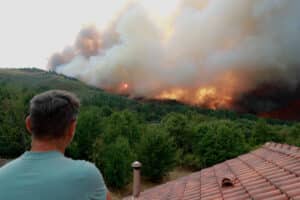
Two full days after a fire began in the area of Tramelo, Alfambras – 10 kms from Aljezur, on the Algarve’s west coast – hot spots were still flaring back up, and warnings were filtering through as the initial panic of fire combat relaxed: “Do not go hiking or drive in forest areas.”
This has been a fire that shows just how terrifyingly ‘a little fire’ can develop so that it becomes a roaring monster that no amount of firefighting can hope to contain.
Were it not for the falling temperatures at night (thanks to the approach of autumn) and rising levels of humidity, things could have developed much more dramatically.
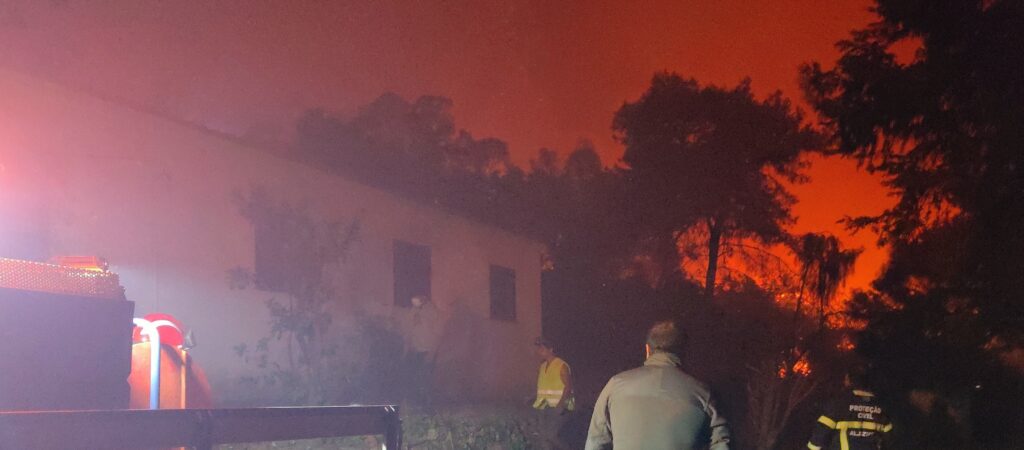
As it was, at least two homes – both belonging to foreigners – were completely destroyed in the first few hours (one in the municipality of Aljezur, where the fire started, and one in the Bordeira valley behind Barão de São João, in the municipality of Lagos, where the fire was finally brought under some kind of control).
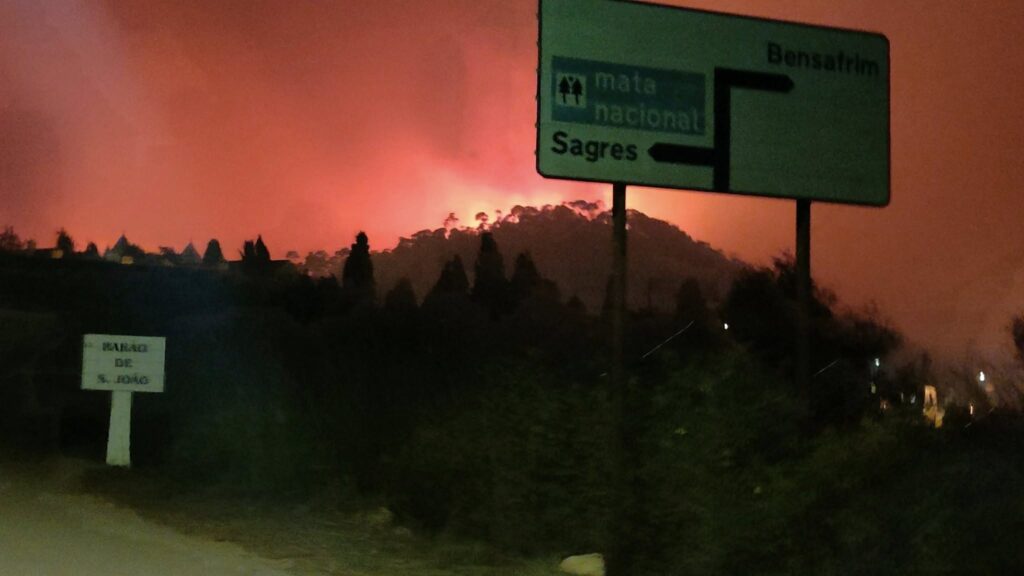
On Monday night, flames were still burning in areas of difficult access within the National Forest of Barão de São João, which separates the two municipalities. And on Tuesday, Civil Protection commander Abel Gomes was still full of caution, the message being ‘we are far from being out of the woods’.
Indeed, concerns are, with the constant wind and occasional changes in direction, that the fire could continue and even ‘double back’ on itself and hit the forested areas leading to Monchique, where the wealth of combustible material is vast.
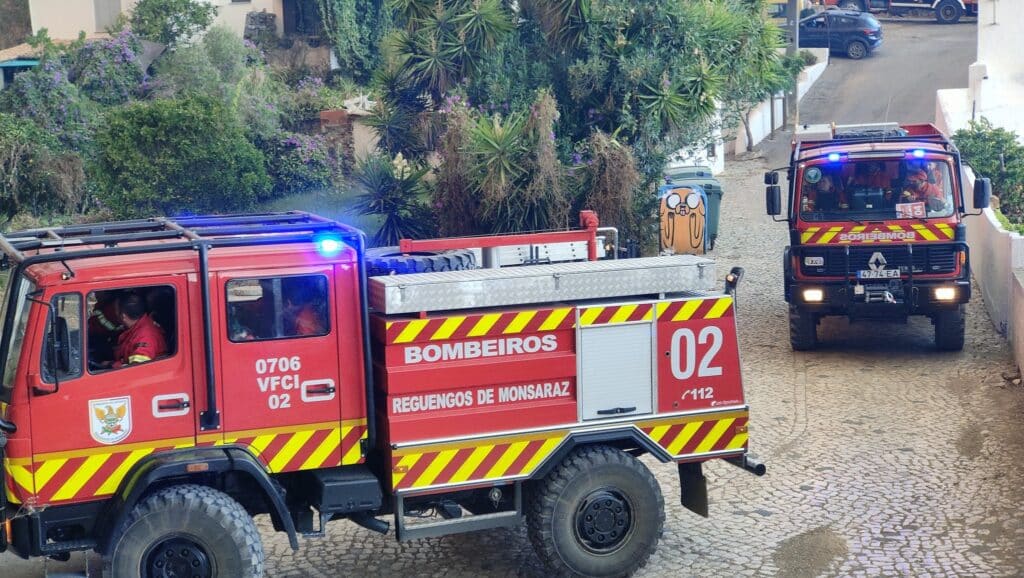
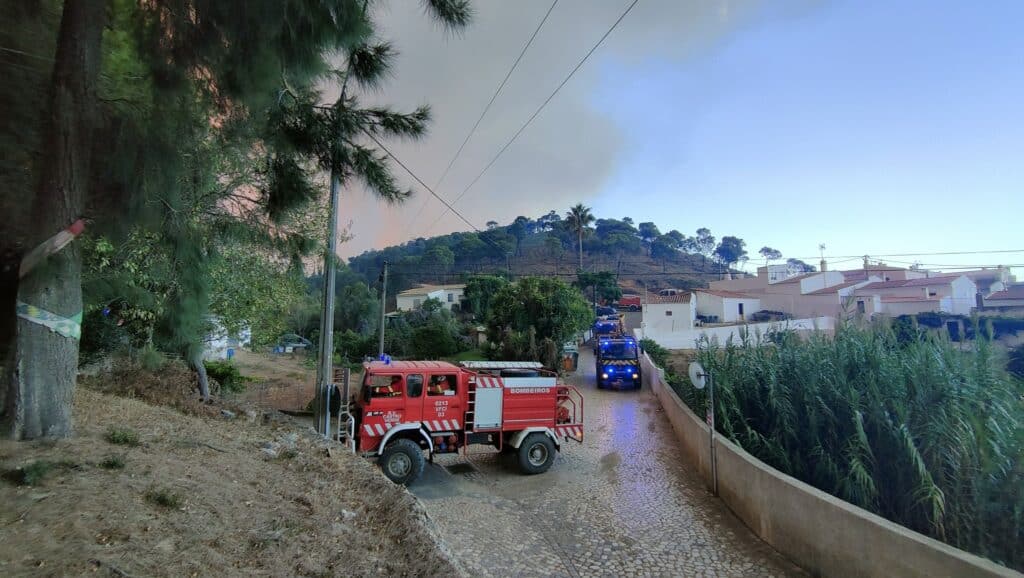
Over 600 firefighters were on the ground on Tuesday, aided by a constant stream of firefighting planes and helicopters, returning again and again to douse developing challenges.
Back in Aljezur municipality, locals were reporting new ‘flare-ups’ on Tuesday – some too difficult to tackle on their own.
In the Barão National Forest, there were still areas that firefighters could not reach.
But even in the uncertainty, there was a lot to be thankful for. Beyond the tireless response of firefighters – who arrived from multiple fire stations in the Alentejo and even further north – people have been the unlikely heroes in this firefight: they have organised themselves into WhatsApp groups, rushed to help each other, exchanged tips on how best to defend properties, how to tackle projections before firefighters arrive, and where to send food, water and supplies that were needed, either by firefighters, or others caught out, and/or evacuated temporarily from their homes.
Sunday may have seemed like a chaos ‘on the ground’ – certainly television stations made a marvellous muddle of everything, describing Aljezur as Barão de São João, and vice-versa – but the quiet reality was that people knuckled down and helped each other.
Veterinary clinics announced their ability to accept pets and animals that needed evacuating.
As we wrote this text, locals were still exchanging messages about flare-ups, areas of smoke. There was even the added ‘anxiety’ of a potential group of arsonists on the ground. But there was also the feeling that everyone was watching each other’s backs – and at times like these, that is all anyone can hope for.
As for the fire, Commander Gomes continues his message since Sunday, that nothing can be taken for granted: this is a challenge that is constantly changing. “It is not due to lack of means that this fire hasn’t yet been resolved,” he said on Tuesday. “The fire itself is always changing, and forcing us to reposition.”
Initially moving at under 2 kms per hour (on Sunday), it accelerated to “around 600 hectares per hour” – and even when the blaze was considered ‘dominated’, it was still a tussle: areas seemed to reignite on a whim, plunging people back into action/reaction.
Thus, the warnings: do not set out for hikes in forested areas; do not drive through them – the entire region is a potential powder keg for ignitions, and the wind right now poses too much of a threat.
Anyone walking the ‘Via Algarviana’ should exercise the ultimate caution, and perhaps keep well away from the Lagos, Aljezur and Monchique sections, just to be on the safe side.
For now, hopes are that this fire will be fully contained by the middle of the week, and then a mega dampening down operation will need to remain in place for days more. The army has already become involved with heavy machinery, working mainly in the Aljezur areas for the time being.
As for criticism of ‘hectares of eucalyptus’ being to blame, this cannot really be the case: the vegetation consumed includes cork oaks, pines, eucalyptus and other species. This isn’t about a certain type of tree causing fires to propagate, it is about the frightening mixture of a bone-dry landscape, high winds and fire that multiplies by the minute.
People uploading videos onto WhatsApp groups have shown how quickly a ‘little flare-up’ becomes ‘uncontrollable’. The summer may be over, but conditions out there haven’t yet received the memo.
Massive appeal for supplies
With days left in this firefight, even if everything develops well, associations like Alerta (Forest Fire Alert, run over Facebook) are appealing for supplies for firefighters. In Aljezur, the fire station reports that it has run out of everything in terms of food and drink for its people, and needs:
- Water: bottles no bigger than 500ml
- Individual fruit juices
- Sports drinks rather than energy drinks (these hydrate better)
- Fruit (apples, pears, bananas)
- Cereal and energy bars
- High protein foods
- Cream for burns
- Eye wash
- Underpants/sanitary products
- Pocket food (not chocolate because it melts)
The Madrugada Charity Shop in Lagos (next to the vets) will also receive any donations, to be taken to firefighters in the various areas around Barão de São João.
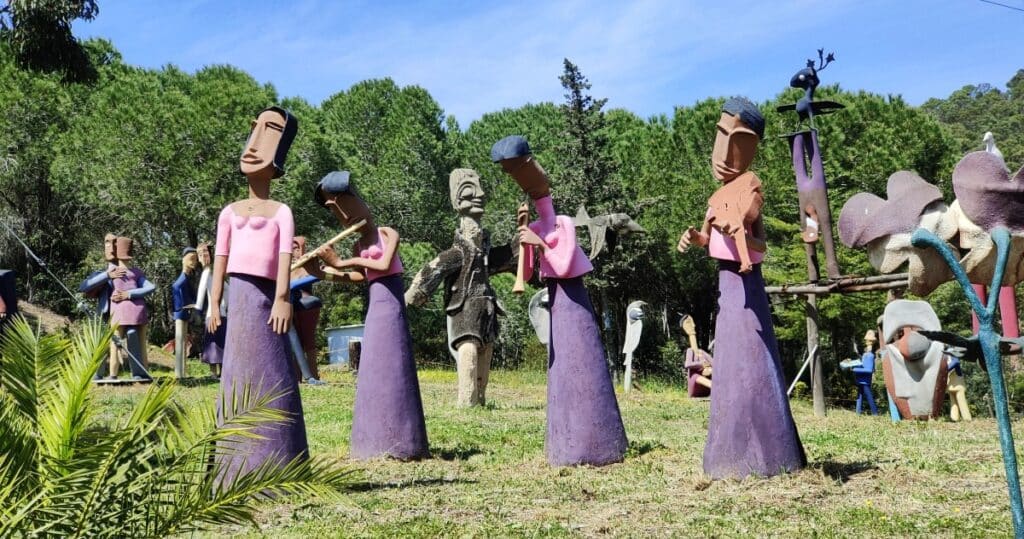
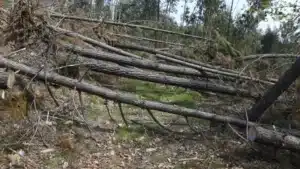
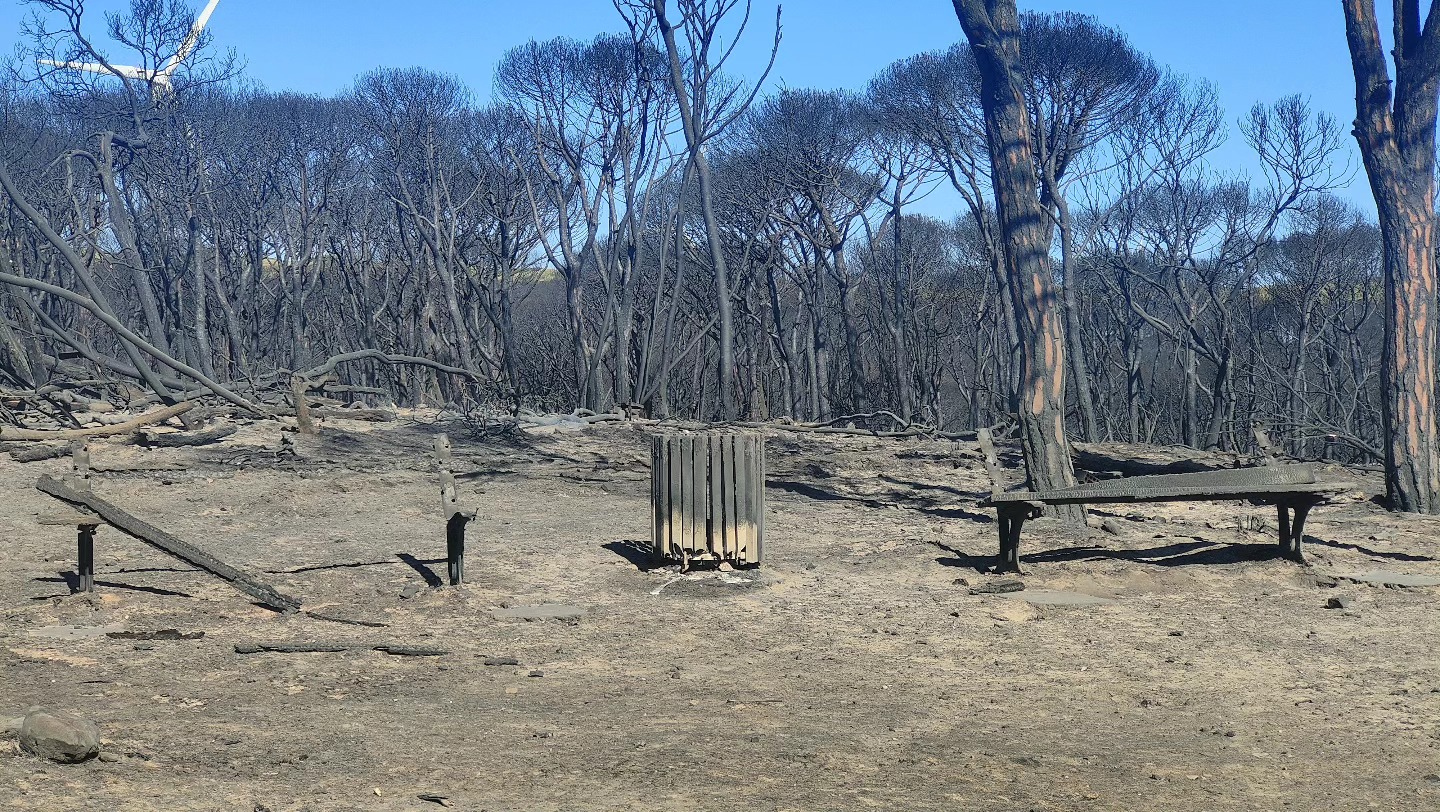
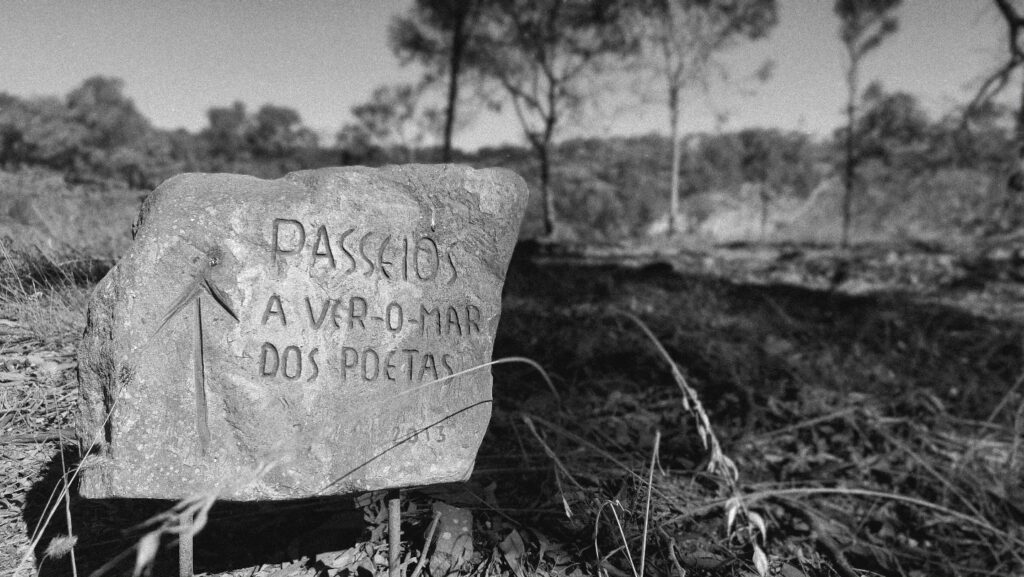
Regarding our photographs, taken by Barão de São João resident Sónia Silva, she tells us one heartwarming detail: the forest sculptures, crafted by one-time revolutionary Deodato Santos, have survived, even if the sign to them is blackened. The fact that these bizarre, comical and sometimes creepy ‘beings’ have made it gives hope: the forest will return. It will just take time.
All pictures (except sculptures) taken by Barão de São João resident, Sónia Silva