Invasive plants are non-native plants that cause negative environmental and economic impacts.
Many of the plants that surround us have been transported from their natural habitat to other places and are, therefore, called exotic plants (from the Greek exotikós, “from outside”; or non-native).
Some of these species coexist with native species in a balanced way, but there are others that grow very quickly and escape human control, becoming harmful – these are called invasive species.
As well as overcoming geographical barriers, these species manage to overcome normal limiting factors. They maintain stable populations from which they continue to invade other sites.
The mediterranean climate zones of the world are particularly vulnerable and climate change has only served to increase the threat.
The warming oceans have spread the distribution of marine invasive species into the Mediterranean basin.
The plant kingdom has also had many natural controls removed, leading to changes in the composition and function of ecosystems and the loss of biodiversity. The overwhelming presence of many exotic species such as acacias in regions of Portugal has contributed to an increase in allergic reactions when the trees flower and fill the air with their pollen.
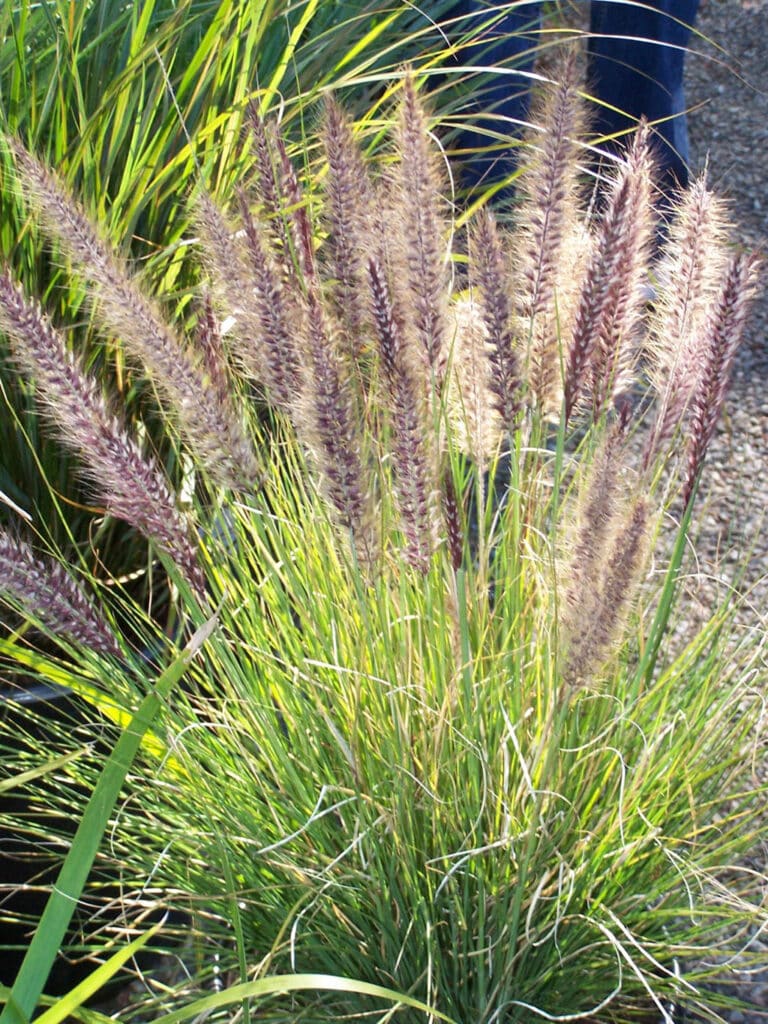
Perhaps you have already noticed on the roadside invasives such as Pampas Grass (Cortaderia selloana) and the increasing groups of another grass, Pennisetum setaceum, both capable of sending huge amounts of wind-borne seed into the landscape.
There are significant costs associated with the control of invasive plants and a need exists for an integrated environmental policy that supports local capacity to manage invasive species within Mediterranean landscapes.
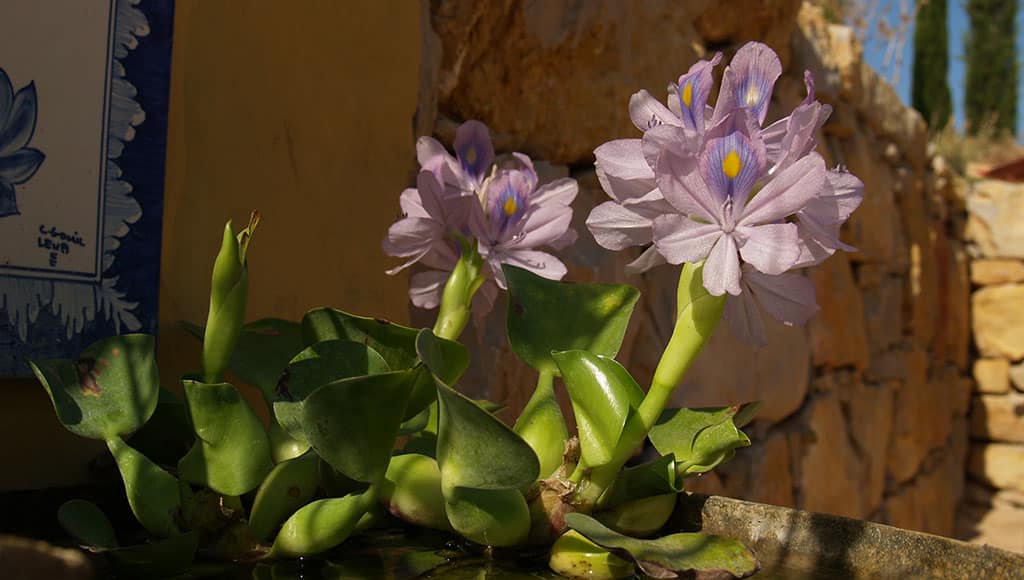
There is significant damage caused to already vulnerable waterways, streams and rivers by the water hyacinth (Eichhornia crassipes). Its removal is currently done manually or, when access permits, by huge vacuum cleaner-type machines.
The average time lag between the first record of damage from a given species in each location and the first record of a management action response was 10.7 years. We can do our part to shorten this response time by eliminating some of the worst culprits from our gardens and land and avoid further dispersal.
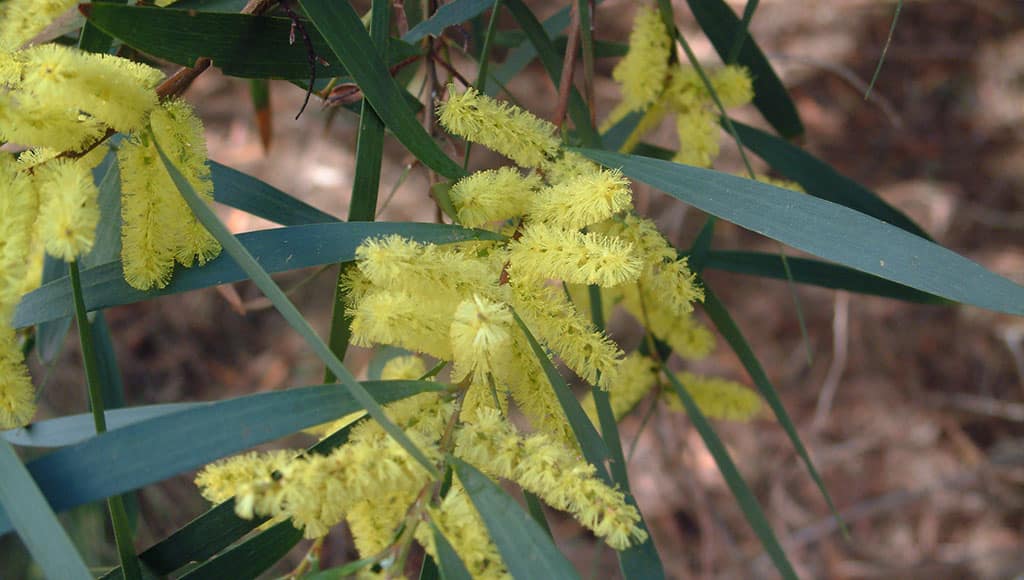
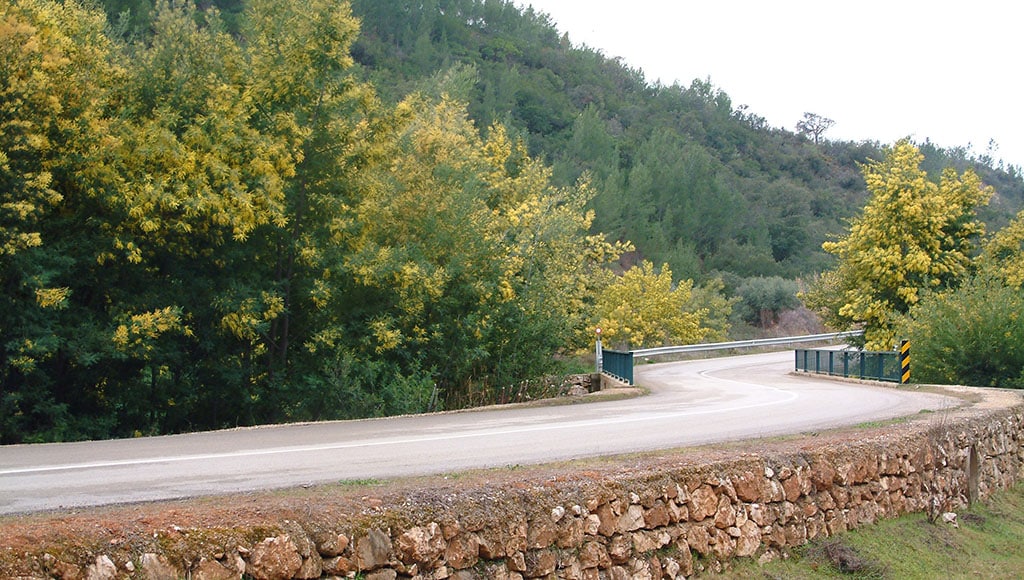
For many from the north of Europe, mimosa is an iconic springtime sight with trees covered in bright yellow flowers. Unfortunately, mimosa is part of the Acacia family, which has nine species of invasive acacias listed in Portugal. Do you think you can identify them without making mistakes?
The acacias (wattles) are part of a range of invasives from Australia including eucalyptus. There are special laws controlling the distribution and sale of many invasives – Decreto-Lei nº 92/2019, de 10 julho. We are lucky to have good quality information from a special unit based at Coimbra University; you can see the full range of invasive acacias on their website.
The geographical distribution of acacia species in mainland Portugal is varied. Most species of the genus can be found in coastal regions. Coastal dune systems, cliffs or transition zones, such as pine forests, are the ecosystems most invaded by acacias.
There is a good control method available which does not involve cutting down the tree. You need only strip all the bark off the trunk to a height of 1m from the base and return later in the year for some good firewood. This is particularly effective for mimosa, Acacia dealbata, and for A. melanoxylon.
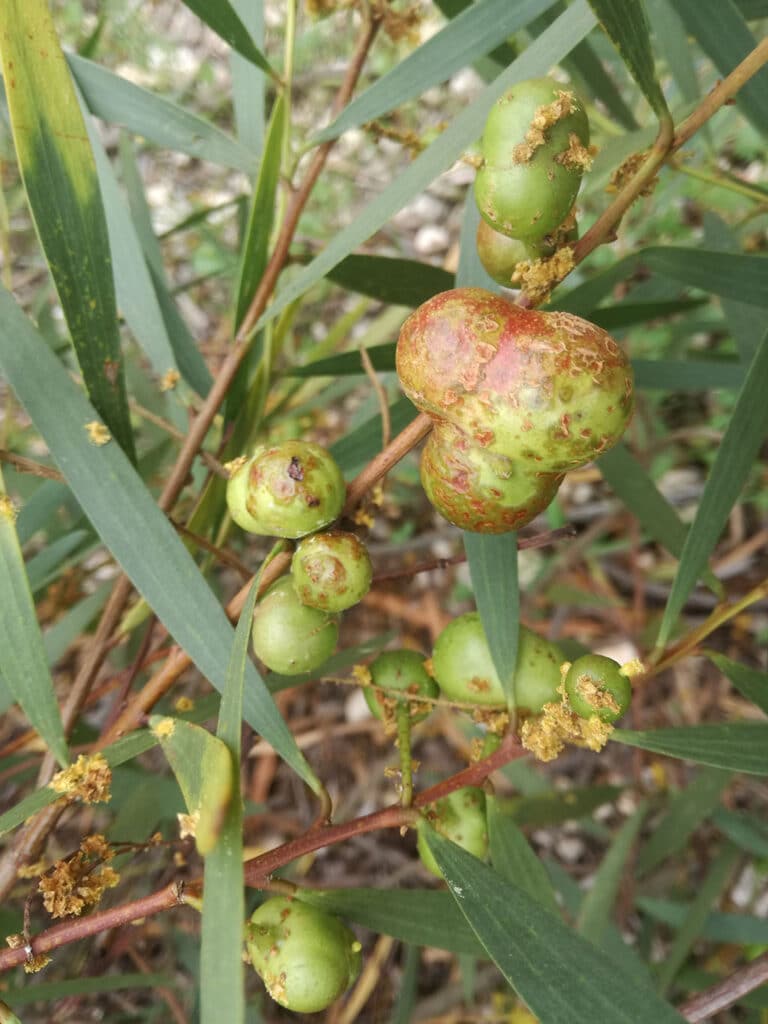
Since 2020, the introduction of a natural control has also limited the spread of A. longifolia. The gall wasp (Trichilogaster acaciaelongifoliae) forms galls on the floral and vegetative buds of A. longifolia, preventing up to 90% of the seeds from forming.
There has recently been a week focused on Invasive Plants in Portugal. This is an annual series of events throughout Portugal and Spain to raise awareness of biological invasions on the Iberian Peninsula and Islands. There is now available a guide on how to control these woody invaders which is available for free to download.
While exotic species may have numerous negative impacts, many were introduced for a specific use, for example, coastal erosion control.
Exotic plant species are at the base of many resource management systems such as agriculture, horticulture, forestry and landscape gardening. It is, however, important to remember that there are alternative species available which do not have the same invasive character. We are supposed to learn from our mistakes, not repeat them.