Portugal is still under a ‘state of alert’ imposed last weekend to try and reduce the risk of fires breaking out during a period of intense heat.
That period, however, is showing little sign of abating. Forecasts for next weekend are every bit as high as they were last. Meteorologists admit there will be little let up in searing temperatures before August 13 – and all the while fires burn, break out and reignite.
With hundreds of firefighters working ‘around the clock’ in the most affected parts of the country (north and centre), there is a mounting sense of discontent, seized on by politicians, over why Portugal’s leaders have not sought ‘outside help’.
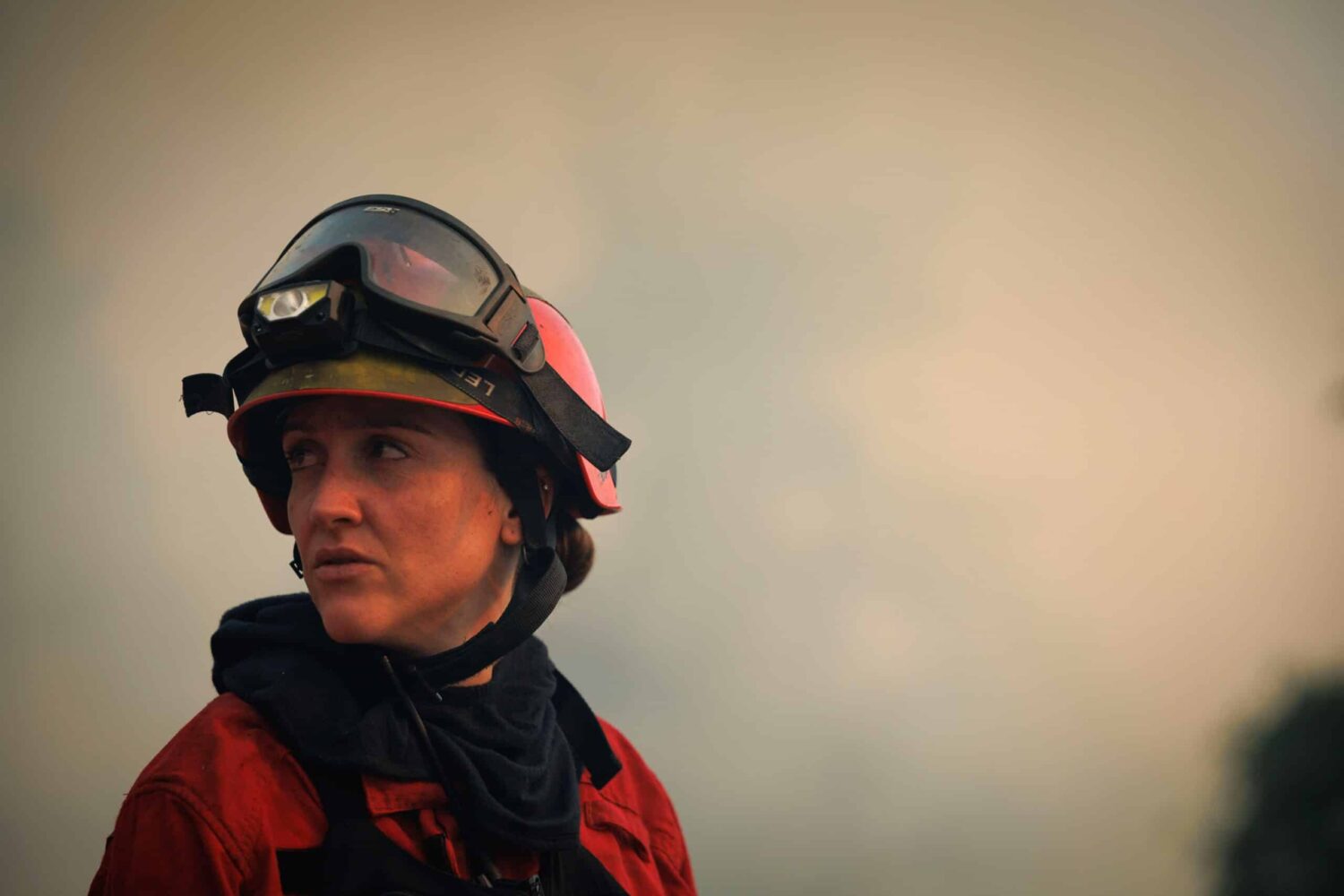
“Government freezes international help” screamed the front page of the ‘best-read tabloid’ Correio da Manhã after six terrible days in which thousands of firefighters rushed from one burning inferno to another, pulling hoses valiantly through thick smoke, trying to save people and properties – and stay alive themselves.
It is not something widely reported, but the first week of this year’s wildfire misery resulted in around 50 firefighters being injured.
“The combat force has been incredible, tackling several fires that have very violent and rapid progression. We have had truly violent occurrences where fire-fronts literally swallow kilometres of land in a matter of minutes, threatening people and their property,” one division commander told reporters. “We have managed to minimise damage at the cost of a huge amount of effort.”
This is the crux – “a huge amount of effort”: these men and women are not bionic. They cannot keep going without rest, and rest has been in very short supply in the areas of Vila Real, Ponte da Barca, Celorico de Basto, Braga. The list varies as the days go by, but the essential is the same: raging fires, galloping through parched landscape – many of them starting ‘after dark’, or at times when fires naturally do not tend to start.
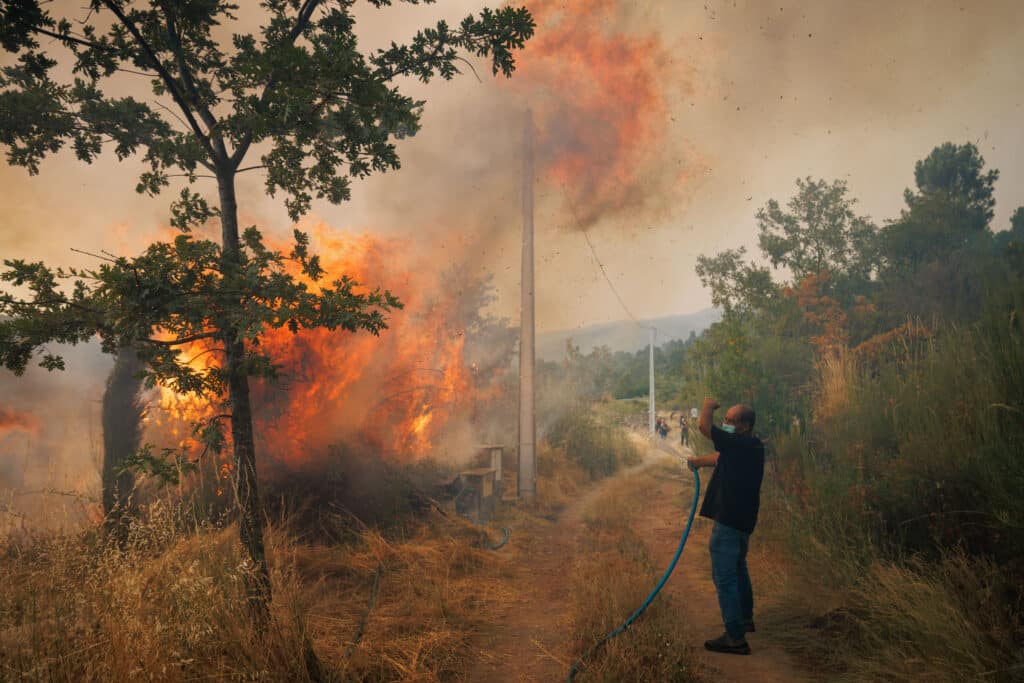
A local resident helps prevent flames from spreading further in Aldeia de Gontães, Vila Real, on August 4 – Photo: Pedro Sarmento Costa/Lusa
Correio da Manhã insists that firefighters now are at a point of exhaustion where outside help would make all the difference.
The call for international aid has been suggested by various sectors of Civil Protection, by mayors of municipalities ablaze, and by certain political quarters.
But the government has sought to “squeeze existing means to the limit in spite of the daily complaints that there are not enough firefighting planes/helicopters” to cover so many outbreaks.
Secretary of State for Civil Protection Rui Rocha has suggested that the situation up until now has “not shown the necessity to action the European Civil Protection Mechanism, stressing that the trials facing Portugal are “similar to those being experienced by Spain, France, Italy and Greece”.
This is undoubtedly the case: Spain has also declared a state of alert due to heat and fires, while wildfires throughout Europe this year have surged to record levels, with intense blazes fuelled by soaring temperatures and dry conditions.
But the trouble with ‘going it alone’ lies with what might happen – and how long it will take then to organise European support. Right now, the fires have been concentrated in the north and centre: firefighters from all over the country have been drafted in to help local corporations.
And then there is the current state of alert: it is due to run until Friday, but temperatures are not falling. It may have to be extended, which, incredibly, is not popular with certain sectors, principally the ‘pyrotechnic industry’, which is complaining that it has lost €2 million since the various prohibitions came into place.
In other words, as always, these fires are a juggling act – quite literally with balls of fire: prohibitions may be followed by the majority of people (if they are actually aware of the state of alert, which surprisingly few appear to be), but they won’t mean a thing to arsonists, who have been having a field day over the last hot weeks.
Every day there is news of yet another suspect having been arrested – one of the most recent being a 22-year-old who ‘started fires as he rode a bicycle through the villages of Mira’. On detention, the young man admitted he couldn’t really explain his motives, he “just didn’t feel good”.
Appealing to the civic responsibility of people like this (as authorities do) is a non-starter. For now, the young suspect is charged with having started four fires which put people and property at risk. We never hear if these people are kept in custody, let out on an electronic bracelet, or simply released on bail – and this does not help the rising criticism.
Many, too, point out that landowners have not been clearing land as stipulated – leaving far too much ‘combustible material’ lying in the path of fires, or just being ‘perfect fuel’ for any random spark. Authorities were seen to be ‘enforcing the law about land-clearing’ post the 2017 fires that claimed the lives of over 100 people, but as the years have passed, so too has their perceived zeal.
One of the most damning columns came this week from Tânia Laranjo, one of Correio da Manhã’s leading reporters, who focused on the Minister of Internal Administration, speaking last Sunday “from the comfort of her offices (…) meticulously presented and made-up, with jewellery round her neck” to give “various messages to farmers. The weather was getting hot, there could be no (land) burnings, and no fireworks.
“She refused to answer journalists’ questions, treating legitimate queries from the population as if they had no merit.
“At the end, she thanked the heroes that are firefighters but said nothing about the disorganisation that everyone is talking about.
“There are no firefighters in the villages, many are stuck in dense burning scrub without the help that they need. Some don’t have food, others don’t have water. It is the same every year (…) we leave everything to burn. God willing a fire won’t suddenly appear and destroy villages and kill people. Prayer continues to be our fate.”
Prohibitions imposed by ‘state of alert’
These are: no use of fire in rural settings (no land burnings), no access, circulation or permanence in forests, no fireworks, no use of machinery in outdoor settings that could emit sparks.
At the same time, the government has “increased the readiness and response levels of police and Armed Forces; beefed mobilisation of forest firefighters; enhanced readiness of medical emergency teams, and increased ground and aerial patrols of districts with maximum fire risk” (which is the entire mainland territory).
Posting this advice over social media resulted in some fairly hostile comments, including the most apt: “For fires that start at night, what are the measures of prevention?”