The drive up through the Alentejo on the A2 is always very nice, but, when we got to the Palmela part of the Terras do Sado, and being all of us wine enthusiasts, we decided to stop at Ermelinda Freitas to taste some of their new wines.
But first things first. We had to lunch. We found a lovely little Portuguese restaurant named Manjar do Paladar quite near the winery, in Pegões, and lined our stomachs. “Manjar” means “delicacy” in English, and the food certainly fit the description. Ready to taste some wines.
Ermelinda makes beautiful wines, but its real distinction is that it hast always been owned and run by an all-female team, including the oenologist! Although the winery dates from 1920, always in the same family, they only started selling wine under their own label in 1997.
The last time we visited Ermelinda was some 20 years ago. In the interim, they have grown tremendously, now farming 550 hectares of vineyards and producing almost 20 million bottles annually (not including the substantial volume produced by acquisitions in other wine areas).
In 2019, Ermelinda was named “European Producer of the Year” by the Sommelier Wine Awards in the UK, and today they are one of Portugal’s biggest wineries.
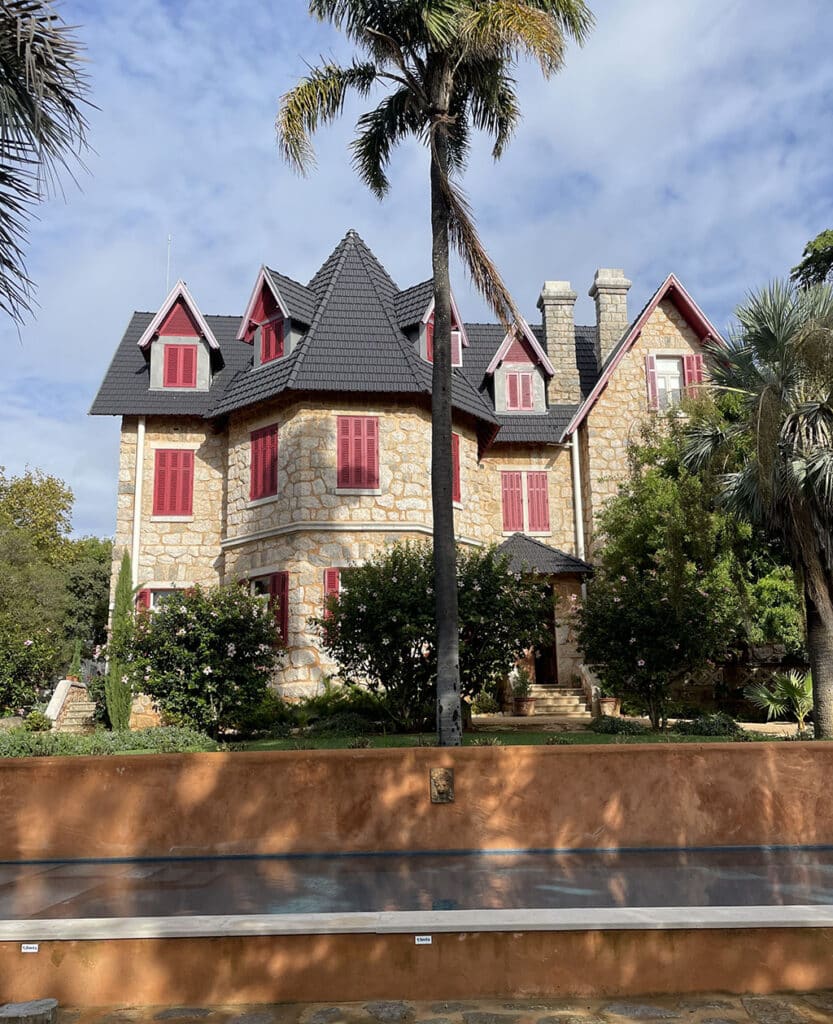
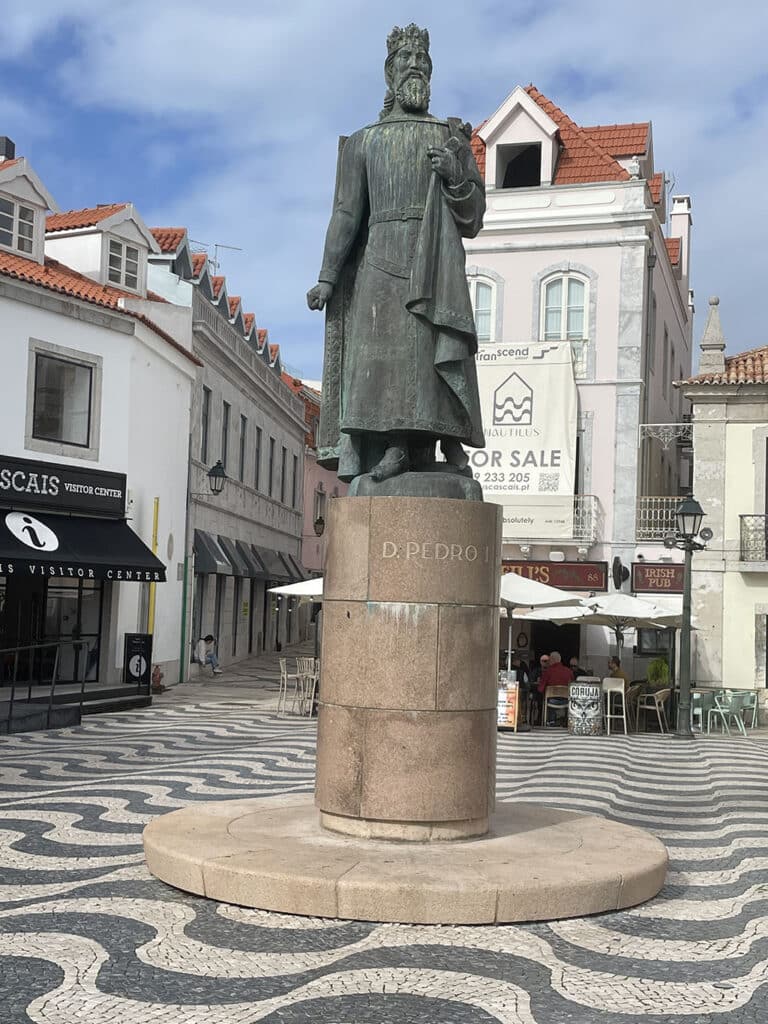
With the tasting finished quite satisfactorily, we carried on to Cascais, where we were spending three nights in the Chalet Ficalho. This elegant old house is very conveniently located in the heart of Cascais, within walking distance of the Paula Rego Museum, the harbour, the historic centre and shopping arcades and the train station.
The house was built in the 1890s as a summer residence for the Countess of Ficalho and her daughter. A lush garden with exotic tree species and recently a pool were added. The interior and authentic furnishings are themselves worth a visit. Two years ago, it became a B&B with nine bedrooms. What a find!
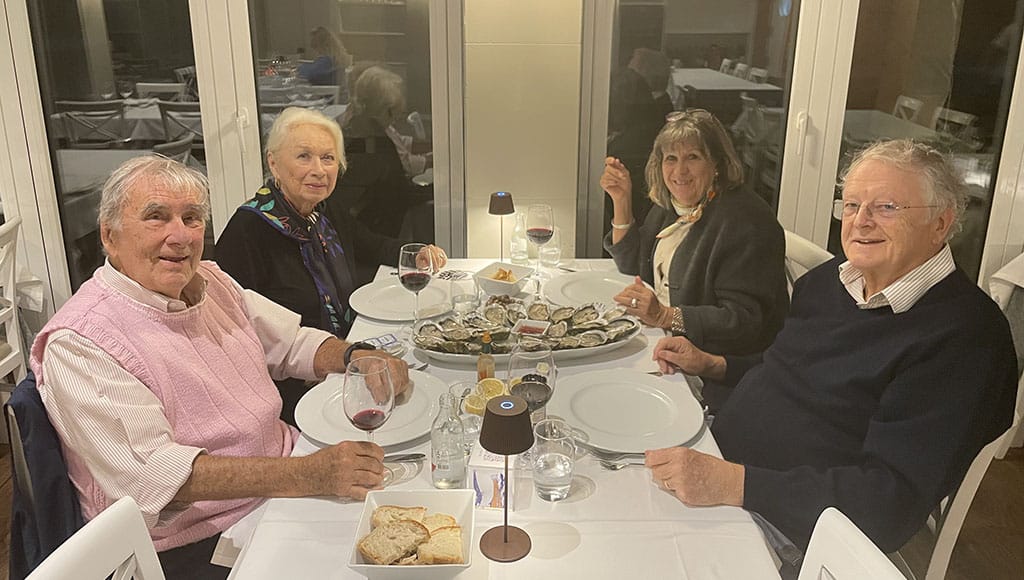
During our stay in Cascais, we dined at all three of the beautiful seaside restaurants – Mar do Inferno (actually right in Cascais harbour), Furnas do Guincho and Monte Mar (both west of Cascais on the road to Guincho). With the sound of the waves crashing just outside as our dinner music, we feasted on some of Portugal’s best seafood.
On the second day, we drove north through the Serra de Sintra, part of a protected Parque Natural, to Mafra, where we toured the monumental palace-convent, built by King João V in the early 1700s and one of the most impressive Baroque monuments in Portugal. UNESCO designated the palace and its gardens a World Heritage Site in 2019.
Lunch was in a small, very Portuguese restaurant in Mafra called João da Vila Velha. It is unprepossessing on the outside, but the locals clearly know and love it, judging by the crowd. The food was really good.
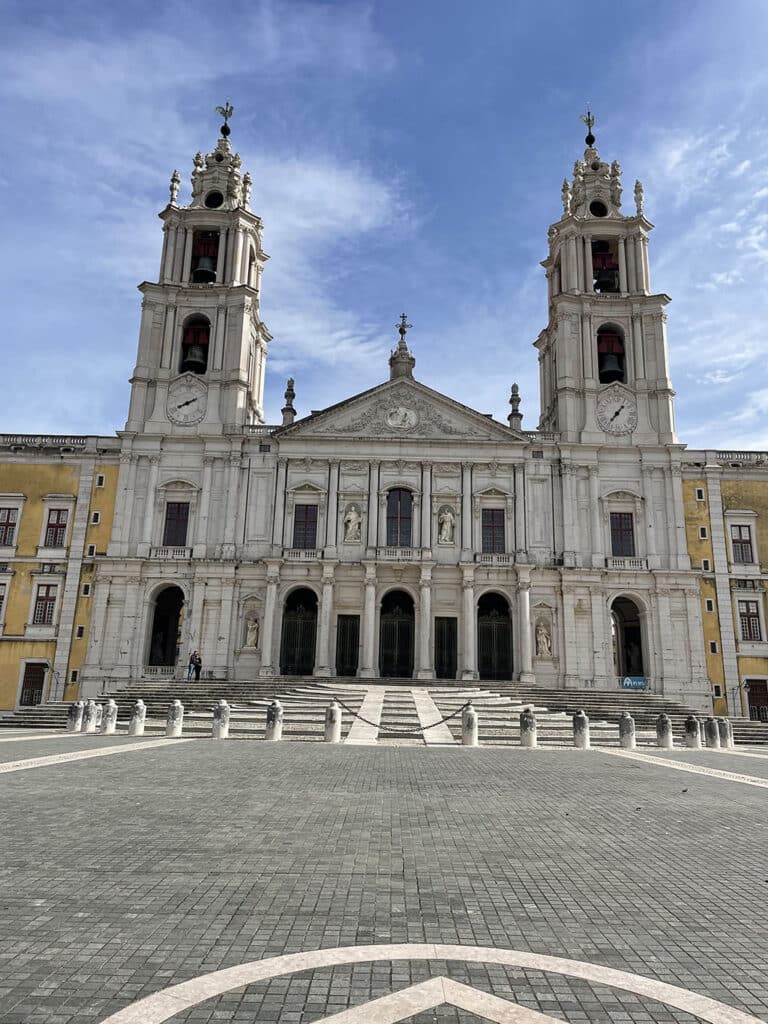
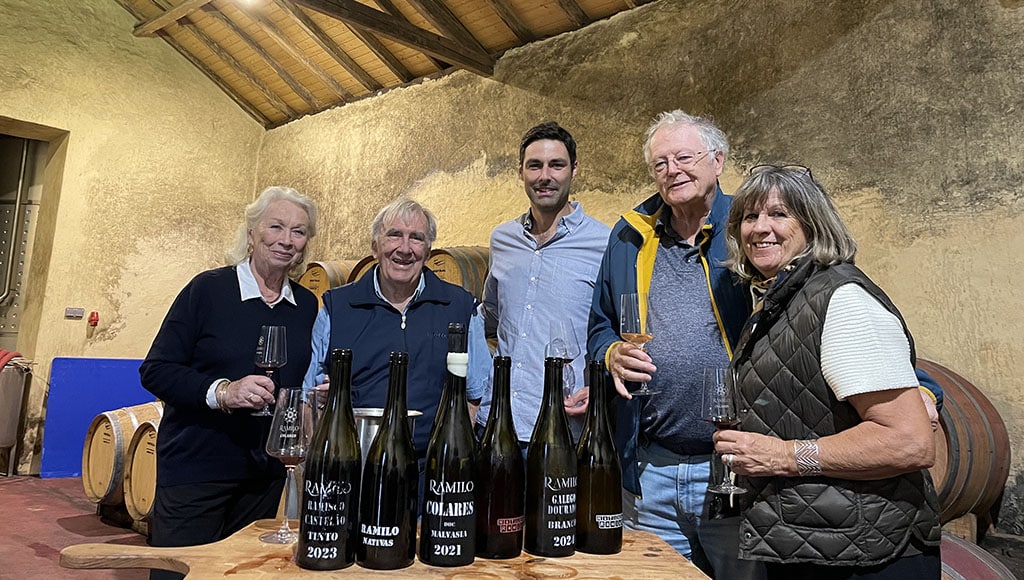
In the afternoon, we visited a small winery named Ramilo. It is one of only six producers of Colares wines. The Colares area, located southwest of Mafra, is one of the oldest DOCs in Portugal, so designated in 1908. It is an area of very sandy soils very near the Atlantic coast.
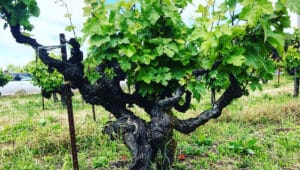
Because of the sand, the pest phylloxera could not attack the vines, so most Colares vines are ungrafted. And the predominate grapes are unique to the area – Ramisco for reds and Malvasia de Colares for whites. Because of the proximity to the ocean and salty winds, sandy soil and old vines, the little DOC is absolutely unique, and the wines have a very distinctive character.
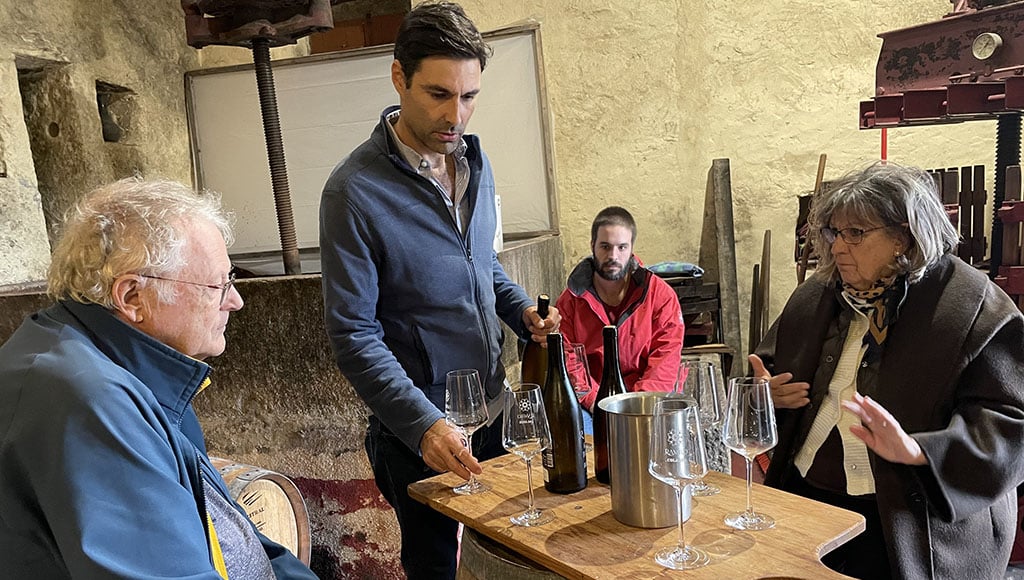
Ramilo Wines started producing in 1937 and today produces between 30 and 50,000 bottles. Very small but very interesting. Nuno Ramilo received us and, after showing us his distinctive vineyard, opened a sample of his entire range of seven different wines for us to taste. Helga and I particularly loved the Nativas red 2022 (Castelão) and white 2024 (a blend of Malvasia, Arinto and Vital). This was a thoroughly interesting and informative stop.
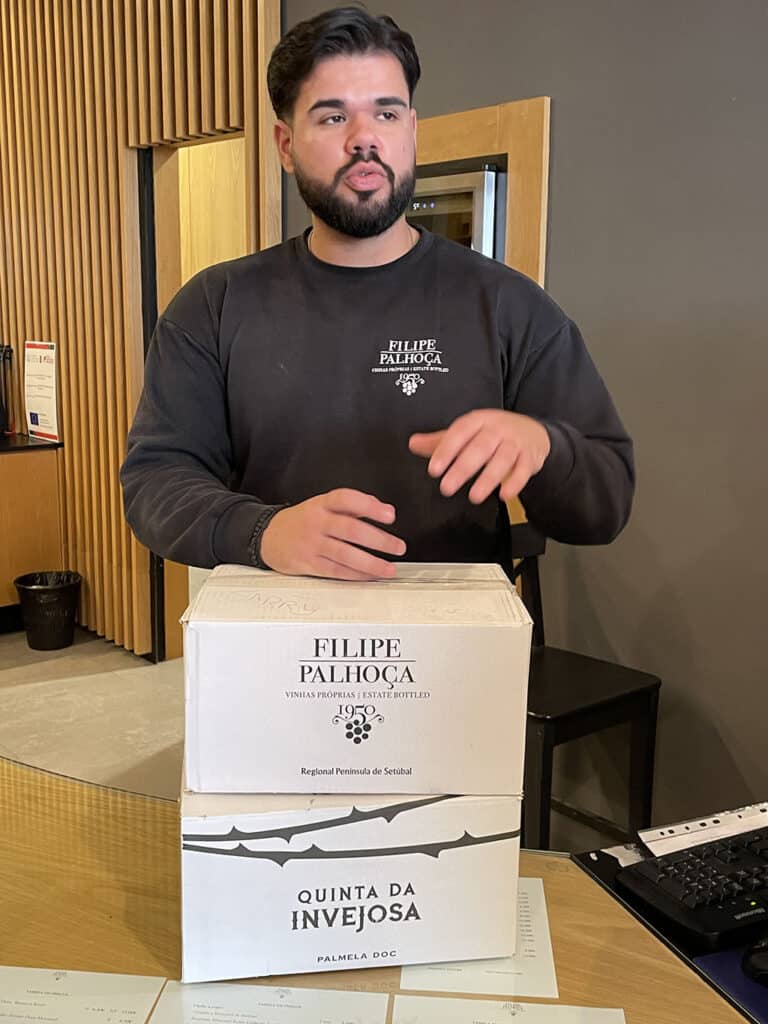
On our fourth day, it was time to head back south, but our wine tasting adventures were not finished. We stopped at a winery that none of us knew – Filipe Palhoça Wines, near Pegões. It turned out to be a great find. This producer started in 1950, farms about 112 hectares of vines and makes about four million bottles a year. Although 60% of production is “bag in box”, we found some really good (and inexpensive) wines in the other 40%. We loved their Quinta da Invejosa Grande Reserva 2016 red and 2022 white.
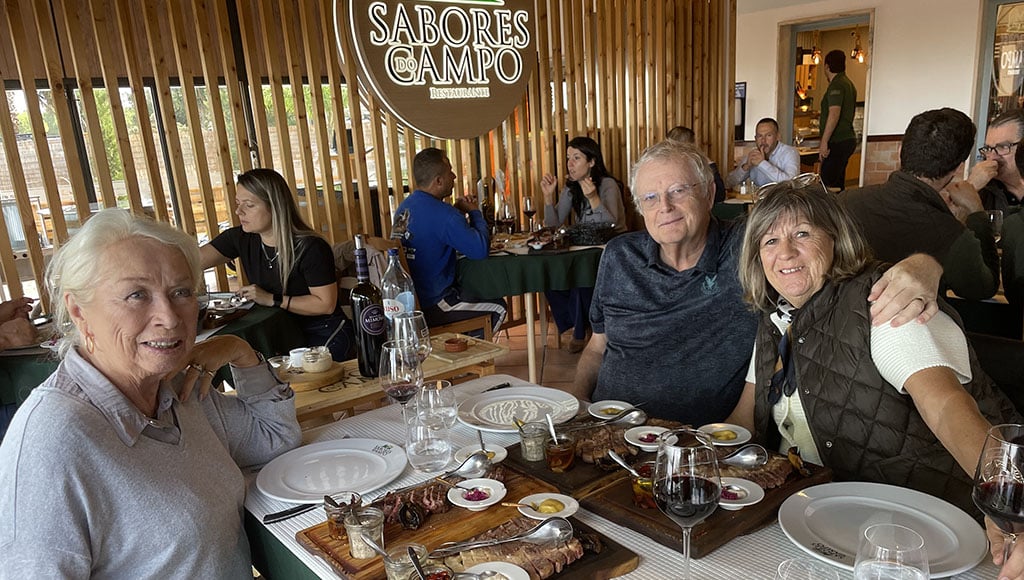
Lunchtime. We had had some really great seafood in the past three days, but now it was time for red meat. We found the Sabores do Campo restaurant, a real meat specialist nearby, and indulged in some spectacular steaks, enhanced by a lovely Ermelinda red.
What a lovely way to spend four days – good friends, great food and wine and some welcome knowledge acquisition. Cheers to that!