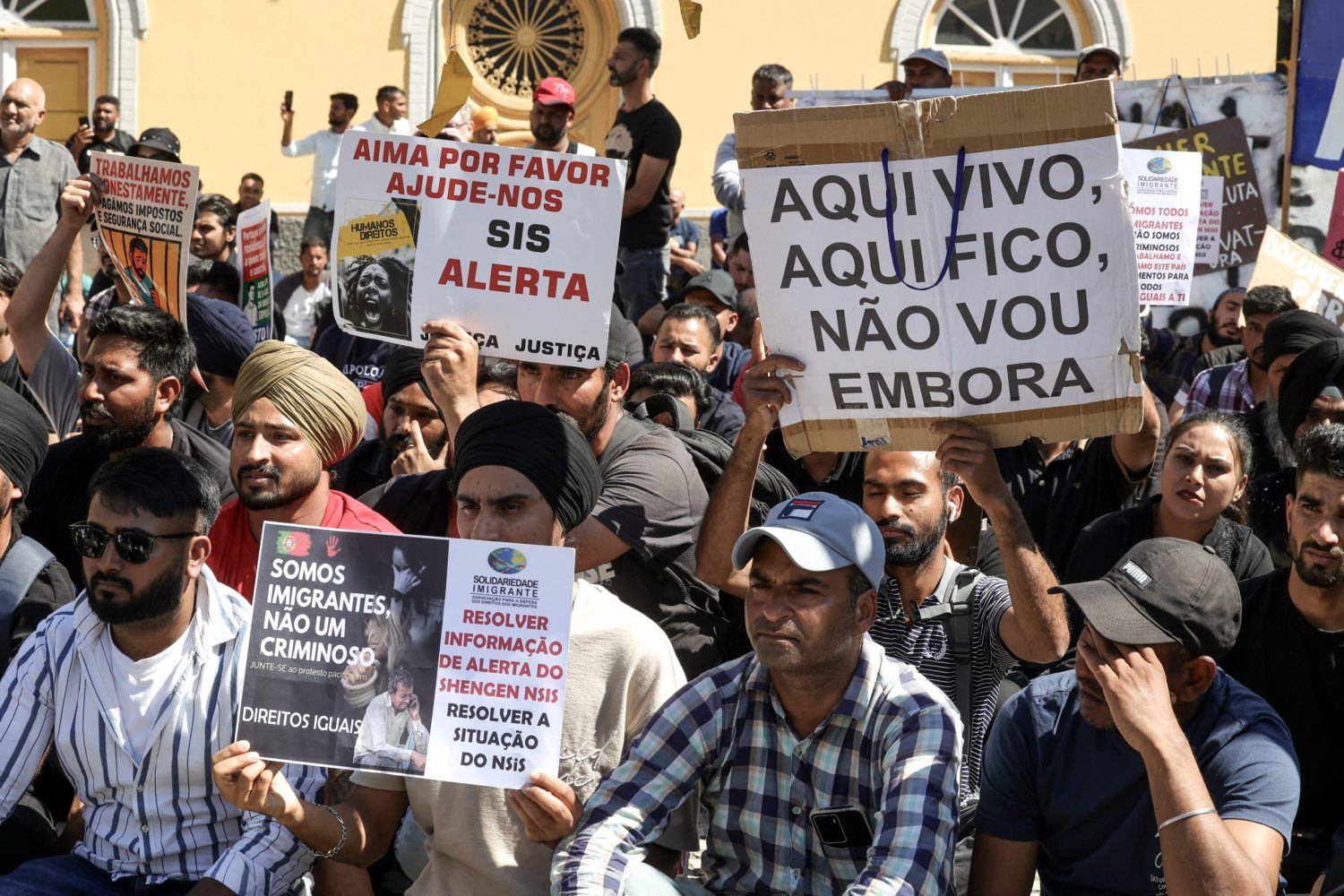
Academics have called out the ‘schizophrenia’ at play in the Portuguese government’s approach to immigrants, stressing little (or nothing) is done to create policies based on scientific data.
As a result, we have a country where immigration has become a political football while the state as a whole “actively promotes the survival of customs and experiences among its emigrés”.
The confusion helps no-one – as researchers on the sidelines of a meeting on emigration have been pointing out.
Emigration observatory researcher Rui Pena Pires put the situation in a nutshell: the government “demands from immigrants the opposite of what it promotes in emigration.”
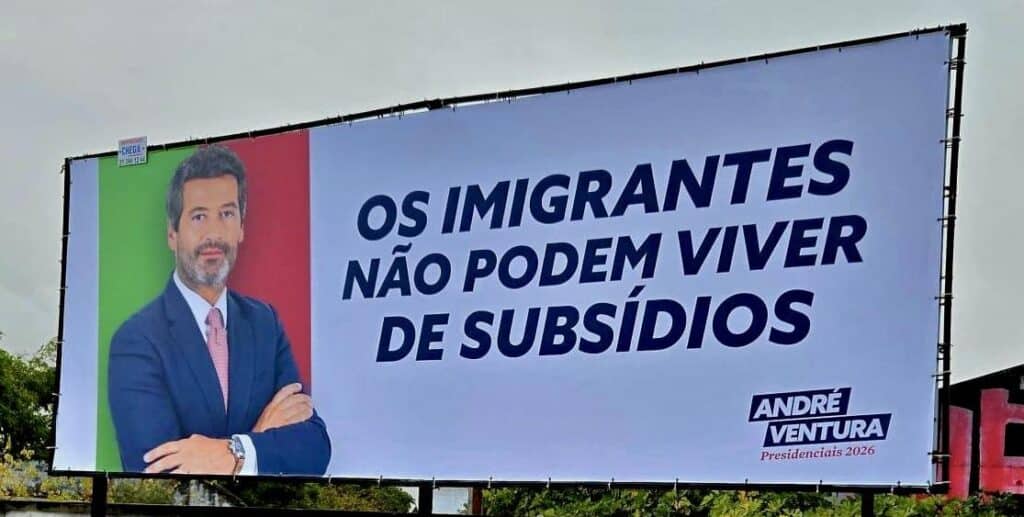
The (common) discourse on immigrants in Portugal portrays them as people who are “taking advantage of the system and subsidies”, adds researcher Liliana Azevedo – whereas “the dominant narrative regarding Portuguese people abroad (…) presents them as ambassadors of Portugal. Good workers who integrate themselves well and preserve the language and traditions.”
Portuguese people living abroad are not expected to eschew their national traditions. Here, the feeling is that immigrants should become “fully integrated” (meaning, take on Portuguese ways of living/ behaving).
Even more relevant perhaps is that “many Portuguese people” who live abroad “experience problems with housing, access to healthcare, integration and stigmatisation” but this is barely ever mentioned. “Pointing the finger at immigrants who come from other continents and not looking at Portuguese migration abroad is, in fact, hypocritical,” said Liliana Azevedo, lamenting the lack of dialogue between “academia and decision-makers.”
Politicians “rarely attend scientific meetings, despite being invited”, she told Lusa, while analysts “are rarely called to the dialogue table”.
Thus when migration policies are decided, “sociologists, anthropologists and/ or geographers” are not brought into the debate.
“It is not a problem of a lack of data, it is a problem of a lack of political will to find solutions based on scientific data,” she stressed.
And this is the point where Lusa’s report becomes very much more interesting (on the basis that many ‘blame’ former prime minister António Costa for having ‘flung Portugal’s doors wide open’ to the thousands of immigrants from the Asian subcontinent).
Former secretary of state for Migration, Cláudia Pereira – also a researcher at Iscte – referred to Mr Costa as ‘knowing about the subject’ and reading articles on migration when she was in government “in some cases before we did.”
Many of the measures for the sector “were based on studies”, Pereira explains (referring to measures that have since been overturned by the incoming centre-right government).
Fast forward to December 2025 and, in Cláudia Pereira’s mindset, the country is experiencing a “very demanding and challenging political climate (…) Portugal is one of the epicentres of hate speech in Europe“, with the whole issue captured by “myths and falsehoods“.
“In comparative terms, Portugal has fewer immigrants than other European countries” and “refugees in Europe account for less than 1% of the population, but they have gained visibility that has made them the centre of attention,” Pereira considers, defending that it is wrong to adopt restrictive policies on the entry of foreigners in a context of economic growth.
What regulates flows is the labour market: “If there is work, people migrate; if there is no work, people do not migrate (…) In a very provocative way, the best way to drive immigrants away is to create an economic crisis,” she said, recalling the sovereign debt crisis which prompted a new wave of emigration because “there were few jobs in Portugal and many in the United Kingdom”.
As Rui Pena Pires added: “Portugal has never stopped having emigrés, with around 65,000 Portuguese leaving every year.”
But this is rarely discussed. The most talked-about topic in the media right now is immigration – in line with a global trend.
Portugal used to be a country “that attracted people, and there were legislative changes in terms of immigration laws, which were a factor of attraction (during the Socialist years). The media talked about this, and (the far right) CHEGA took advantage of it and used immigrants as scapegoats” for the “problems that had arisen in the meantime“.
Now there is “a discourse and political practice on immigration that would have been “unimaginable a few years ago” – and in the eyes of these academics this is “dangerous because it creates divisions and hatred and, in the long term, conflicts”.
“If we normalise xenophobia towards immigration, we accept that other processes of the same type will happen to others”.
There is a risk of repeating history: “at one time it is the Jews, at another time it is the gypsies and at others it is immigrants,” concluded Rui Pena Pires.
As many people will already have been made aware, gypsies and immigrants are already being highlighted in the presidential campaign of CHEGA leader André Ventura.
Source: LUSA