Four legal changes announced following Council of Ministers
Portugal’s AD government formalised new steps in reorganising what it has repeatedly denounced as the ‘uncontrolled immigration’ of the last seven years.
Yesterday’s (Monday’s) Council of Ministers approved four legal changes, which will now go forwards for debate in parliament.
They include the creation of a ‘foreigners and frontiers unit’ within the PSP police force (very much like the extinct SEF, borders and foreigners service); changes to rules on nationality – making it harder to become a Portuguese citizen; alterations to the terms for family reunification and the loss of nationality for anyone (born outside the country) who commits serious crimes.
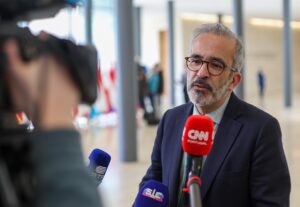
The changes have been “guided by constitutional respect” and concern for “humanist values”, minister for the presidency António Leitão Amaro told a press conference, stressing that the government has sought advice before coming up with these measures from experienced constitutionalists.
With regard to the changes to laws on nationality, the focus is that anyone applying for citizenship should be seen as seeking “to belong to the national community” with a “genuine, robust and lasting connection to Portugal”.
In light of the recent plane disaster in India, where all six Portuguese victims were in fact foreigners, who had never lived in Portugal, this change is particularly relevant: the government is closing ‘loopholes’ that have seen a Portuguese passport seen little more as a way into Schengen space and other European countries.
The same applies to Portuguese citizenship for babies of foreign parents, who arrive in this country on tourist visas. They will no longer be eligible for citizenship. Only if both parents have lived in this country as residents for at least three years, would a baby be eligible, and then only if the parents request this.
As for the time foreigners need to be living as residents of Portugal before they can request nationality, the government wants this extended from the current five years to 10 for most nationalities (seven for citizens of CPLP (Portuguese speaking) countries) – while the controversial amnesty granted to Sephardic Jews expelled during pogroms of 500 years ago has been scrapped altogether.
Reports today go into other details about the requirements for foreigners seeking to become ‘Portuguese’: they will need to have a command of the language and Portuguese culture, and understand how society/ national politics work. People with criminal convictions will not qualify for Portuguese nationality, and those who go on, as Portuguese citizens, to commit serious crimes (like murder/ rape/ institutional fraud), risk being stripped of their adopted nationality by a judge.
The Council of Ministers also decided that only ‘highly qualified foreigners’ should be able to visit Portugal without a work contract.
In short, AD wants to transform the way foreigners have been arriving in this country in large numbers, so that the country benefits, not simply the new arrivals.
To this end a new department is to be created at AIMA, the agency for integration, migrations and asylum, entitled: “department of talent”. It will be designed to ‘negotiate with universities’ for the arrival of foreign researchers/ lecturers.
Family reunification has been another real issue in immigration – threatening to swell the population by hundreds of thousands of people, most of which would have no work/ no accommodation/ few qualifications and little knowledge of the Portuguese language. The government has, for the time being, suspended family reunification – and this now will only apply to the minors of immigrants who have been legally living in Portugal for at least two years, as long as ‘adequate accommodation’ is assured, as well as the financial means with which to receive them. Incoming family members will also be expected to ‘integrate’, learn the Portuguese language and attend obligatory schooling. ND