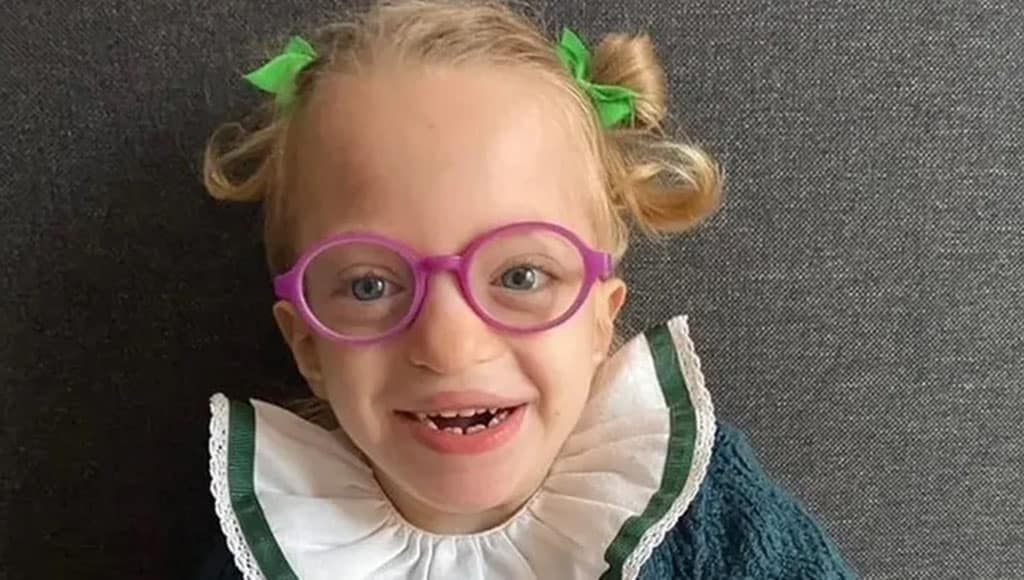
Seven-year-old Constança Nobre, from Lagos in the Algarve, is bright, loving, and full of life – despite living with a rare genetic condition known as KAT6A. The condition affects her speech, development, vision, digestion, and even her heart, yet Constança continues to inspire everyone with her strength and unstoppable smile.
But now, she needs help — and fast.
“Constança has a wheelchair and an adapted walker that she needs to transport several times a week, to accompany her to school and to the therapy clinic. Her current transportation is no longer suitable nor accessible. An adapted vehicle with wheelchair accessibility is crucial for her safety, independence, and quality of life,” her family says.
These specially adapted vehicles can cost between €30,000 and €50,000, depending on modifications like ramps, lifts, or lowered floors – none of which are covered by insurance.
“Any donation, no matter the amount, will make a big difference. Even if you’re not in a position to give financially, sharing this campaign with others can help more than you know,” her family appeals.
A GoFundMe page where donations can be made has been set up. You can also follow Morning Smile with Constança on social media to stay updated on her journey.
About KAT6A
According to the National Organization for Rare Disorders (NORD), KAT6A syndrome is an extremely rare genetic neurodevelopmental disorder in which there is a variation (mutation) in the KAT6A gene. Variations in the KAT6A gene can potentially cause a wide variety of signs and symptoms; how the disorder affects one child can be very different from how it affects another.
Neurodevelopmental disorders are ones that impair or alter the growth and development of the brain and the central nervous system. Common symptoms include varying degrees of intellectual disability, delays in reaching developmental milestones (developmental delays), delays in being able to speak and communicate (speech delays) and diminished muscle tone (hypotonia). Additional symptoms including abnormalities affecting the heart, eyes and gastrointestinal system can also occur.
In most instances, variations in the KAT6A gene occur spontaneously and there is no family history of the disorder (de novo variations). Treatment is based on the specific symptoms present in each individual.