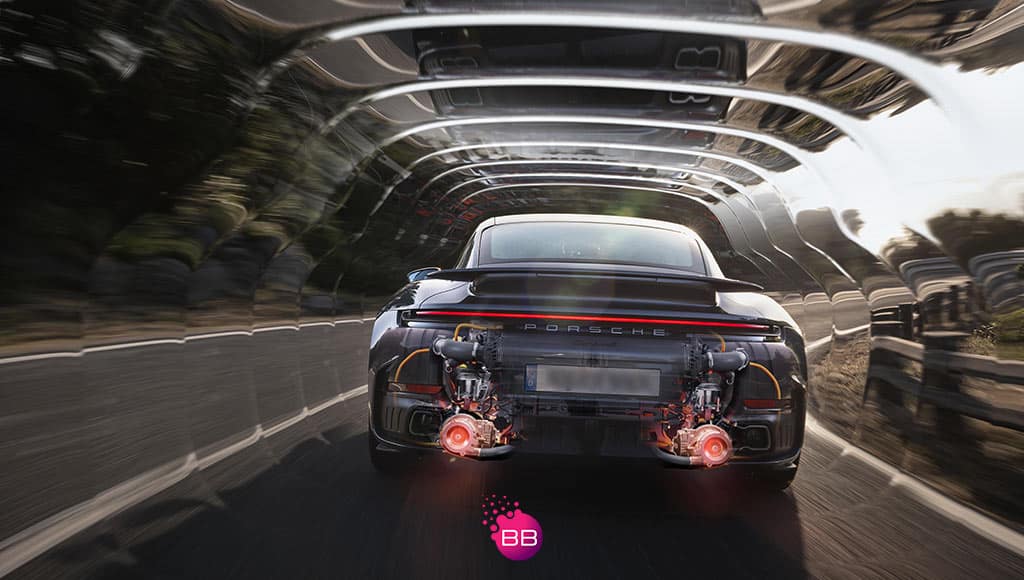
Text by José Barros Rodrigues, Centro Porsche Faro
In June 1903, the Automobile Club of France promoted what was to be the biggest and most spectacular car race ever, the famous Paris-Madrid. The registrations closed with an impressive 316 vehicles with all kind of engines and shapes. The race would be a real nightmare, due to an unusually high number of fatal accidents, caused by the total incompatibility between the technological development of the engines – which in the space of a year had reached unimaginable levels of power – and the other components of the vehicles, such as steering, suspension and braking. Furthermore, the public who followed this competition so passionately did not realise the severity and potential dangers of the spectacle and many spectators were hit by cars because they were not used to the incredible speeds that they could reach.
The difference in the evolution level of the various systems that make up automobiles has always been a characteristic of the industry. Until the 1930s, engineering was essentially dedicated to the development of engines, which showed notable increases in specific power in a short notice. The following area of research focused on aerodynamics, as a direct consequence of the influence of the growing knowledge of the laws of lift and stability of aircraft. Tires, chassis, suspensions and brakes also underwent some improvements, but far from the levels of evolution recorded in engines and aerodynamics.
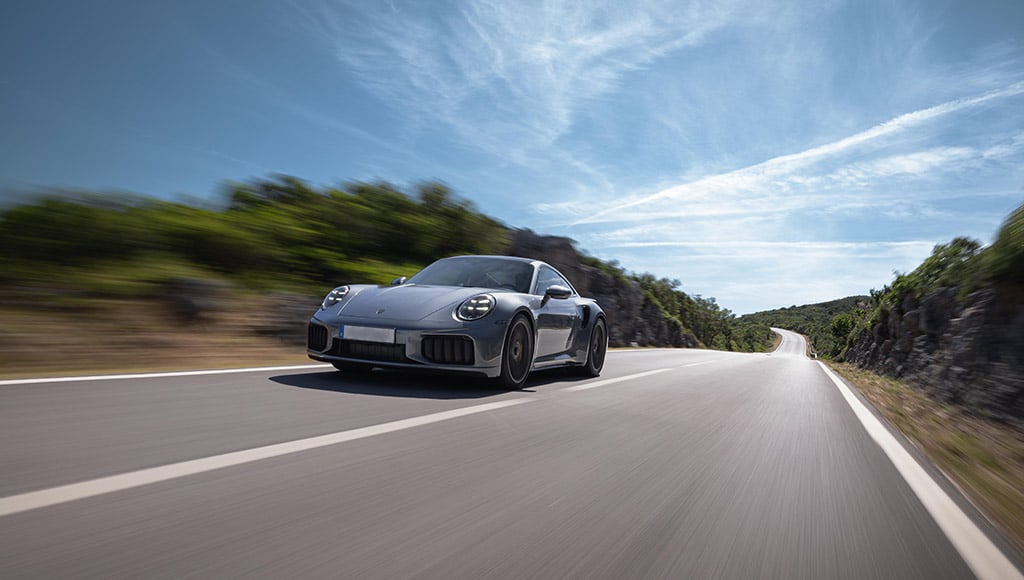
Today, with the advent of electric motors, the automotive industry has entered another research cycle that is at a different level from other areas of vehicle design – the so-called chassis, made up of unitary bodies, with high rigidity and high levels of safety, aerodynamics, hydraulic braking with electronically controlled discs on all four wheels, independent pneumatic suspensions also with electronic control, have some development advantages over the current status of electric car batteries in various contexts: energy density, charging speed, temperature dependence, scarcity and reliability of materials used in their production, etc.
Artificial intelligence (AI) is becoming increasingly important in automobile and overall vehicle development. It has become an indispensable tool, especially for complex systems in a network, such as the battery-electric energy storage system. The increasing number of highly developed sensors provides a volume of data that could no longer be processed with conventional software. For Porsche, using machine learning and AI for data analysis is helpful for understanding huge amounts of information and varying contexts. A high-voltage battery is a complex system that is exposed to a wide range of external and internal influences. These influences are made visible by Porsche’s engineers through data analysis, and the use of AI in connection with the effects on the energy system. The knowledge gained in this way is an essential basis for developing ever-better components and systems for Porsche’s customers, who will benefit from this as the service life of a vehicle battery can be extended significantly.
(+351) 289 888 911
(chamada para a rede fixa nacional / call to the national landline)
info@porsche-faro.com | www.porsche-faro.com
Sponsored content