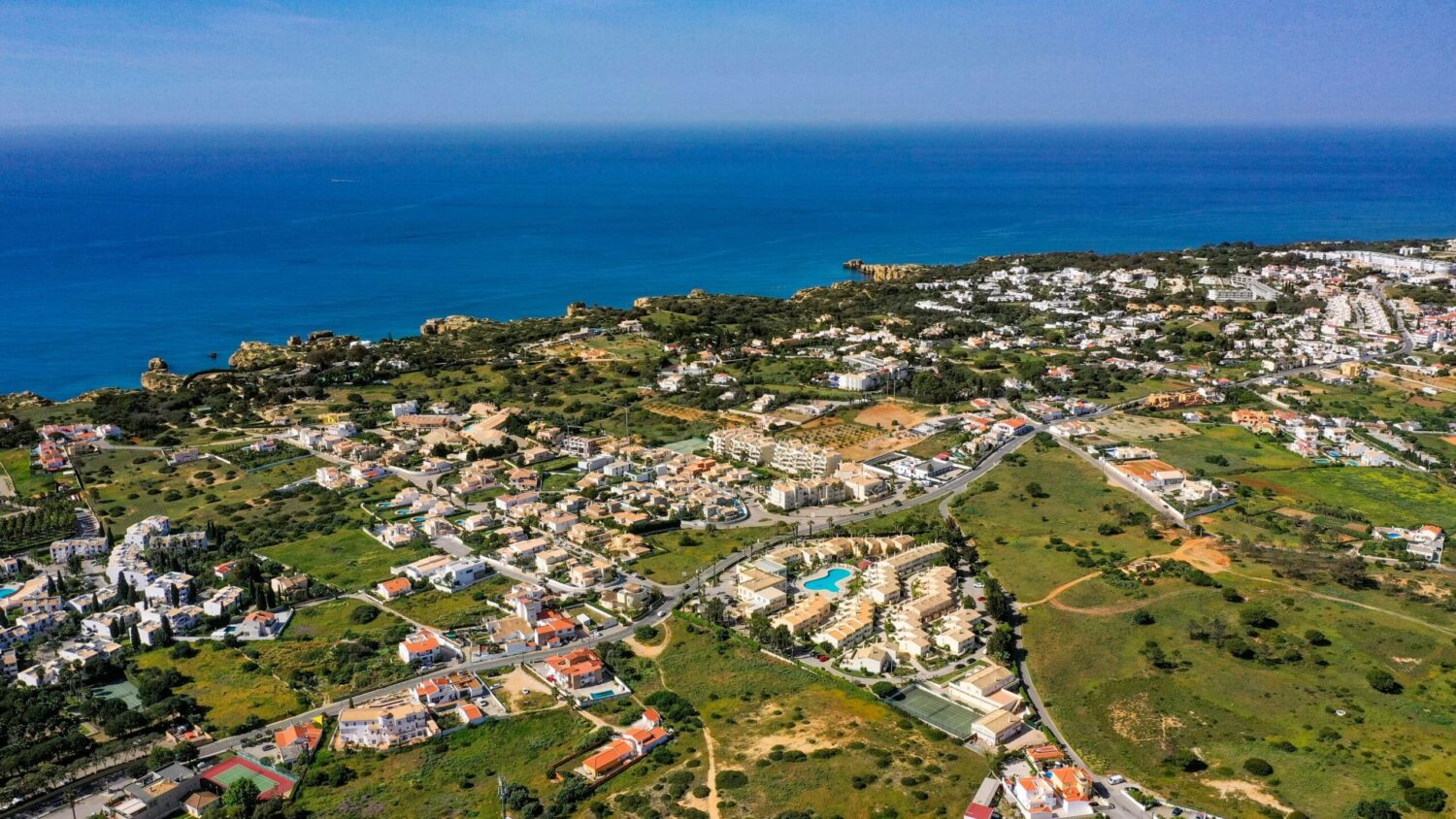
The Algarve is a world-famous tourist destination, recognised across the globe for its pristine beaches, year-round sunshine and delicious food. But for the region to truly thrive, economy experts agree the Algarve must diversify its economy.
For decades, tourism has been the lifeblood of the Algarve. From hotels and resorts to restaurants, bars, and nightclubs, much of the Algarve’s prosperity depends on its visitors.
In many ways, the region’s transformation into a leading tourist destination has been a success. Once again in August, the Algarve ranked as Portugal’s top holiday destination in August, accounting for 30.3% of all overnight stays in the country, according to data released by the National Statistics Institute (INE).
However, experts agree that this overreliance on tourism has turned the Algarve into something of a ‘one-trick pony’, limiting its full potential as a truly thriving and well-rounded region.
“The Algarve cannot do without tourism,” Marco Vieira, head of Algarve business association NERA, told the Resident. “We do not have too much tourism; we have too little of other sectors.”
His statements were echoed by other pundits at the first Algarve Economic Congress, held at the end of last month in Faro.
“The Algarve has to be more than tourism,” said Miguel Frasquilho, the former president of Portugal’s Agency for Investment and External Commerce (AICEP) and national airline TAP, who acted as the event’s curator.
The economist described the Algarve’s challenge as a “demographic paradox” – a region of 470,000 residents that hosts millions of visitors every year.
“This seasonal pressure is both an opportunity and a challenge,” Frasquilho said, highlighting the need for innovative solutions in housing, mobility, health services, and environmental protection. He also called for investment in agroindustry, the blue economy, and clean energy as essential steps toward diversification.
Marco Vieira from NERA agrees: “We’ve made progress when it comes to talking about the importance of diversifying our economy, which is classified as a priority in the strategical proposals of the region’s official documents.”
He added that NERA and other business associations frequently stress diversification as “a central issue for the Algarve’s future.”
“The Algarve has enormous potential,” Vieira said, lamenting that many available funding programs remain underused. “There are financial instruments, mostly managed by the CCDR with public and private partners, that aren’t being fully taken advantage of – often because of difficulties meeting eligibility criteria.”
Still, the region’s natural assets remain compelling for new businesses and investors. “There are opportunities in every sector – from tourism and its many subsectors to agriculture, maritime industries, and innovative fields linked to new technologies.”
Foreign investment has long played a role in the Algarve’s economy, particularly in property, tourism, golf and the restaurant sector, but Marco Vieira sees room – and need – for more. “It’s important that foreign investment grows in sectors that strengthen the diversification of the region’s economic structure,” he argues. “The Algarve has enormous potential for that.”
“There are opportunities in every sector – from tourism and its many subsectors to agriculture, maritime industries, and innovative fields linked to new technologies” – Marco Vieira, NERA
Algarve could be “economic success in five to 10 years”
Looking ahead, Vieira’s tone is one of careful optimism. “The Algarve has every condition to be an economic success in the next five to 10 years,” he said.
Tourism is already a cornerstone of the economy, but Vieira believes other resources, such as “those linked to the land and the sea,” will increasingly complement it, giving rise to a more balanced and productive regional economy. “The Algarve also has all the conditions to move boldly into innovation and new technologies,” he added.
Immigrant labour increasing
Just like the rest of Portugal, the Algarve has seen a sharp rise in its number of immigrant workers.
“Immigrants are essential to the development of the Algarve’s economy, but they must be integrated,” said Miguel Morgado Henriques, president of ACRAL (Algarve retailers association), at the congress.
“The proportion of immigrant workers in the Algarve is high and has been increasing,” Marco Vieira from NERA said, adding: “There is greater demand for qualified people, and we’ve seen an increase of legal employment, which is fundamental for companies.”
However, recruiting and retaining those workers brings its own challenges. “For companies, beyond qualifications, legal status and the willingness to stay in the company are key,” Vieira said.
Housing remains major challenge
Housing remains a nationwide problem that poses major obstacles to companies in the Algarve. As they explain, businesses struggle to hire if potential employees cannot find enough affordable housing in the region.
The solution, Vieira argues, cannot be piecemeal. “The response must come from a regional strategy involving both public and private players, one that considers the different economic and social realities.”
Diversification also needed within tourism
Diversification has also become a key theme among Algarve tourism officials, who in recent years have sought to attract new visitors by reaching out to emerging markets such as the United States and developing underexplored niches like nature and cultural tourism, Algarve tourism boss André Gomes said at the congress.
In a region where around 75% of hotel revenues are generated in July and August, according to the Algarve hoteliers’ association AHETA, expanding tourism beyond the peak summer months is essential, Gomes acknowledged.
There are signs of progress, however. An increasing number of hotels and resorts are now choosing to remain open year-round rather than close for the winter, he noted.