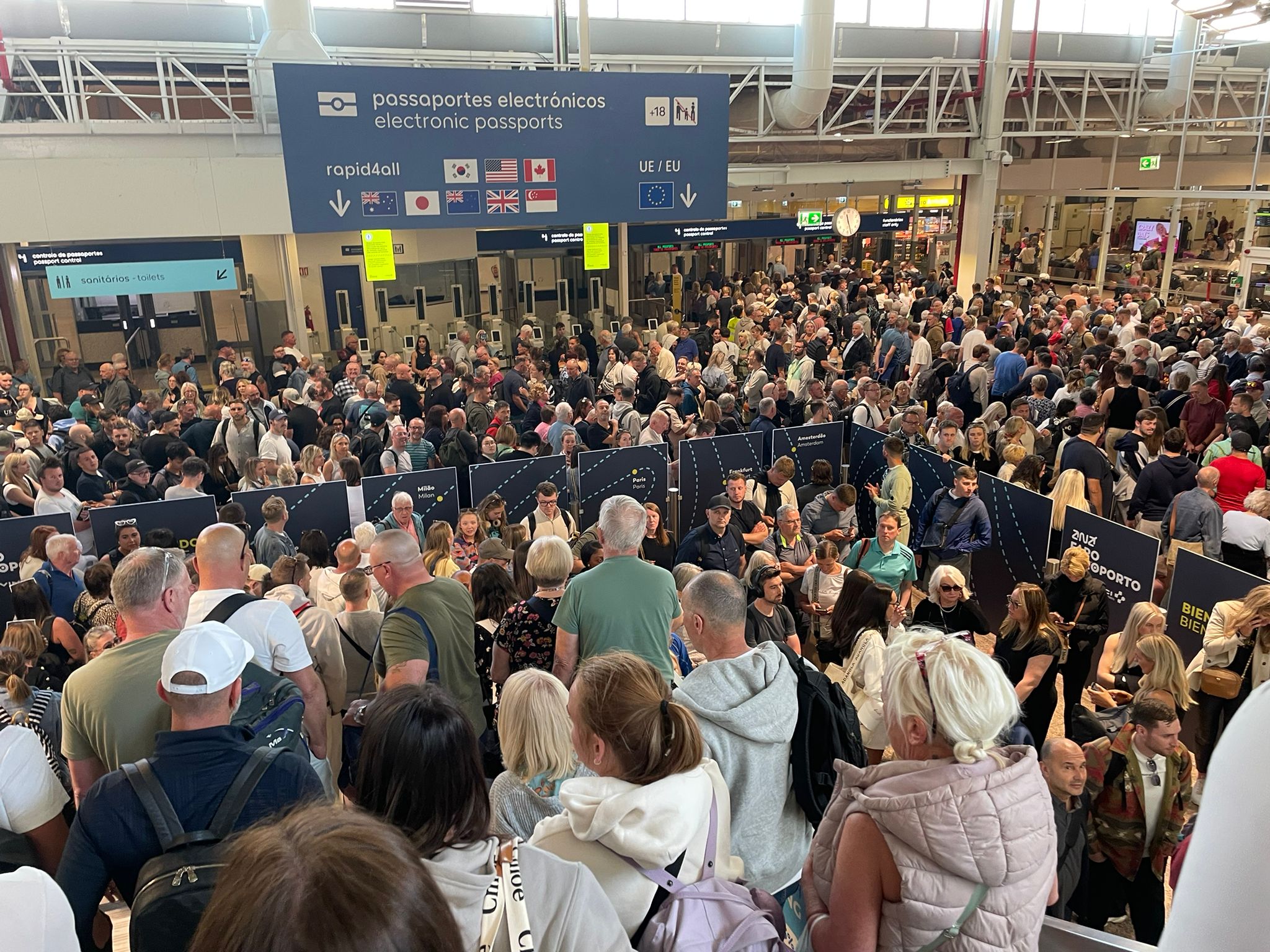
Hoteliers in the Algarve have sent an urgent letter to Prime Minister Luís Montenegro warning of potential “chaos” linked to the implementation of the European Union’s new Entry/Exit System (EES) at Faro Airport and calling for its suspension.
The system – agreed by 29 Schengen countries – began testing in October 2025 and is scheduled to become fully operational this April, coinciding with the start of the Algarve’s peak tourist season.
In its letter to the PM and the ministers responsible for the economy and tourism portfolios, the Algarve Association of Hotels and Tourism Establishments (AHETA) expressed “deep concern” over the rollout of the biometric border control system, citing inefficiencies already observed at other European airports.
The association pointed in particular to difficulties at Lisbon’s Humberto Delgado Airport, where the government temporarily suspended the EES for three months at the end of 2025 to prevent operational disruption and restore passenger flow.
UK market at risk
AHETA stressed that the United Kingdom – which accounts for over 50% of passenger traffic at Faro Airport between April and October – is outside the Schengen area and therefore fully subject to the new biometric entry procedures.
The association also warned that efforts to diversify tourism markets, particularly in attracting visitors from the United States and Canada, could be undermined, as long-haul passengers will face the same additional border formalities.
Following a recent meeting with Faro Airport management, AHETA said it fears the outlook for summer 2026 could be “frightening”, with congestion potentially exceeding the disruption seen in previous years, resulting in “irreparable damage” to the Algarve’s reputation as a leading tourism destination.
Call for suspension during peak season
The hoteliers are urging the government to follow recommendations made by the ABTA (the trade association for UK travel agents, tour operators and the wider travel industry) and apply EU contingency measures to their fullest extent.
At the centre of AHETA’s demands is the temporary suspension of the EES between June 1 and September 30, in order to prevent peak-season travellers from facing hours-long waits and potential passenger unrest.
The association is also calling for an urgent reinforcement of staffing levels and electronic border control points, in coordination with Portugal’s airport and border authorities.
“For AHETA, Portuguese hospitality is incompatible with images of endless queues,” the association said, stressing the need to protect both business profitability and the quality of the tourist experience in the region.
The letter was signed by the association’s board of directors.
Airports in France have also made a similar plea to suspend the rollout of the new system over the same fears of “summer chaos”.