The Portuguese government has officially approved the granting of protected status to one of the Algarve’s most cherished treats – the Dom Rodrigo.
The decision to register the sweet as ‘Indicação Geográfica Protegida’ or IGP (Protected Geographical Indication) was greenlit by the Secretary of State for Agriculture, João Moura, on November 17 and published this week in the Diário da República government gazette.
The move “officially recognises the uniqueness of this emblematic sweet,” says the Algarve’s regional development commission (CCDR Algarve), adding that the bid for recognition was presented by ADRA – the Algarve Regional Sweets Association.
According to a government website on Portugal’s traditional products, Dom Rodrigo do Algarve is made by combining delicate egg threads with a rich paste of ovos-moles, almond, cinnamon and sugar syrup. The mixture is shaped into small balls and toasted in a frying pan directly in the same syrup used to cook the egg threads – a process that gives the sweet its caramelised finish. Industrial caramel is strictly forbidden. This “pan-burning” technique, along with the absence of liquid caramel, is what sets Dom Rodrigo apart from any imitations. Production is allowed only within the Algarve’s 16 municipalities, ensuring the sweet’s unmistakable regional identity.
The same source traces its origins back to Lagos, where the dessert became linked to D. Rodrigo de Menezes, governor and captain-general of the Algarve, from whom it takes its name. The recipe that inspired today’s version is believed to have emerged from the Convent of Nossa Senhora do Carmo in Lagos, later passed on to a local family in the 19th century. Since then, the tradition has been preserved with almost reverential care, handed down from one generation to the next.
As CCDR Algarve points out, securing IGP status is more than just a badge of honour and will help protect the sweet from imitations, while also guaranteeing strict quality controls and ensuring every sweet that calls itself Dom Rodrigo is, in fact, produced in one of the Algarve’s 67 parishes of its 16 municipalities. The commission adds that it will boost the region’s cultural, economic and tourism value, reinforcing the sweet’s role in the promotion and preservation of traditional Algarve confectionery.
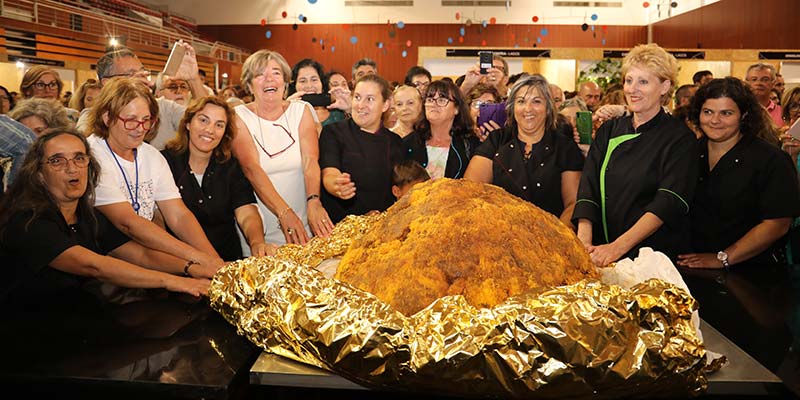
In 2019, Lagos set a world record for the largest Dom Rodrigo ever made.