A 45-year-old in cardiac arrest died early this morning as an ambulance failed to reach him in time to resuscite.
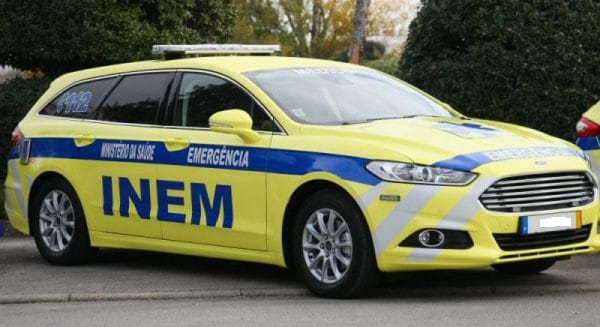
INEM (medical emergency institute) had apparently suggested the ambulance could get to the situation within eight minutes – a target that firefighters driving the ambulance have since said was impossible, given the state of the roads.
Today’s incident happened in Abrantes (Santarém district). Two emergency response vehicles were dispatched with the VMER (the one focused on resuscitating people) only arriving 20 minutes later.
Twenty minutes was just too long. But – as certain experts have insisted during the latest headlines about people dying as ambulances take ‘too long to reach them’ – certain cases are doomed, whatever the time an ambulance arrives.
The problem with today’s ‘news’ is that it was the tip of the iceberg: STEPH (the syndicate of pre-hospital technicians) explains that just this afternoon – in the appalling weather brought by Storm Ingrid – there were “several dozen instances” where people were left waiting for ambulances, sometimes for longer than 60 minutes. Many saw the times defined by INEM for response exceeded. It is just that no-one else appears to have died as a result.
This sad news about the man in Abrantes has seen ANTRAL – the association that represents most of the country’s taxi drivers – offer to lend its services to fire stations for ‘non-urgent patient transport’, as a way of leaving ambulances more free to answer more serious call-outs.
INEM’s system of priorities came into effect at the start of this year (23 days ago). P1 (emergent) with the clinical criteria “immediate risk to life”, is meant to guarantee the arrival of response in just eight minutes (something firefighters believe is almost impossible, given the level of traffic usually on roads). P2 cases (classified as very urgent) should see response reach victims in 18 minutes. P3 (urgent) cases are expected to wait for up to 60 minutes and P4 (not-really-urgent) are given a response time of 120 minutes. Any calls classified as P5 are basically told they don’t require an ambulance and are then transferred to the SNS24 helpline.
source material: SIC/ Lusa