Yesterday’s announcement by the prime minister in parliament of“the largest investment in ambulances in over a decade” came less than 36-hours after three citizens were reported to have died waiting for ambulance response, and as such, the timing has been queried by presidential candidate Henrique Gouveia e Melo.
“Announcements like these, made in the wake of tragic events are always strange”, he told journalists during yet another initiative of the ongoing presidential campaign – stressing once again that he sent his condolences “to the people and families who have suffered the loss of loved ones” in such traumatic circumstances.
“They (the announcements) may even be made with the best of intentions, and be the best of proposals, but it always seems like a measure that has to do with communication, or crisis communication management, rather than a real solution to a problem. A problem that has been affecting us for a long time,” said the former naval admiral.
Obviously, hopes are that the current reality “will move on from declarations of intent to implementation”.
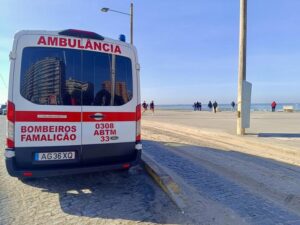
“Often, when we make investments, we forget that there is a whole operational cost associated with this equipment: the cost in human beings, who need to work with the equipment and need to exist in the system. But also a daily operational cost to maintain this equipment,” he added – citing a situation in Aveiro where ambulances exist but where “there is a risk that for nine days we will not have these vehicles operational because we have problems with personnel.
“Often, investment is not only material. You have to invest in organisations, in professional leadership, truly professional, in knowledge and in capacity,” he said.
Again, Gouveia e Melo acknowledged ‘the elephant in the room’: the Portuguese have been told “that the largest investment ever in health has been made, but none of this has worked so far”.
“As such, you can’t just throw money at a problem, especially if the nature of the problem is not one of material investment,” he said, recalling that “all governments in recent years have invested in health. Therefore, the problem is not investing in health, the problem lies in the organisation of health.”
Gouveia e Melo’s comments came as talks have taken place between the Portuguese Firefighters League and INEM (institute of medical emergency) to try and boost emergency resources along the south bank of Lisbon (the area most affected by health service response constraints).
Lusa reports that the two entities have agreed to “reinforce permanent medical emergency services, although the extent of this reinforcement has not yet been quantified.”
Firefighters League president António Nunes explains that the ‘initial problem’ is “finding the necessary resources to strengthen, improve the flow of information and try to maxmise our response capacity.”
As to criticisms that INEM’s new triage system for 112 calls is snarling up the system when it comes to swift ambulance response, Nunes said that it was agreed at the meeting that next week a document will be presented “that is explanatory, that can be sent to the fire departments, trying to explain why this change was made, and how this change will be implemented.”
Source: LUSA